
0%

Why Choose Wholesale Eyewear Manufacturing for Your Brand?

Wholesale eyewear manufacturing is becoming a practical route for brands seeking scale, control, and recognizable design. Grand View Research valued the global eyewear market at approximately $115.9 billion in 2023. It also forecasts continued growth through 2030. These figures suggest strong demand, but demand alone does not guarantee a successful product.

Manufacturing partners can combine frame development, material sourcing, quality checks, and packaging under one process. This may reduce purchasing complexity and support more consistent retail pricing. The Vision Council reports that most American adults use some form of vision correction, creating a broad customer base for optical products. Small details matter. A smooth hinge, balanced temple, and clear lens fit can shape repeat purchases.

As eyewear industry executive Giovanni Vitaloni has said, “Innovation is the key to the future of eyewear.” That principle applies beyond appearance. It includes responsible materials, accurate specifications, dependable production, and responsive communication. A supplier should explain minimum order quantities, sample revisions, testing procedures, and lead times clearly.

The path is not flawless. Larger orders can create cash-flow pressure, and attractive samples may hide production weaknesses. Brands must inspect prototypes and verify factory capabilities before committing. Still, wholesale eyewear manufacturing can offer a stronger foundation than scattered sourcing. With careful partner selection, a brand can turn practical frames into a coherent collection, ready for real customers and real-world wear.
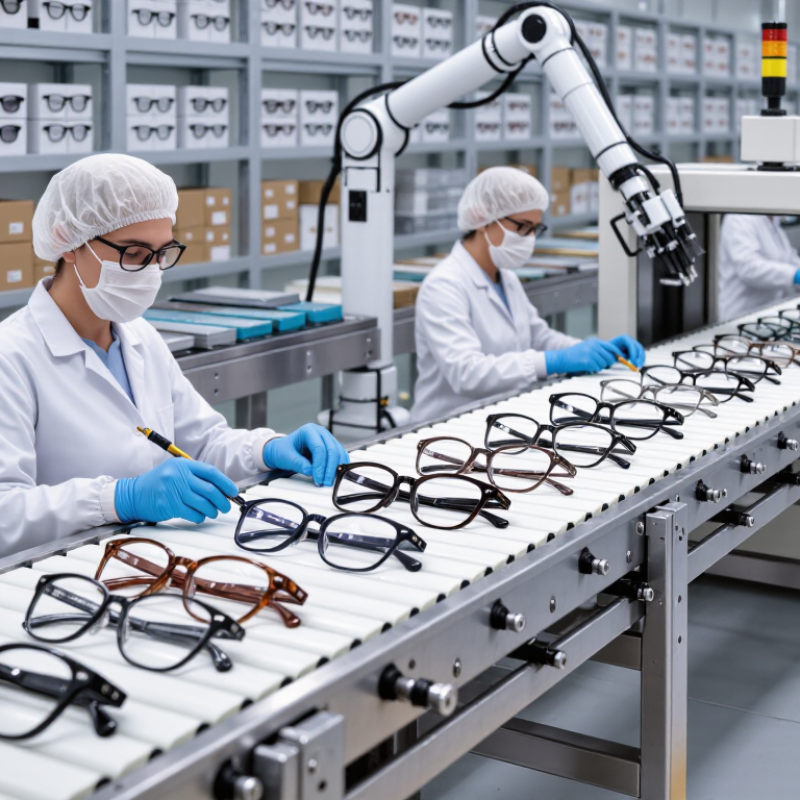
Why Choose Wholesale Eyewear Manufacturing for Your Brand?

Market Scale: Eyewear’s $115.9B 2023 Value (Fortune Business Insights)

Why Choose Wholesale Eyewear Manufacturing for Your Brand?

The global eyewear market reached an estimated $115.9 billion in 2023, according to Fortune Business Insights. This scale signals strong demand, but it also creates intense competition. Wholesale manufacturing can help emerging brands control unit costs, access established production expertise, and order coordinated collections. A practical supplier may support frame development, lens options, packaging, and quality checks under one workflow. This reduces repeated communication and makes product planning more manageable.

Tips: Request physical samples before approving bulk production. Check hinge movement, frame alignment, surface finish, and lens clarity. Ask for material specifications and inspection records. Confirm minimum order quantities and realistic lead times. Cheap pricing can hide expensive rework.

Market value alone does not guarantee success. The $115.9 billion figure combines many regions, product types, and customer segments. It may not reflect your exact audience or selling channel. That limitation deserves attention. A focused collection can perform better than a large, unfocused catalog. Wholesale partners should provide consistent measurements, traceable production details, and clear communication when defects appear. A small tolerance issue, repeated across thousands of frames, can become a serious cost. Build a pilot order first, even when the supplier appears experienced.

Consumer Need: WHO Reports 2.2B People With Vision Impairment

Why Choose Wholesale Eyewear Manufacturing for Your Brand?

Consumer Need: WHO Reports 2.2B People With Vision Impairment

The need for eyewear is global, persistent, and still expanding. The World Health Organization’s World Report on Vision (2019) estimates that at least 2.2 billion people live with near or distance vision impairment. Many cases remain unaddressed because of limited access, affordability, or suitable products. This creates a clear opportunity for responsible wholesale eyewear manufacturing.

Wholesale production helps brands manage larger demand with controlled unit costs. It also supports wider selections, including reading glasses, prescription frames, sunglasses, and children’s styles. The Lancet Global Health Commission on Global Eye Health reported that 1.1 billion people had preventable vision impairment in 2020. It projects this figure could reach 1.8 billion by 2050 without stronger action. These figures require more than attractive frames. They require dependable sizing, durable materials, consistent quality checks, and practical distribution. The model is not flawless. High production volumes can also create excess inventory and unnecessary waste.

Tips: Request sample frames before placing a large order. Check hinge strength, lens alignment, surface finish, and packaging. Review product measurements carefully. A small fitting error can affect customer comfort. Track sales by size, material, and use case. This evidence can improve the next production cycle. It is also wise to discuss responsible material choices and realistic lead times with manufacturing partners. Forecasts are helpful, but they are never perfect.

Cost Advantage: Wholesale Buying and Economies of Scale

Why Choose Wholesale Eyewear Manufacturing for Your Brand?

Cost Advantage: Wholesale Buying and Economies of Scale

Wholesale eyewear manufacturing can reduce the cost of each frame through larger production runs. Suppliers spread tooling, labor, packaging, and inspection expenses across more units. This structure gives growing brands room to invest in design, testing, and customer service.

Grand View Research valued the global eyewear market at approximately USD 140.78 billion in 2023. It also projects an 8.5% compound annual growth rate from 2024 to 2030. This expansion increases competition, so purchasing efficiency matters. A wholesale order may also provide better access to lenses, hinges, acetate, and protective packaging. The saving is not only on the invoice.

However, scale is not magic. A large order can create slow-moving inventory, storage costs, and cash-flow pressure. In practice, experienced buyers compare minimum order quantities with sales forecasts. They request sample approval, material specifications, tolerance data, and inspection records before production. The International Trade Centre emphasizes accurate product classification and trade data when evaluating international sourcing decisions. That discipline helps brands compare suppliers more reliably.

A practical approach is to begin with a controlled assortment. Review defect rates, delivery consistency, and repeat-order flexibility. Then expand proven styles in larger quantities. It may feel slower, but poor forecasting can erase wholesale savings quickly.

Production Choice: Compare MOQ, Lead Time, Materials, and Compliance

Wholesale eyewear manufacturing becomes practical when production choices match your brand’s real demand, not optimistic forecasts. The 2024 Grand View Research eyewear report valued the global market at approximately USD 157.9 billion in 2023. That scale creates opportunity, but excess inventory remains expensive.

MOQ directly affects cash flow. A small MOQ supports testing, seasonal colors, and easier revisions. However, smaller runs usually increase tooling and unit costs. Larger orders can lower prices, but they may leave hundreds of frames in storage. I would not treat any MOQ benchmark as universal. A pilot order of 300–500 pieces may suit a new collection, while established programs often require 1,000 pieces or more.

Lead time also needs detail. Sampling may take two to four weeks, while approved production can require six to ten weeks, excluding shipping. Delays happen when temples, hinges, or packaging change late.

Material selection should balance appearance, durability, and compliance. Acetate offers a polished finish, while stainless steel supports slimmer constructions. Recycled materials may strengthen a sustainability claim, but suppliers still need traceable documentation. ISO 12870 provides requirements for spectacle frames, and EU REACH controls substances that may affect market access.

Ask for material declarations, test reports, and batch records before mass production. It is easy to approve a beautiful prototype too quickly. That mistake can become costly.

Brand Execution: Apply the Forecast 5.5% CAGR to Inventory Planning

Why Choose Wholesale Eyewear Manufacturing for Your Brand?

Brand Execution: Apply 5.5% CAGR to Inventory Planning

Wholesale eyewear manufacturing can turn market expectations into practical stock decisions. A forecast 5.5% CAGR suggests steady category expansion, not permission to overbuy. Your purchasing plan should connect sales history, customer preferences, seasonal demand, and production lead times. In sourcing work, a simple demand sheet often reveals more than an exciting market report. It shows which frame shapes move quickly and which colors remain on shelves. It also exposes where cash is trapped.

A 5.5% annual rise will not fit every quarter. Weather, promotions, and changing preferences can distort demand. My first forecast would still be wrong. That is normal, but ignoring the error is not. Use smaller trial orders, flexible production schedules, and clear reorder points. Wholesale partners can support this approach through sample reviews, material checks, and consistent quality records. Ask for measurable details, including minimum order quantities, production capacity, inspection steps, and delivery timelines.

Tips: Divide projected growth across product categories. Keep a safety stock for proven sellers. Review slow-moving inventory monthly. Do not increase every style equally. Test new colors in limited quantities before committing to larger production. A shared planning sheet also helps your team compare actual sales against the 5.5% CAGR assumption. Keep revising it when the evidence changes.

FAQS

How can wholesale eyewear manufacturing reduce frame costs?

Larger production runs spread tooling, labor, packaging, and inspection expenses across more units. Scale is not magic. Savings can disappear when unsold frames occupy storage.

What order size suits a new eyewear collection?

A controlled pilot of 300–500 pieces may limit financial risk. Established collections may need 1,000 pieces or more. The right quantity depends on demand, cash flow, and sales forecasts.

How does minimum order quantity affect cash flow?

Smaller MOQs support testing, seasonal colors, and easier design changes. They usually create higher unit costs. Larger MOQs lower prices but can leave hundreds of frames in storage.

How long can sampling and production take?

Sampling may require two to four weeks. Approved production can take six to ten weeks, excluding shipping. Late changes to hinges, temples, or packaging may cause delays.

Which materials are commonly considered for eyewear frames?

Acetate can provide a polished appearance and solid structure. Stainless steel supports slimmer frame designs. Recycled materials may support sustainability claims, but documentation must be traceable.

What documents should buyers request before mass production?

Request material declarations, test reports, batch records, and tolerance data. Inspection records can reveal recurring defects. Beautiful samples can hide production problems.

How can a buyer protect wholesale savings from poor forecasting?

Compare the MOQ with realistic sales forecasts, not optimistic hopes. Review storage capacity and cash-flow pressure before ordering. Forecasts are often wrong. I would allow extra caution.

How should a buyer compare different suppliers?

Compare unit cost, defect rates, lead times, material details, and repeat-order flexibility. Accurate product classification also supports clearer international sourcing comparisons. Cheapest is not always best. Consistency matters.

Conclusion

Wholesale eyewear manufacturing offers a practical path for businesses seeking to enter or expand in the global eyewear market. Valued at approximately $115.9 billion in 2023, the industry benefits from strong and continuing demand, while the WHO reports that around 2.2 billion people live with some form of vision impairment. This combination creates significant opportunities for well-planned eyewear collections that address different consumer needs and price points.

Working with a wholesale manufacturer can reduce unit costs through economies of scale and make product development more efficient. When selecting a production partner, businesses should compare minimum order quantities, lead times, material options, quality standards, and compliance requirements. The market’s projected 5.5% CAGR also highlights the importance of accurate inventory planning. By aligning purchasing volumes with expected demand, businesses can control costs, manage stock more effectively, and build a flexible product range suited to long-term growth.

Evelyn

Evelyn

Evelyn is a highly experienced marketing professional dedicated to helping businesses understand products, markets, and customer needs more clearly. With a strong background in strategic communication, content development, and product education, she brings both creativity and analytical insight to......