EN ISO 12870 & Medical Device Regulation (EU) 2017/745 MDR Compliant

CE Certified Kids Optical Frames Manufacturer & Factories

OEM/ODM Pediatric Eyewear Engineering: High-Purity TR90 Memory Polymers, Biocompatible Beta-Titanium, and Ergonomically Stabilized Anatomical Bridge Systems.

Industrial Sourcing & Manufacturing Whitepaper

Precision-Engineered Pediatric Optical Eyewear Built to Global Clinical Safety Standards

Designing and manufacturing prescription optical frames for children demands an uncompromising intersection of medical-grade toxicological safety, dynamic impact endurance, and specialized cranial anthropometrics. Backed by five generations of optical benchcraft since 1879, our manufacturing facilities engineer Class I medical device certified optical frames that empower pediatric clinics, independent optical retail groups, and international eyewear brands with certified safety and minimal return rates.

Factory Direct Catalog

Recommended CE Certified Kids Optical Frames

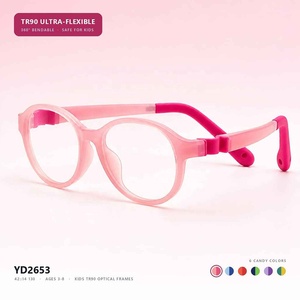
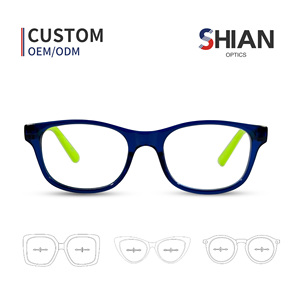
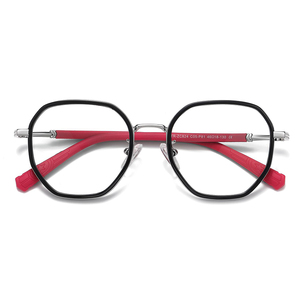
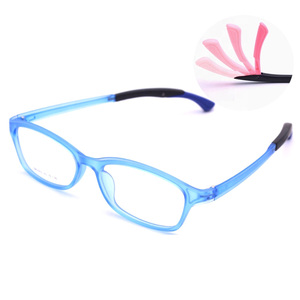
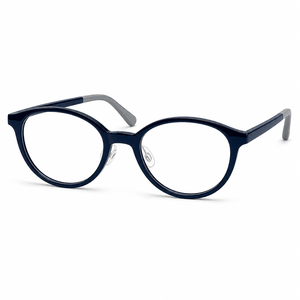
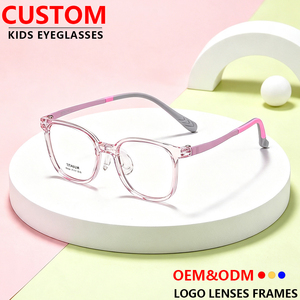
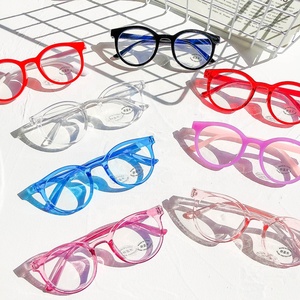
Explore our fully customizable pediatric series engineered with food-grade TR90, flexible memory metals, and soft anatomical temples.
145+
Years Optical Heritage
Five generations of precision eyewear tooling and ophthalmic bench expertise.
100%
CE MDR Class I Compliance
Fully audited to EN ISO 12870, EU 2017/745, and REACH toxicological specs.
< 0.28%
Batch Defect Rate
Rigorous automated bridge fatigue, hinge cycle, and drop-ball testing.
72h
OEM Engineering Response
Rapid DFM analysis, 3D anatomical prototyping, and mold-flow optimization.
Medical Device Directive & Safety

Understanding CE Harmonization: EN ISO 12870 & EU MDR 2017/745 for Children

Within the European Economic Area and across global ophthalmic procurement networks, children's spectacle frames are classified not as fashion accessories, but as Class I Medical Devices under Regulation (EU) 2017/745 (MDR). This imposes stringent legal liabilities on importers, brand owners, and dispensing opticians.

Unlike adult frames, pediatric optical hardware faces severe dynamic stresses and prolonged direct cutaneous contact. Our CE-certified kids optical frame manufacturing protocols subject every batch to rigorous mechanical and biochemical validation:

  • Nickel Release Prohibition (EN 16128 & REACH Annex XVII): Guaranteed 0.00 μg/cm²/week nickel leaching on all metal hinges, core wires, and nose pad arms to prevent severe childhood contact dermatitis.
  • Bridge Fatigue Endurance (EN ISO 12870 §4.8): Withstanding 500 sinusoidal flexing cycles at 40 cycles/minute without micro-fracture or plastic deformation exceeding 5 degrees.
  • Biocompatibility (ISO 10993-5 / 10993-10): Food-grade raw resins certified for zero in-vitro cytotoxicity, skin irritation, or delayed-type hypersensitivity.
  • Thermal Stability & Flame Resistance: Exposure to 60°C dry heat without bridge warping, ensuring high diopter prism alignment remains clinically stable.

Pediatric Optical Quality Matrix (Batch-Release Benchmarks)

Test Parameter Standard Factory Tolerance
Tensile Bridge Yield ISO 12870 Clause 4.8 > 120 N No Deformation
Hinge Endurance Custom 50k Cycle Test Zero Screw Loosening
Phthalate Content REACH Annex XVII < 0.01% (ND Level)
Coating Sweat Resistance ISO 12870 §4.9 (pH 4.7) 24h Saline No Bubble
Optical Axis Stability Pediatric Myopia Spec ± 0.25 mm Optical Center
Polymer Science & Biomechanical Fit

Pediatric Craniofacial Anthropometrics & Polymer Selection

Children are not miniature adults. Their undeveloped nasal bridges, shorter vertex distances, higher ear level relative to eye axis, and dynamic movement demand customized frame geometry and advanced polymer synthesis.

Swiss Grilamid TR90 & Memory Resins

Engineered using genuine Swiss EMS polyamide compounds. Offers an ultra-low specific gravity of 1.14 g/cm³, superior torsional recovery, and shatter-resistant flexibility during school sports. Ideal for injection molding without micro-porosity.

Co-Injected Liquid Silicone & TPE

Dual-shot molded temples combine rigid TR90 structural cores with ultra-soft medical-grade thermoplastic elastomer (TPE) touchpoints. Prevents retro-auricular abrasions and keeps frames firmly anchored on lower-profile pediatric ears.

Anatomical Saddle & Modified Keyhole Bridges

Pediatric nasal cartilage lacks the adult bony crest. Our frames feature broadened splay angles (35°–42°) and lowered bridge heights to maximize surface weight distribution, eliminating skin indentation and vertex distance slip.

Strategic Sourcing Intelligence

Future Procurement Trends in Pediatric Optical Frames (2025–2030)

Global B2B frame procurement is transitioning from disposable, low-cost plastic specs toward clinically aligned, sustainable, and technologically integrated ophthalmic solutions.

1. Myopia Management Geometry

With the rapid global adoption of Defocus Incorporated Multiple Segments (D.I.M.S.) and Highly Aspherical Lenslet Target (H.A.L.T.) lenses, frames require zero-flex bridge stability to maintain precise centration and tight pantoscopic tilt tolerances (≤ 6°).

2. Screwless & Elastic Friction Hinges

Screw breakage and loosening represent 64% of optical clinic warranty claims. Advanced procurement now prioritizes interlocking elastic pivot joints and co-molded silicone hinges that automatically withstand over-extension beyond 180°.

3. Bio-Circular & Recycled Polyamides

Driven by EU Green Public Procurement criteria, institutional buyers are actively adopting ISCC-certified bio-polyamides derived from non-food castor plant biomass, achieving over 45% carbon reduction without losing elasticity.

A Heritage of Optical Precision Since 1879

Rooted in five generations of eyewear innovation, our manufacturing foundation traces its origins to 1879 St. Louis, Missouri. From early custom lens grinding to pioneering contemporary handcrafted and 3D additive eyewear, we understand the fine tolerances that make optical dispensing successful.

We do not merely supply wholesale frames; we act as your comprehensive OEM/ODM engineering and vendor partner. Our vertically integrated facilities in Wenzhou and Shenzhen leverage computerized CNC machining, precision multi-cavity injection molding, and independent quality laboratories trusted by independent practices and international distributor brands worldwide.

5th Gen

Family Optical Legacy

100%

Factory Traceability

3D CAD/CAM

7-Day Rapid Tooling

Zero Risk

Drop-Ship & Trunk Shows
Professional Procurement Guidelines

Frequently Asked Questions for B2B Optical Buyers & Importers

Direct technical and commercial answers regarding minimum order quantities, compliance documentation, custom tooling, and after-sale support.

What regulatory documentation is provided for customs clearance under EU MDR?
Every shipment intended for the European Union is backed by an authorized EU Declaration of Conformity (DoC), technical construction files referencing standard EN ISO 12870:2018, REACH toxicological screening reports (SVHC test certificates), and ISO 13485 quality management manufacturing logs. Our technical team works directly with your appointed Authorized Representative (EC REP) to ensure unimpeded medical device import validation.
What are the typical Minimum Order Quantities (MOQ) for custom OEM/ODM children frames?
For ready-to-ship stock models requiring custom pad printing or private-label laser engraving, our MOQ starts at just 100 to 300 pieces per model across multiple colorways. For fully customized ODM molds featuring proprietary ergonomic eye sizes, custom bridge widths, or bespoke hinge architectures, mold creation requires an MOQ of 1,200 pieces per tooling shape, typically partitioned into 3 or 4 custom color assortments.
How do you guarantee that injection-molded TR90 frames will not crack when high-plus diopter lenses are glazed?
Pediatric hyperopia and amblyopia prescriptions often require thick positive lenses with steep base curves. We employ precision CNC eye-wire bevel profiling (110° to 120° V-groove angle) and utilize pre-conditioned Grilamid TR90 resin with strictly controlled moisture equilibrium. This prevents residual internal molding stress, ensuring optical labs can perform cold or warm lens insertion without temporal rim blowout or optical axis shift.
Can you supply customized adjustable end-tips and modular headband systems?
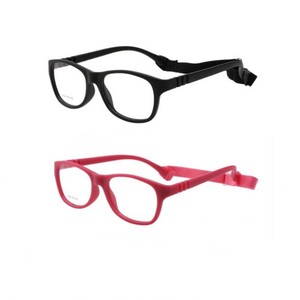
Yes. We offer fully integrated pediatric retention systems including: thermo-formable internal copper core temple tips covered in food-grade silicone, click-on adjustable headband straps, and interchangeable 360-degree rotating temple ends. All silicone elements are certified vulcanized rubber compounds free from phthalate plasticizers and bisphenol A (BPA).
What is your warranty policy regarding clinical returns and accidental schoolyard breakage?
We provide a 12 to 24-month manufacturer warranty against bridge fractures, structural delamination, and coating degradation under normal dispensing conditions. In addition, for wholesale inventory programs, we can incorporate a structured spare-parts buffer kit (extra temples, silicone nose bridges, and hinge pins) with every bulk shipment to ensure opticians can provide immediate on-site patient repair.
How does your factory accommodate trunk shows and boutique vendor partnerships?
Following our historic Studio Optyx brand support traditions, we support retail partners through sample showcase sets, custom trunk show presentation kits, high-resolution lifestyle imagery for clinic marketing, and low-risk trial programs. Connect directly with our vendor team to arrange a physical sample inspection kit tailored to your clinical demographic.

Partner with an Audited Pediatric Eyewear Manufacturing Leader

Whether you require turn-key OEM mass fabrication, proprietary custom frame tooling, or CE-compliant wholesale inventory for your retail network, our optical engineering team is standing by to assist with DFM blueprints and material samples.

Contact Us