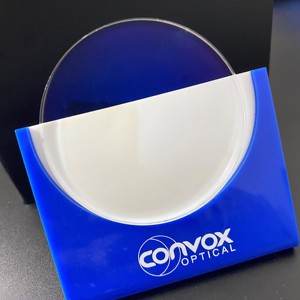

Inspect our direct manufacturer portfolio spanning refractive optical blanks, CNC automated flash measurement units, and heritage eyewear frames curated for modern dispensing requirements.
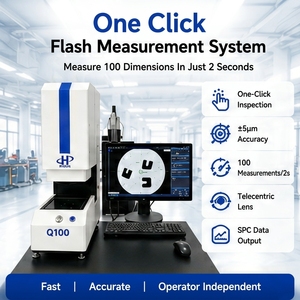
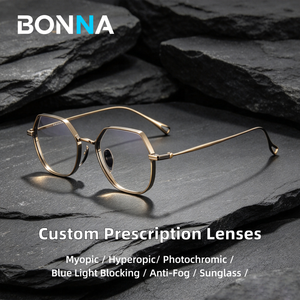
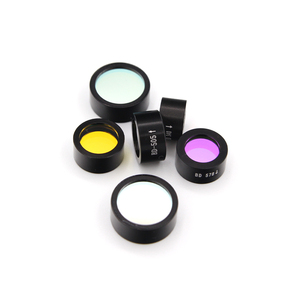
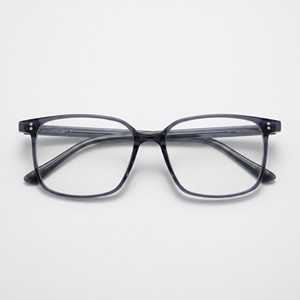
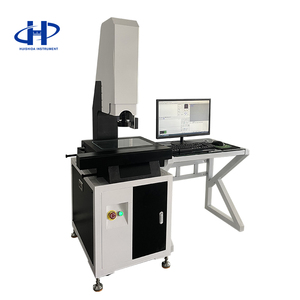
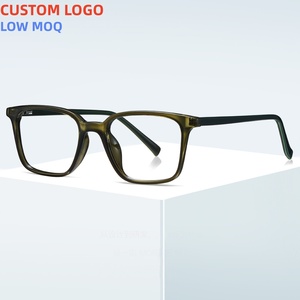
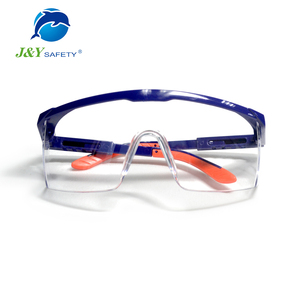
Procurement executives and clinical buyers across Europe and North America operate within a dramatically tightening regulatory climate. The enforcement of the EU Medical Device Regulation (MDR 2017/745) has forever altered how prescription lenses, ophthalmic frames, and diagnostic instrumentation clear customs and clinical validation checkpoints. Modern wholesale sourcing has moved far beyond rudimentary cost-per-unit metrics. Enterprise procurement strategies in 2026 and beyond prioritize audit-traceable technical documentation, verified biocompatibility certs (ISO 10993 for ocular and dermal interfaces), and tight tolerance verification via optical coordinate metrology.
Leading optical supply networks demand resilient dual-sourcing capabilities. Relying entirely on mass unbranded generic injection molders exposes dispensary chains and healthcare clinics to high return rates, progressive power distribution errors, and non-compliance fines. B2B buyers now pivot toward CE-audited manufacturing partners that integrate automated cleanroom lens casting (utilizing Mitsui Chemical MR-series resins) alongside sub-micron non-contact optical coordinate inspection devices such as the HSD-Q100. This convergence of clinical lens manufacturing with precision metrology guarantees that batch-to-batch variation remains below ±0.02D in dioptric power distribution and axis precision.
The optical industry is experiencing an unprecedented structural evolution in raw material formulation. For prescription corrective lenses, ophthalmic demand has pivoted from standard 1.50 CR-39 and brittle 1.56 middle-index resins toward high Abbe-value polyurethane formulations like MR-8 (1.60/1.61) and MR-7 (1.67). These monomers combine high tensile pull-strength (critical for rimless edge drilling), elevated impact resistance, and minimum chromatic aberration (Abbe number 41-42), creating the ideal balance of thinness and visual sharpness.
Simultaneously, luxury optical retail buyers demand sustainability without compromising mechanical durability. This has propelled pure organic cellulose acetate (derived from renewable cotton linter and wood pulp plasticizers) to the forefront of frame architecture. Paired with beta-titanium core-wires and precision 5-barrel hinges, contemporary hand-finished frames withstand over 25,000 continuous hinge flexions while remaining 100% hypoallergenic and nickel-free. Concurrently, technical additive manufacturing—exemplified by Scandinavian 3D-sintered polyamide powder methods pioneered in collections like Monoqool—allows zero-waste manufacturing profiles alongside hinge systems that require zero screws.
As the demand for complex freeform progressive surfaces and dichroic splitters for ophthalmic lasers expands, laboratory QA systems must surpass manual vernier calipers and simple lensometers. Incorporating telecentric dual-lens automated vision measuring systems allows enterprise optical facilities to verify pitch, bevel angles, optical center decenter tolerances, and surface reflection curves across complete production trays within three seconds. By executing automated dimensional and coating reflection checks (IAD Hard Multicoated stacks, anti-static, oleophobic, and UV400 filters), suppliers eliminate dispensing-table rejections and establish an unassailable baseline of reliability.
Built upon five generations of optical authority since 1879, our manufacturing ecosystems unify American design heritage, European regulatory compliance, and cutting-edge optical engineering.
Founded in 1879 in St. Louis, Missouri, Studio Optyx represents 145 consecutive years of ophthalmic and optical design lineage. From historic bench work to modern digital cadences, our institutional knowledge ensures unmatched fitting geometry, temple balance, and dispensing longevity.
We solve the fragmented procurement puzzle for optical retailers. Direct access to our proprietary design lines—Erkers1879, NW77th, The Neighbors, and Tocco Eyewear—paired with premier technical European brands like Monoqool (3D printed screwless) and ba&sh Eyewear under a consolidated supply channel.
Our collaborative industrial manufacturing labs feature Ion-Assisted Deposition (IAD) high-vacuum chamber coating lines alongside sub-micron coordinate measuring automation. Each optical product delivers repeatable performance for clinical-grade reliability.
Under current European Union mandates, all prescription optical lenses and corrective eyewear frames are classified as Class I Medical Devices under Medical Device Regulation (EU) 2017/745 (MDR). Shipments must hold valid CE conformity marks, accompanied by a Declaration of Conformity (DoC), an allocated Basic UDI-DI, and complete technical documentation verifying compliance with EN ISO 12870 (eyewear frame requirements and test methods) and EN ISO 14889 (ophthalmic optics). Personal protective equipment like safety goggles must comply with PPE Regulation (EU) 2016/425, certified under EN 166.
MR-8 is a specialized thiourethane polymer developed by Mitsui Chemicals. While traditional 1.56 acrylic/allyl resin lenses tend to be brittle, have lower Abbe values (approx. 35), and exhibit poor heat resistance, 1.61 MR-8 boasts an Abbe number of 41, substantially eliminating peripheral chromatic aberration. Furthermore, MR-8 delivers exceptional impact resistance and can withstand drill-mount tensile stresses exceeding 60kgf, making it the industry benchmark for grooved and rimless frames.
Optical retail inventory turnover depends heavily on local demographic alignment. Studio Optyx provides turn-key trunk show frameworks and representative-guided frame curation. Rather than committing blind capital to unproven SKUs, retailers receive curated assortments spanning historic acetates (Erkers1879), technical lightweight silhouettes (Tocco), and fashion forward color stories (NW77th), testing patient engagement directly within the dispensary before placing volume bulk replenishment orders.
Ion-Assisted Deposition (IAD) introduces high-energy ion bombardment during the vacuum evaporation process of dielectric materials (such as SiO2 and TiO2). This packs the deposited molecular layers tightly, eliminating micro-porosities that otherwise absorb atmospheric humidity. Consequently, IAD-coated dichroic optics, clinical beam splitters, and ophthalmic hydrophobic/oleophobic multi-coatings resist spectral shifting over time, withstand thermal shock, and deliver up to 98% spectral reflectance or transmittance precision.
Yes. Through flexible manufacturing structures spanning our North American design studios and specialized production facilities, we accommodate customized temple laser-engravings, unique pad-printing, custom acetate color block combinations, and bespoke packaging suites. Low-MOQ tiered sampling tiers allow independent clinics and boutique chains to cultivate their proprietary private house brands without excessive inventory risk.
Initiate direct dialogue with our B2B optical design directors. Request complete collection catalogs, optical spec sheets, bulk wholesale pricing, or live trunk show dates.
Send an Inquiry