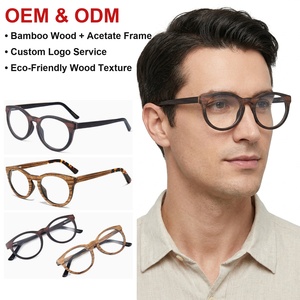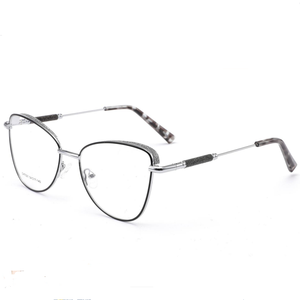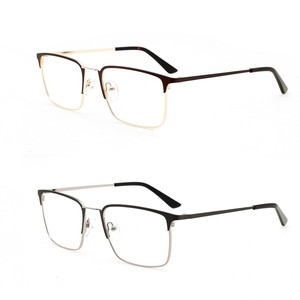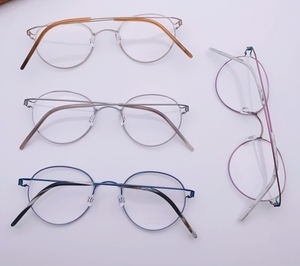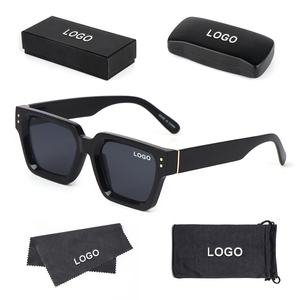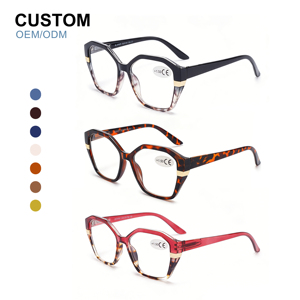
Engineered to strict CE MDR (EU) 2017/745 Class I medical device regulations and EN ISO 12870 standards. Explore our high-demand round silhouettes, vintage pantos, and complementary luxury geometries.
Why the round optical frame remains the definitive benchmark for ophthalmic lens alignment, vertex consistency, and pantoscopic precision.
The spherical and circular panto silhouette represents one of the most mechanically demanding geometries in precision eyewear manufacturing. Unlike rectangular or cat-eye architectures where lens retention grooves experience non-uniform perimeter tension, a circular chassis distributes radial stress evenly across 360 degrees. However, achieving CE-certified dimensional stability under EN ISO 12870:2018 specifications requires unprecedented tolerances in eyewire milling, bridge coining, and barrel hinge positioning.
For independent opticians and eyecare professionals (ECPs), dispensing round frames introduces specific optical advantages. The radial symmetry minimizes effective diameter (ED), directly reducing edge thickness in high-minus prescriptions (-4.00D to -10.00D) and minimizing center thickness bulges in plus prescriptions. When manufactured with Japanese beta-titanium or high-density cellulose acetate (Mazzucchelli-grade polymers), our round frames achieve zero optical aberration induction, allowing computerized freeform progressive lenses to maintain uninterrupted corridors of clear vision.
Beyond traditional acetate slab cutting, our facility leverages multi-axis micro-CNC routers to sculpt 3D anatomical nose pads and saddle bridges. This addresses the historic challenge of round frames resting too closely on the supraorbital ridge or sliding down Asian or low-bridge facial profiles. By integrating custom-engineered step bridges and titanium pad arms with surgical-grade silicone or pure titanium pads, we deliver universally fitting frames that prevent skin irritation and eliminate localized pressure necrosis during prolonged wear.
Rooted in an artisan lineage dating back to 1879, our export operation combines multi-generational optical craftsmanship with high-throughput medical-device manufacturing.
Guided by generational optical stewardship since 1879, our understanding of dispensing ergonomics, bridge resting angles, and facial morphology is unmatched. Every prototype is vetted by licensed optical craftsmen before tooling approval.
Complete technical documentation files, Declarations of Conformity (DoC), and traceability matrices under EU Medical Device Regulation (MDR 2017/745). Verified zero-nickel elution protecting your brand from international customs delays.
From organically cured bio-acetates and laminated sustainable hardwoods to surgical stainless steel, Japanese beta-titanium wire, and screwless 3D-printed polyamide structures, our factory handles diverse material matrixes under one roof.
Complete turnkey manufacturing support: rapid SLA prototyping within 72 hours, private-label laser etching, custom pantograph colorways, and proprietary tooling creation with guaranteed territorial exclusivity for brand owners.
Multi-stage 72-hour organic beechwood barrel tumbling, followed by precision manual wheel buffing and vacuum ion plating (IP). Delivers optical frames with deep lustrous sheen, scratch-proof coating, and long-term sweat resistance.
Empowering optical boutiques and wholesale distributors with ready-to-display branded sample cases, point-of-sale acrylic counter units, trunk show curation services, and on-demand replenishment with zero backorder lag.
Strategic intelligence for wholesale eyewear buyers, supply chain executives, and retail category managers navigating technological transitions.
Global retailers are phasing out petrochemical plasticizers. Procurement demands now mandate ISO 14855 certified biodegradable cellulose acetate made from wood pulp and cotton lint, utilizing bio-based diethyl phthalate replacements to comply with upcoming EU Green Claims directives.
Micro-screw loosening accounts for over 42% of optical return-to-vendor (RTV) claims. Advanced round collections are pivoting toward screwless interlock barrel hinges and friction-based cylindrical pivots, drastically reducing warranty claims and simplifying in-practice glazing.
Additively manufactured round rims using medical-grade Polyamide-12 (PA12) enable complex organic lattice structures weighing under 8 grams. Powder-bed fusion allows zero-waste on-demand small-batch production, shortening procurement cycles from 90 days to 14 days.
Traditional wet chemical electroplating is being replaced by environmentally closed-loop PVD titanium carbide coatings. This process yields ultra-dense 0.8μm - 1.2μm wear-resistant layers that prevent galvanic corrosion, tarnish, and sweat-induced oxidation in extreme humid climates.
Direct, transparent answers regarding manufacturing standards, quality testing thresholds, MOQ agreements, and global shipping operations.
Our entire optical production is registered as Class I Medical Devices under the European Medical Device Regulation (EU MDR 2017/745). We certify complete conformity with EN ISO 12870:2018 (Ophthalmic optics – Spectacle frames), including mechanical strength, dimensional stability at elevated temperatures (60°C), resistance to perspiration, and biocompatibility in according with EN 16128 for non-nickel release. Full technical dossiers and Declarations of Conformity accompany every export container.
For our catalog ready-to-ship models, we offer ultra-flexible low MOQ thresholds starting at 50 to 100 units per colorway, making it ideal for independent boutique optical retailers. For completely custom OEM/ODM tooling with proprietary front-shape molds, pantographed wire cores, and bespoke acetate sheets, our production MOQ is typically 300 pieces per model (divided into 3 colors).
Circular round frames can suffer from lens rotation if eyewire perimeter tolerances drift. We machine our metal and acetate eyewire grooves using diamond CNC milling cutters calibrated to ±0.02mm tolerances. Furthermore, we calibrate the eyewire inner bevel cross-section to an exact 120-degree optical groove profile with precise screw closure detents, ensuring high-index 1.67 and 1.74 progressive or astigmatism lenses lock rigidly without axial rotation during daily wipe down.
Yes. Our engineering department designs temple end-pieces with an engineered 8-degree to 10-degree pantoscopic angle and a 5-degree frame wrap (face-form angle). This matches modern computerized digital lens resurfacing formulas, ensuring wide reading corridors and minimal unwanted peripheral astigmatic blur for progressive addition lens (PAL) wearers.
Every production run passes an exhaustive 4-stage AQL 1.0 inspection: 1) Raw material ultrasonic flaw detection and spectrographic alloy analysis; 2) In-line 500-cycle bridge deformation testing and 20,000-cycle temple hinge fatigue cycling; 3) 48-hour artificial sweat immersion testing; and 4) 100% individual optical bench alignment where temple parity, closure gap, and demo lens tension are hand-checked by senior opticians.
In-stock wholesale frames ship within 48 to 72 hours from our central logistics hub via DHL Express, FedEx, or air freight. For customized OEM production runs involving custom acetate extrusion and tooling, lead times average 45 to 60 days from golden sample sign-off. We maintain dedicated rolling stock of core components to accelerate repeat reorders.