Smart Optical
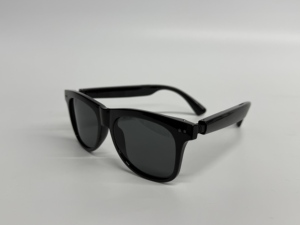
Smart Glasses OEM ODM Polarized Eyewear
Bluetooth Audio
UV400 Polarized
IPX4 Water-Resist

Explore our rigorously calibrated optical line-up. Every silhouette is engineered from high-purity cellulose acetate, surgical stainless steel, or aerospace-grade beta-titanium to ensure effortless lens mounting, anatomical temple adjustment, and enduring mechanical integrity.
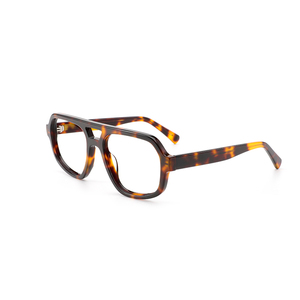

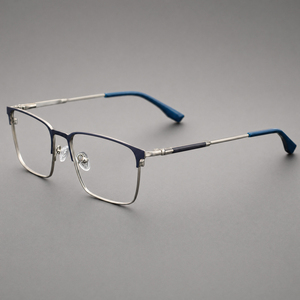
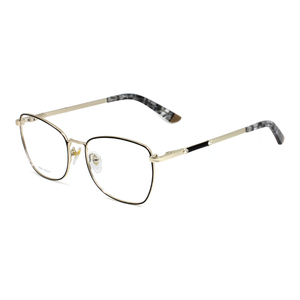
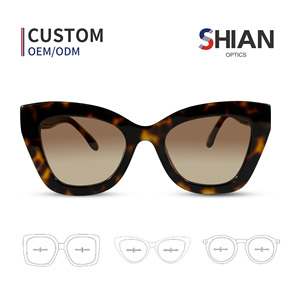

Precision geometric frames demand advanced mechanical balancing to overcome the optical aberration challenges, temple lever tension, and temporal displacement endemic to angular spectacle shapes.
In modern ophthalmic dispensing, square optical frames represent both an aesthetic standard and an engineering challenge. The angular perimeter alters the conventional mechanical force vectors seen in round or oval silhouettes. When prescription lenses—particularly high-minus or astigmatic toroidal lenses—are edged into a square eyewire, the unequal radial distribution of clamping forces can result in rim splay, lens twisting, or localized chromatic aberrations. As a premier CE certified square optical frames factory and international exporter, our manufacturing plants resolve these issues at the microscopic tooling stage through high-frequency CNC profiling, calibrated eye-wire grooves, and specialized material tempering.
To ensure optimal visual acuity, square frames must maintain an exact pantoscopic tilt of 8° to 12° and a vertex distance consistently centered at 12mm to 14mm. Our technical department integrates dual-plane five-barrel hinges and cold-bend temple cores that allow dispensing opticians to adjust temple rake and retro-pantoscopic orientation without inducing work-hardening stress fractures in the acetate or alloy matrix. By anchoring the geometric center precisely in line with the average monocular pupillary distance (PD) of global demographic cohorts, our frames prevent peripheral lens distortion while providing a commanding aesthetic silhouette.
The manufacturing integrity of certified optical spectacles relies intrinsically on raw chemical feedstock stability. Our square acetate chassis are carved exclusively from cured, low-plasticizer cellulose acetate slabs aged for a minimum of 90 days to release internal tensile stresses. This thermal curing eliminates frame shrinkage, warpage, and post-assembly bridge sagging when exposed to regional humidity and temperature fluctuations.
Conversely, for ultra-thin metallic square designs, our production uses Japanese Grade 1 pure titanium for front eyewires and aerospace beta-titanium (β-Ti alloy: Ti-15V-3Cr-3Sn-3Al) for temples. Beta-titanium delivers exceptional super-elasticity with an elastic modulus of approximately 82 GPa, enabling ultra-fine wire contours down to 1.2mm thickness that effortlessly withstand repeated flexural fatigue without permanent plastic deformation.
Every production batch undergoes strict laboratory verification: bridge deformation resistance, 500-cycle endurance flexing, perspiration resistance (pH 4.7 testing for 24 hours), and optical dimensional stability under thermal cycling (-10°C to +55°C).
Compliant with EU MDR 2017/745 Class I medical device governance. Complete batch traceability through permanent laser UDI (Unique Device Identification) markings, Technical Documentation files, and full Declaration of Conformity (DoC) readiness.
All metallic frame components, micro-screws, rim-locks, and decorative end-pieces conform to REACH Regulation (EC) No 1907/2006 Annex XVII. Direct and prolonged skin-contact surfaces yield nickel release rates below 0.5 μg/cm²/week under EN 16128 testing.
A definitive material science reference for optical procurement directors, product managers, and lab technicians selecting frame materials for private label manufacturing.
| Material Classification | Specific Density (g/cm³) | Tensile Yield (MPa) | Biocompatibility / Nickel Release | Optimal Rx Strength Window | B2B Manufacturing Lead-Time |
|---|---|---|---|---|---|
| Cured Eco-Acetate (Mazzucchelli Grade) | 1.28 – 1.32 | 85 – 110 | 100% Hypoallergenic (Phthalate-Free) | Sph: -10.00D to +6.00D (Hides thick lens bevels) | 45 – 60 Days (Custom Acetate Colors) |
| Surgical Stainless Steel (SUS 316L) | 7.90 – 8.00 | 290 – 340 | Passivated Anti-Nickel PVD Coating | Sph: -4.50D to +4.00D (Slim Profiles) | 35 – 45 Days (Tooling dependent) |
| Aerospace Beta-Titanium (β-Ti) | 4.50 – 4.60 | 880 – 950 | Zero Nickel; Inert Medical Grade | Sph: -6.00D to +5.00D (Rimless / Thin Wire) | 50 – 65 Days (Micro-Laser Cut) |
| Smart Hybrid (TR90 / Magnesium-Alloy) | 1.14 – 1.20 | 120 – 160 | Medical Class VI Polymers | Sph: -5.00D to +3.50D (Electronic Temple Core) | 60 – 75 Days (PCBA Overmolding) |
How international supply chain realignments, decarbonization mandates, and hybrid digital-wear lifestyles are redefining bulk optical ordering criteria over the next five years.
Retail buyers in Northern Europe and North America increasingly require verified circularity metrics. Our export facilities now offer ISCC-certified bio-based acetates utilizing non-wood cellulose and recycled plasticizers derived from recovered manufacturing swarf.
The convergence of classic square styles with hearables and vision-augmentation sensors is rapidly gaining market traction. Factories must now offer hollowed-core acetate extrusion channels and modular temple joints capable of housing directional audio transducers without bloating the silhouette.
High inflation and carrying costs are driving global buyers away from monolithic 5,000-unit runs toward modular batching. Leveraging our 5-axis robotic milling stations, we allow optical networks to commit to core front tooling while mixing colors and temple styles in agile batches of 300 units per colorway.
Bridging five generations of heritage optical design since 1879 with contemporary German-machined toolpaths, rigorous CE certification governance, and seamless OEM/ODM services.
Inheriting a craftsmanship history dating back to 1879, our executive optical directors understand what independent opticians and lab technicians face at the dispensing counter. Every bevel angle, hinge stop, and temple core is created to prevent glazing slippage and ensure lifetime wearer satisfaction.
We don’t outsource our mold construction. Operating a clean-room EDM (Electrical Discharge Machining) and ultra-precision toolmaking division, we compress prototype turnaround from the industry standard 45 days down to just 12 business days, drastically lowering market-entry lead time for new geometric collections.
Every frame undergoes a 28-point dimensional inspection before leaving the plant. Using digital profile projectors and robotic hinge-cycle analyzers, we verify screw retention torque (0.25–0.35 N·m), plating adhesion (cross-hatch testing), and lens-groove symmetry on every single production lot.
Clear technical answers covering regulatory documentation, production minimums, custom logo engraving, and private label optical frame deployment.
Connect directly with our engineering and procurement desk. Request physical master samples, CAD design reviews, or complete container-level wholesale pricing tailored for independent optical networks and distributor chains.