
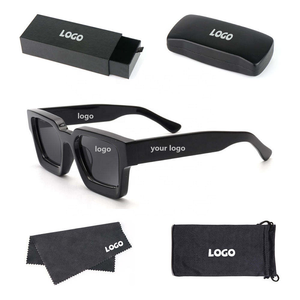
Production Line Architecture
Precision Optical Showcase & Multi-Material Solutions
Engineered for international wholesale distributors, optometrists, and boutique brands demanding superior finish, ergonomic fit, and strict regulatory compliance.
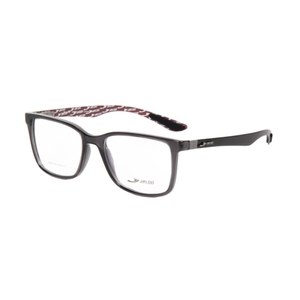
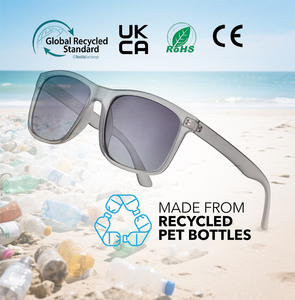
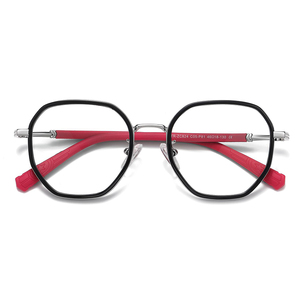
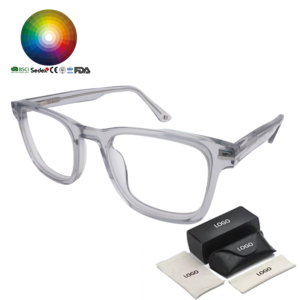

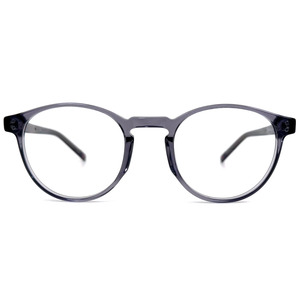
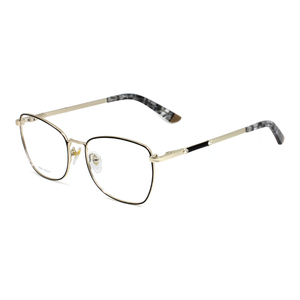
Bio Acetate vs Standard Cellulose: The Polymer Engineering Revolution
Decarbonizing eyewear without sacrificing dimensional stability, tensile rigidity, or mirror-grade hand tumbling luster.
| Physical & Ecological Metric | Traditional Cellulose Acetate | Industrial Bio Acetate (Our Factory) | RPET / Recycled Polymer Hybrid |
|---|---|---|---|
| Raw Plasticizer Origin | Petrochemical DEP (Diethyl Phthalate) | 100% Bio-derived Citric/Vegetable Plasticizers | Post-Consumer PET Pellets / Flakes |
| Renewable Carbon Ratio (C14) | 40% – 48% (Wood Pulp based) | 68% – 74% Certified Bio-Based Content | 0% Bio (100% Post-consumer Recycled) |
| Industrial Biodegradation Rate | Non-biodegradable (> decades) | > 90% decomposed in 115 days (ISO 14855) | Recyclable in closed loop, slow degradation |
| Cold-Bending & Temple Adjustment | Excellent heat memory & elasticity | Identical thermal memory, zero brittleness | Requires careful temperature control |
| Tumbling Polishing Finish | Ultra-gloss finish achievable | Deep, tactile mirror gloss (72h walnut shell) | Satin to semi-gloss, texturized |
| Chemical Resistance & Skin Safety | Standard ISO skin biocompatibility | Hypoallergenic, ISO 10993 skin irritation free | Inert, food-grade contact rating |
Forward Sourcing Intelligence
Global Eyewear Procurement Forecast: 2025 to 2030
How stringent ESG frameworks, the European Union Green Claims Directive, and evolving consumer psychology are rewriting OEM/ODM purchasing protocols.
1. Mandatory Digital Product Passports (DPP)
By 2026, European and North American customs authorities will accelerate transparency regulations requiring traceability from cotton linters and wood pulp mills (FSC-certified) down to final frame surface finishing. Procurement directors are systematically shifting RFQs toward verified manufacturers with documented supply chains.
2. Transition to Bio-Plasticizer Chemistry
The traditional use of diethyl phthalate (DEP) faces severe restriction under chemical safety acts. The upcoming manufacturing benchmark demands non-toxic, plant-based citric and sebacic ester plasticizers that eliminate off-gassing while preserving frame flexibility during optical prescription glazing.
3. Hybrid Structural Monolithic Fusion
Next-generation eyewear combines ultra-thin Bio Acetate front rims with medical-grade Beta-Titanium and aerospace Carbon Fiber temples. Sourcing teams prioritize factories with internal multi-axis tooling capabilities capable of joining distinct sustainable composites without chemical solvent glues.
Factory Competency & Heritage
Five Generations of Craftsmanship: Why Tier-1 Brands Entrust Us
Combining the deep optical design heritage of Studio Optyx (Est. 1879) with high-efficiency smart manufacturing in China.
145-Year Optical Architecture
With an optical pedigree tracing back through five generations, our manufacturing processes respect the anatomy of face contours, bridge weight distribution, and temple tension. Frames are engineered to prevent dispensing table fatigue and maintain adjustability across temperature shifts.
Proprietary Multi-Material Ecosystem
Beyond Bio Acetate, our manufacturing lines integrate high-precision Japanese Beta-Titanium, Swedish 3D-printed selective laser sintering (SLS) polymers, ultra-light carbon composites, and medical memory TR90 for both boutique fashion and active performance collections.
Tolerances Measured in Microns
Our computer-numerically-controlled (CNC) milling centers hold groove tolerances within ±0.05mm, eliminating lens pop-outs and cold bevel misalignment. Every production batch undergoes 72 hours of multi-stage organic tumbling followed by artisanal hand-buffing inspection.
Procurement Directives
Frequently Asked Procurement Questions (B2B FAQ)
Clear, direct answers for supply chain directors, brand founders, and optical retail procurement executives.
What certifications validate your Bio Acetate credentials?
Our raw Bio Acetate material conforms strictly to ISO 14855 standards for aerobic biodegradation in municipal compost environments. It holds certification via ASTM D6866 radiocarbon analysis confirming >68% bio-based organic carbon content, completely free from toxic phthalate plasticizers.
What is the minimum order quantity (MOQ) for custom private label orders?
Standard custom private-label acetate models require an MOQ of 300 pairs per style, divided into 2 to 3 custom color variants (100 pairs per color). For customized off-the-shelf inventory with laser logo branding, MOQs start from 50 to 100 units per collection.
Can Bio Acetate withstand standard optical heated frame warmers?
Yes. Our bio-engineered acetate maintains the exact thermal glass-transition properties (Tg: 65°C – 75°C) as conventional luxury acetate. Dispensing opticians can warm, bevel-mount prescription lenses, adjust pantoscopic tilts, and shape temple tips without delamination, clouding, or shrinking.
What are standard prototyping and mass-production lead times?
High-precision 3D CAD blueprints and CNC physical acetate prototypes are dispatched within 12 to 15 business days. Mass manufacturing takes 45 to 65 days depending on tooling complexity, custom hinge co-molding, and barrel tumbler polishing schedules.