

A comprehensive procurement whitepaper for independent opticians, optical retail groups, and international eyewear brands navigating production resilience, material science, and supply chain scalability.
The international eyewear landscape has shifted rapidly from basic component procurement to high-precision, vertically integrated design and supply networks. Independent eye care professionals (ECPs), multi-door optical chains, and boutique design houses require manufacturing partners that deliver not merely bulk output, but verifiable metallurgical integrity, biocompatible cellulose acetate curation, and sub-millimeter CNC tolerances. As a leading China eyewear wholesale factory and global distribution partner, we combine five generations of heritage optical craftsmanship with advanced automated finishing, providing procurement officers with unprecedented agility, lower unit costs, and strict compliance with ANSI Z80.5, ISO 12870, and CE/FDA medical device classifications.
Selecting an optical supplier demands comprehensive audits beyond superficial catalog styling. High-performance optical dispensaries require frames that endure rigorous lens edging, stress-free bevel insertions, and long-term ergonomic stability across varied facial anatomies. Below, our engineering team has curated our core product releases currently serving leading distributors worldwide, followed by a critical assessment of upcoming materials, manufacturing shifts, and vendor risk-mitigation strategies.
Engineered for high-volume prescription dispensing, luxury ergonomics, and rapid private label turnkey branding.
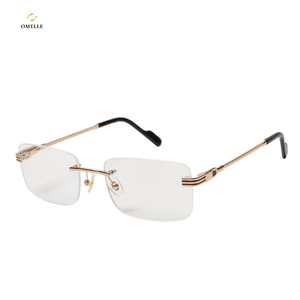
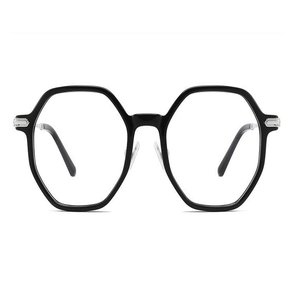
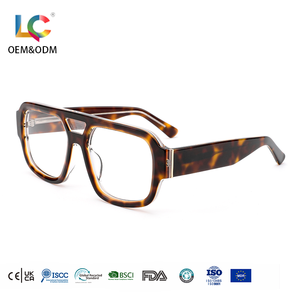
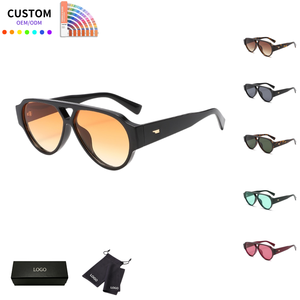

Years Heritage Experience
Global Retail Accounts
Dispensing QC Pass Rate
Rapid Sample Dispatch
Combining legacy design heritage with Chinese industrial manufacturing scalability and international quality control standards.
Rooted in five generations of refined optical knowledge since 1879. We design with an intimate understanding of bridge pantoscopic tilt, temple tension, and ergonomic daily comfort.
Seamless execution in premium cured Italian/Japanese Mazzucchelli-grade acetate, aerospace-grade Beta Titanium, memory TR90, injection-molded PC, and eco-friendly bioplastics.
Frames feature balanced grooving depth, standardized base curves (4C-6C), and robust cold-insertable eyewires to prevent lens stress fractures during in-clinic glazing.
From flexible, low-MOQ test batches for emerging capsule lines to high-throughput container loads with automated pad printing, laser engraving, and custom case fulfillment.
Key strategic indicators every optical supply chain director, brand founder, and distributor must monitor to safeguard margins.
Wholesale eyewear procurement is undergoing structural changes influenced by shifts in international logistics, regulatory compliance, and rapid consumer lifestyle evolution. As healthcare integration merges with consumer fashion, eyewear sourcing teams can no longer view frames as static inventory. Successful buyers are optimizing their supplier matrix based on several emerging procurement vectors:
Global regulatory pressure (including EU microplastic and packaging directives) is driving rapid adoption of bio-acetate (cellulose derived from sustainably managed wood pulp, free of diethyl phthalate plasticizers) and chemically recycled ocean polymers. Enterprise buyers are requiring documented supply chain traceability down to resin origins.
With smart audio, directional acoustic speakers, and heads-up AR displays moving into consumer optics, factories are adapting tooling to house ultra-compact PCBs, micro-batteries, and inductive charging pins inside reinforced acetate temples without sacrificing cosmetic appeal.
Digital trunk show software and rapid localized distribution hubs allow retail chains to test specialized collections without holding heavy inventory. Sourcing contracts are transitioning to hybrid models: predictable baseline MOQ production combined with on-demand CNC engraving and surface finishing.
| Material Category | Tensile / Flex Modulus | Thermal Stability (Glazing) | Optimal Retail Target | Manufacturing Lead Time |
|---|---|---|---|---|
| High-Density Cellulose Acetate | High flex elasticity; hand-moldable at 65°C | Exceptional; ideal for high-index Rx lenses | Heritage, luxury independent opticians | 35 - 50 Days (Aging dependent) |
| Swiss EMS Grilamid TR90 | Ultra-lightweight, high memory retention | Cold-glaze recommended; avoid open heat | Athletic, activewear, blue-light digital specs | 20 - 30 Days |
| Aerospace Beta Titanium | Superior tensile strength; zero skin irritation | Extremely stable; zero warping over time | Minimalist, executive, lightweight luxury | 45 - 60 Days |
| Polycarbonate (PC) Composite | High impact resistance; rigid structure | Standard; designed for snap-in optics | Fast-fashion sunglasses, promotional, high-volume retail | 15 - 25 Days |
How state-of-the-art Chinese optical factories are eliminating traditional structural weak points.
Traditional eyewear manufacturing relied heavily on intensive manual labor, which introduced dimensional inconsistencies between production runs. Today's competitive wholesale landscape is shaped by 5-axis CNC machining, ultrasonic hinge wire fusion, and additive powder-bed 3D printing. These advancements reduce lead times, minimize material waste, and guarantee that a frame produced in Month 12 matches the bridge calibration and temple hinge resistance of Month 1.
Screw loss remains a primary post-sale consumer complaint. Modern engineering leverages interlocking surgical metal barrel designs and tension-folded titanium mechanisms that do not back out under repetitive rotational cycles.
Physical Vapor Deposition (PVD) has replaced wet electroplating for metal frames, providing corrosion protection against sweat, cosmetics, and coastal humidity, while delivering deep IP rose gold, matte graphite, and gunmetal finishes.
Applying comprehensive anthropometric databases to temple flare, pantoscopic tilt angle (8°-12°), and adjustable splay nose-pad design allows brands to deploy unisex collections that fit comfortably across global demographics.
Direct technical answers addressing production parameters, compliance certifications, tooling investments, and distribution terms.
For factory-direct ready-to-ship catalog frames (such as our core TR90, PC, and baseline acetate collections), MOQs start as low as 10 to 50 pieces per style with available stock, allowing opticians and small retailers to test sell-through. For full OEM/ODM bespoke production—involving custom acetate colors, proprietary hinge molds, or bespoke metal tooling—standard production runs require 300 to 500 pieces per model (often split across 2 to 3 color variations). We also offer rapid prototype runs via 5-axis CNC and high-resolution 3D printing prior to steel tooling sign-off.
Frames destined for prescription lenses undergo rigorous lab-bench QA verification before leaving our facility. We test eyewear frame groove angle tolerance (standard 110° bevel channel), lens retention friction, and thermal ductility. Acetate stock is naturally cured and aged up to 90 days to prevent post-glazing shrinkage that causes popped lenses. Every frame batch is inspected with optical go/no-go ring gauges to ensure true base curvature alignment (4.5C to 6.0C).
Our production facilities maintain complete compliance portfolios for major international trade zones. We certify according to CE Medical Device Regulation (EU) 2017/745 for Class I ophthalmic optics, ISO 12870 for ophthalmic optics and spectacles, ANSI Z80.5 for non-prescription and prescription eyewear, and FDA registration for US customs import clearance. UV400 sunglass lenses are tested to ISO 12312-1 and AS/NZS 1067. We can also provide REACH nickel-release testing and RoHS material certification upon request.
Yes. Our in-house branding capabilities include high-precision laser engraving on metal wirecores, inner-temple hot foil stamping, custom temple tips with inlaid metal logos, and high-resolution pad printing on demo lenses. Additionally, we provide complete, integrated packaging solutions—including branded clamshell cases, microfiber cloths, embossed presentation boxes, barcoded master polybags, and retail counter display systems.
For stock wholesale models requiring localized custom laser branding, turnaround times are typically 7 to 14 business days. For full custom manufacturing: 2D technical drawings and 3D CAD models are finalized within 3 to 5 days; functional prototype samples require 10 to 15 days; mass production runs standardly require 35 to 45 days for TR90 and injection metals, and 50 to 60 days for multi-stage barrel-tumbled handcrafted cellulose acetate. Air express courier and consolidated sea freight shipping options are managed directly by our logistics team.
Whether you require rapid delivery of our current product collections, specialized OEM CAD development, or private label branding, our optical engineering team is available to assist.