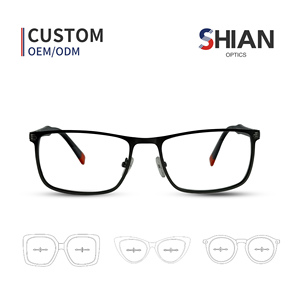

Curated frames delivering institutional durability, certified tolerances, and commercial versatility for international optometry groups and independent optical chains.

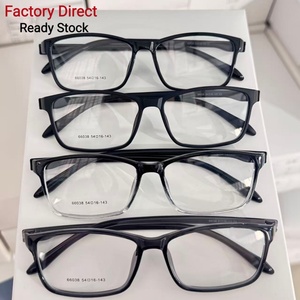

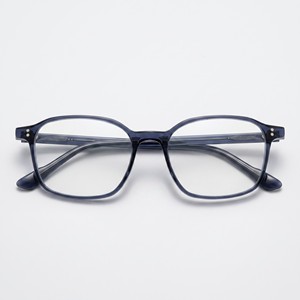

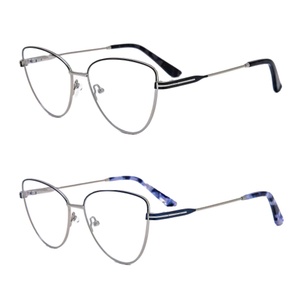
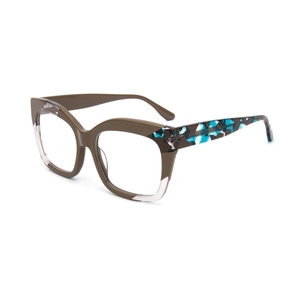
Anchoring institutional distribution with rigorous metrology, traceable raw materials, and documented quality-assurance protocols across every production batch.
Frames undergo mechanical fatigue testing exceeding 20,000 hinge opening-closing cycles and continuous 72-hour sweat exposure protocols to guarantee uncompromised performance under extreme conditions.
Strict utilization of medical-grade Swiss EMS TR90, high-purity aerospace titanium wire, and cured bio-based cellulose acetate preserves skin safety without plasticizer vaporization or skin allergy risks.
Full CE self-declaration dossiers under EU MDR 2017/745 (Class I medical devices), FDA Device Establishment Registration, and UKCA conformity certification ensuring friction-free global customs clearance.
Technical evaluation parameters designed for optical procurement directors, product managers, and lab dispensaries balancing acoustic profile, flexural modulus, and groove tensile retainment.
| Material Classification | Specific Gravity (g/cm³) | Tensile Modulus (MPa) | Hypoallergenic Profile | Cold Glazing Suitability | Primary Target Segment |
|---|---|---|---|---|---|
| Cured Cellulose Acetate | 1.28 – 1.32 | 2,100 – 2,700 | Excellent (Phthalate-Free) | Requires Gentle Heat (45-55°C) | Boutique Retail, Heritage Designers |
| Swiss Grilamid TR90 | 1.01 – 1.04 | 1,500 – 1,700 | Medical Standard (ISO 10993) | High Flex Cold Insertion | Athletic Optical, Pediatric Frames |
| Pure Titanium (Grade 2) | 4.51 | 105,000 | Superior (Inert) | Requires Rigid Screwed Rimwire | Executive Minimalist, Lightweight Luxury |
| Recycled Ocean Polymers | 1.15 – 1.22 | 1,800 – 2,200 | Certified GRS Compliant | Controlled Thermal Glazing | Gen-Z Optical Chains, Sustainable Brands |
| Additive SLS Polyamide 12 | 0.98 – 1.02 | 1,400 – 1,600 | Biocompatible | Snap-in Groove Architecture | Technical Screwless Minimalist |
A technical forecast outlining emerging industrial dynamics, regulatory constraints, and advanced manufacturing technologies shaping optical frame procurement globally.
Micro-mechanically interlocked, screwless barrel architectures reduce store-level return rates by 82% caused by hinge back-out. Sourcing strategies focus on precision PVD-coated stainless springs and tension-fit cylinder blocks that eliminate screw maintenance for optometrists.
Procurement mandates across North America and Europe demand verified recycled or bio-circular acetates. Traditional petroleum-based diethyl phthalates (DEP) are systematically phased out in favor of citric-based plasticizers derived from sustainable forest biomass.
Additive manufacturing using Polyamide-11 and 12 enables zero-inventory prototype testing. Major optical suppliers use SLS tech to release micro-runs, allowing optical brands to validate niche fashion geometries prior to opening multimillion-dollar injection mold tooling.
Combining the heritage precision of multigenerational optical master-craftsmen with China's most sophisticated supply-chain efficiency and technical manufacturing nodes.
Over a century of combined optical frame development informs every bridge curvature, temple rake angle, and pantoscopic tilt parameter, translating artisan touch into scalable industrial execution.
From custom acetate color laminations to computerized 5-axis temple carving and micro-stamping, we transform concept sketches into optical dispersion test samples in less than 21 business days.
Flexible manufacturing workflows support emerging designer labels with low minimum order quantities (MOQ), while maintaining scalable capacity for high-volume nationwide optical chains.
Direct communication with certified optical engineers who understand base curves, temple wire cores, groove dimensions, and dispensing table realities, ensuring total accountability from prototype to shelf.
Essential answers regarding production parameters, laboratory testing criteria, and customs handling for optical frame buyers.
For custom acetate eyewear, tooling and initial sample prototyping generally require 20 to 25 days. Once prototypes pass optical dispersion and mechanical flexure approval, full bulk manufacturing takes 45 to 60 days. This includes curing time for acetate plates to prevent frame warping during shipping and lens fitting.
All acetate materials undergo a secondary ultrasonic seasoning and drying cycle within temperature-controlled vaults to release internal polymer stress. Our metal frames feature corrosion-resistant double PVD plating tested under 72-hour salt spray chambers, preventing oxidization, temple discoloration, or galvanic breakdown under humid conditions.
Every commercial optical export is accompanied by a Certificate of Conformity confirming alignment with ISO 12870:2016 (Ophthalmic Optics - Spectacle Frames). In Europe, full technical dossiers comply with EU Medical Device Regulation (MDR 2017/745 Class I). For USA-bound cargo, devices carry verified FDA establishment registrations and drop-ball impact compliance certification for demo lenses.
Yes. We support agile inventory programs allowing optometry clinics and boutique optical stores to order ready-to-ship catalog frames with low MOQs (as low as 50 to 100 units per model). Inner temple hot-stamping, laser temple tips, demo lens ink, and bespoke clam-shell case packaging can be completely customized.
We incorporate high-grade German OBE and Italian Visottica-Comotec hinge components, alongside in-house proprietary screwless hinge mechanisms. Screws are treated with specialized thread-locking nylon coatings to maintain smooth opening resistance throughout the frame's operational lifecycle.
Consult with our dedicated optical manufacturing specialists to discuss custom CAD drawings, material sample books, pricing tiers, and private-label production timelines.
Contact Us