

Direct from modern cleanroom assembly lines and CNC acetate milling facilities. Every frame complies with ISO 12870, CE marking, and ANSI Z80.3 optical standards.
Navigating precision dimensional tolerances, micro-screwless hinges, and sustainable material compliance in high-volume export operations.
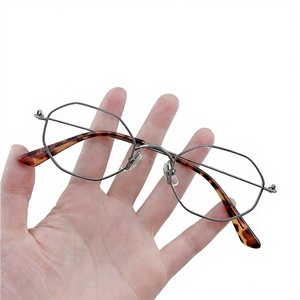
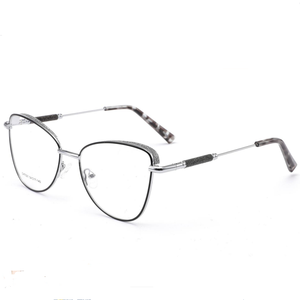
In competitive B2B eyewear supply chains, success is measured in sub-millimeter tolerances. High-performance optical frames cannot rely solely on off-the-shelf components. The convergence of surgical-grade stainless steel (SUS304/SUS316L), Japanese and German beta-titanium wire, and premium cellulose acetate derived from cotton linters has redefined benchmark durability. When manufacturing rimless or semi-rimless frames, such as our round optical metal line, tension distribution along the temple bar and end-piece must be calculated precisely to eliminate lens torque during cold-glazing prescriptions.
Furthermore, the dispensing table experience remains the decisive hurdle for independent optometrists and boutique practices. If a frame slips, creates mastoid pressure, or suffers structural fatigue after thirty days of real-world use, brand equity evaporates. Modern original equipment manufacturers in China now deploy 5-axis CNC router profiles, automated vacuum ion-plating (IP) with multi-layer galvanic coatings, and micro-welding techniques that preserve structural temper while guaranteeing nickel-free contact surfaces for sensitive wearers.
The materials portfolio of top-tier Chinese export manufacturers now rivals and frequently collaborates with storied European ateliers. Cellulose acetate sourced from renowned houses like Mazzucchelli 1849 delivers deep color depth, organic tactile warmth, and hypoallergenic qualities essential for luxury eyewear lines. Each sheet requires multi-stage thermal curing to remove residual solvents, preventing post-fabrication warping when prescription lenses are mounted under elevated ambient temperatures.
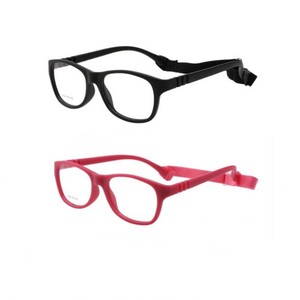
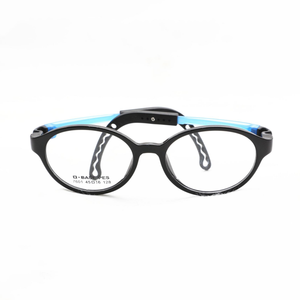
Conversely, pediatric and sports optical segments demand specialized polymers. Swiss EMS Grilamid TR90 delivers remarkable memory retention, low density (1.14 g/cm³), and extreme thermal resilience. Our flexible children's optical frames incorporate food-contact grade, BPA-free formulations that resist aggressive impacts, torsional twisting, and saliva exposure without structural degradation or pigment fading. By mastering co-injection molding and dual-color extrusion, we provide distributors with certified child-safe frames that satisfy FDA 21 CFR 801.410 drop-ball tests alongside EU REACH guidelines.
Procuring wholesale eyewear across international borders requires stringent regulatory compliance. A reliable OEM/ODM factory must maintain verifiable traceability back to raw billet suppliers. Every export consignment destined for the European Union, the United States, Japan, or Australasia undergoes rigorous testing protocols:
A. Sweat and Corrosion Resistance: Artificial perspiration chamber exposure (EN ISO 12870:2018) for 24 to 48 hours to confirm zero surface pitting, blistering, or delamination on electroplated and lacquered metal parts.
B. Mechanical Hinge Endurance: Automated cycle testing simulating 20,000 to 50,000 open-close operations at calibrated angles to ensure hinge friction screws retain pre-set resistance without loosening.
C. Optical Clarity and UV Transmission: Spectrophotometer verification guaranteeing UV400 filters block 99.9% of harmful ultraviolet radiation between 280nm and 400nm, eliminating chromatic aberration and prism imbalance.
Strategic analysis for brand directors, commercial buyers, and supply chain executives positioning their inventory for next-generation retail demands.
The global push toward decarbonization is transforming optical materials. Traditional diethyl phthalate plasticizers are being replaced by renewable bio-based plasticizers derived from corn starch and sustainable forestry. Global wholesale buyers are securing inventory crafted from ISCC-certified bio-acetate and recycled ocean plastics to satisfy corporate sustainability audits and consumer eco-mandates.
Selective Laser Sintering (SLS) of fine polyamide powders allows rapid iterations of complex, organic geometries impossible through conventional subtractive tooling. Paired with minimalist screwless hinge systems, this approach reduces frame weight down to 8–12 grams while completely eliminating dropped-screw warranty claims, dramatically increasing dispenser margins.
The boundary between traditional ophthalmic frames and smart consumer hardware is dissolving. Leading Chinese manufacturers are developing hybrid chassis capable of accommodating bone-conduction transducers, capacitive touch temples, and micro-battery cavities without distorting classic pantoscopic tilt or temple curvature.
Every optical frame is ultrasonically cleaned, deburred, and assembled under controlled humidity and particulate filtration environments to prevent dust contamination beneath protective clear coatings.
We maintain access to vast inventories of classic havana, horn, crystal clear, and multi-laminate acetate blocks, ensuring prompt replenishment times and shade consistency across production batches.
Experienced export document processing covering FDA device registration, Medical Device Regulation (MDR) declarations, certificate of origin paperwork, and door-to-door air or ocean logistics.
Essential answers regarding MOQs, tooling costs, lead times, quality audits, and custom branding services.
For ready-to-ship catalog frames in our standard stock colors, MOQs start as low as 12 to 50 pieces per model. For bespoke custom OEM/ODM production involving custom tooling, custom acetate laminations, or personalized core wire engravings, the standard MOQ typically ranges from 300 to 1,200 pieces per model, distributed across 3 to 4 distinct colorways to support seasonal variety.
We provide full private label customization, including pad printing, high-precision laser etching on the inner temple bar, metallic logo inlay on acetate tips, and custom branded demo lenses. Furthermore, we develop matched packaging ensembles including rigid folding cases, microfiber cloths, warranty cards, and retail display trays built to your brand guidelines.
CAD rendering and 3D resin prototypes are normally completed within 3 to 5 business days. Functional physical samples with custom hand-polished acetate or wire-form metal take approximately 20 to 30 days. Full-scale bulk production typically ranges from 45 to 65 days, depending on plating complexity, material procurement lead times, and required third-party lab certifications.
Yes. All exported optical frames and sunglasses comply with EU Regulation 2017/745 (MDR) Class I, ISO 12870 for ophthalmic frames, CE standards, and US FDA requirements under 21 CFR 801.410 (impact resistance drop-ball test). We routinely cooperate with internationally accredited testing laboratories such as Intertek, SGS, and TÜV Rheinland for batch verification.
Connect with our technical engineering and international export team today. Receive tailored sample collections, detailed volume pricing matrices, and direct manufacturing consultations.
Send an Inquiry