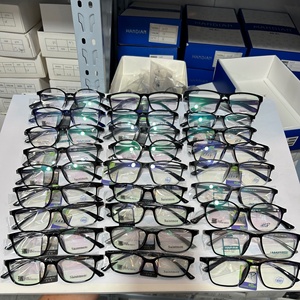

Precision Engineering, Additive Manufacturing & Global OEM/ODM Turnkey Supply Chains for Premium Independent Eyewear Brands
Explore our industrial-grade optical silhouettes. Every frame model represents a calibrated baseline ready for rapid white-label deployment, CNC custom engraving, or complete material reconfiguration.
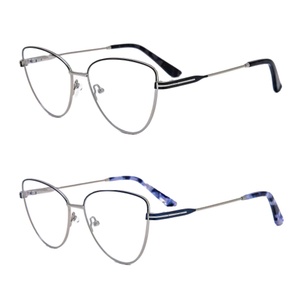
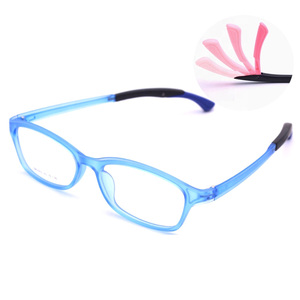
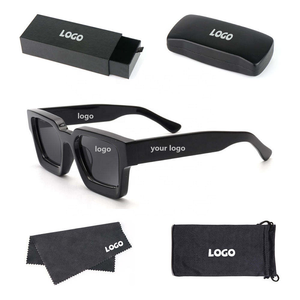
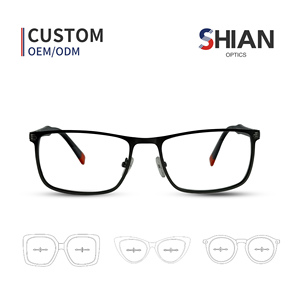
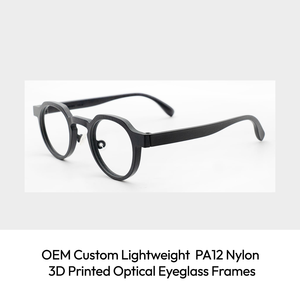
By synthesizing time-honored artisanal finishing with computerized high-yield CNC machining and ISO-accredited cleanrooms, we give optical distributors, optometrists, and designer labels a distinct competitive margin.
We oversee entire development workflows internally. From early industrial sketches and ergonomic CAD mockups to high-precision steel tooling and custom acetate lamination, our clients avoid costly subcontracting markups.
Our manufacturing ecosystem fluently bridges biocompatible medical PA12 nylon additive manufacturing, Mazzucchelli-grade cellulose acetate tumbling, precision Swedish stainless steel, and aerospace-grade Japanese beta-titanium machining.
Every batch undergoes rigorous quality assurance protocols: multi-axis bridge stress deflection tests, barrel tumble plating tests, nickel-release safety audits (EN 16128), and thermal hinge fatigue cycles exceeding 25,000 movements.
Navigating global eyewear supply chains demands an analytical understanding of changing manufacturing economics, consumer facial ergonomics, and lean distribution models.
Traditional metal molds and steel dies incur initial capital expenditure overheads ranging from $3,000 to $8,000 per SKU, alongside an 8-week lead time. Global buyers are increasingly transitioning toward industrial Selective Laser Sintering (SLS) of polyamide powders (PA12). This enables zero-tooling prototype iteration, allowing optical practices to validate regional anthropometric fittings with market batches of just 50 units within 7 business days.
Regulatory landscapes across the European Union and North America (such as the EU Corporate Sustainability Due Diligence Directive) are forcing procurement shifts. Petroleum-derived diethyl phthalate plasticizers are being replaced with bio-based triethyl citrate plasticizers. Leading optical houses now insist on bio-acetate (cotton linters and wood pulp with over 68% renewable content) and chemically upcycled ocean polyamides.
To safeguard working capital, optical retail chains and boutique practices are eschewing unwieldy 1,200-piece container commitments. Instead, procurement strategies favor Chinese original equipment manufacturers capable of offering modular stock replenishment—combining core ready-stock chassis with bespoke surface laser branding and custom-dyed temples at low minimum order quantities (MOQs).
| Material Class | Specific Gravity | Flexural Elasticity | Primary Engineering Benefit | Recommended Brand Segment |
|---|---|---|---|---|
| Bio-Acetate (Mazzucchelli Grade) | 1.28 - 1.31 g/cm³ | Moderate (Thermosetting) | Deep organic color saturation, manual bevel polish, cold-snap core wire adjustability | Luxury Heritage, Boutiques, High-End Independent Opticians |
| Polyamide PA12 (Selective Laser Sintering) | 1.01 - 1.03 g/cm³ | High Flexibility | Screwless hinge integration, 35% lighter than acetate, complex organic lattice geometry | Avant-Garde Architectural Eyewear, Active Lifestyle, Technical Retail |
| Beta-Titanium (Ti-15V-3Cr-3Sn-3Al) | 4.51 g/cm³ | Superior Memory Return | Hypoallergenic, zero-corrosion resistance, featherweight rimless tension retention | Minimalist Executive Frames, Ultra-Light Prescription Optics |
| Swiss Grilamid TR90 | 1.14 g/cm³ | Extreme Elastic Recovery | High thermal threshold (-30°C to 80°C), shock resilience, cost-effective scale | Everyday Reading Frames, Ergonomic Children's Optics, High-Velocity Wholesale |
The optical industry is undergoing an unprecedented technological convergence where medical corrective optics, high-fashion industrial design, and smart micro-optics meet.
The boundary between traditional corrective frames and micro-electronics is dissolving. Next-generation bespoke frame factories are re-engineering standard cellulose acetate and titanium temples to accommodate hollowed micro-conduits for bone-conduction transducers, directional beam-forming microphones, and ultrathin wave-guide optometry prisms without bloating exterior temple thickness.
Hand-cutting acetate sheet blanks is giving way to high-precision 5-axis synchronous milling cutters operating under diamond liquid cooling. This technological leap allows factories to produce intricate dual-bevel geometric lens steps and interior weight-reduction milling pockets, yielding heavy visual silhouettes that are structurally balanced and lightweight.
Micro-hinge screw failures represent over 42% of post-sale optician servicing complaints. Modern industrial design has shifted toward screwless interlocking frictional hinges, friction-fit cylinder clasps, and shape-memory wire hinges. These mechanisms eliminate thread stripping, looseness over time, and regular screw-tightening adjustments.
Essential technical, financial, and logistical insights for sourcing bespoke frames directly from Chinese manufacturing facilities.