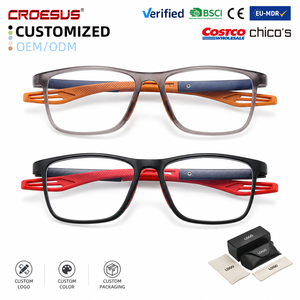

Explore high-yield prescription optical frames, advanced polarized lifestyle sunglasses, smart wearables, and precision automated metrology equipment crafted to international dispensing standards.

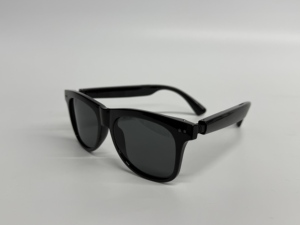
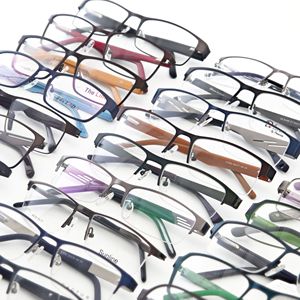
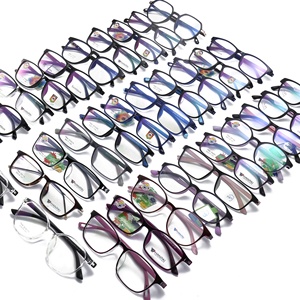
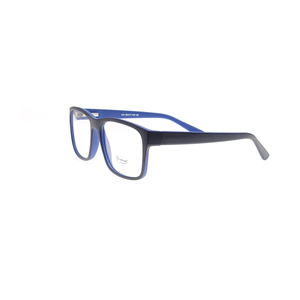
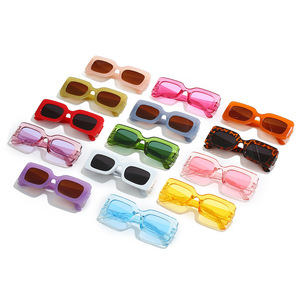
Combining the meticulous standards of a five-generation family design house dating back to 1879 with scalable precision optical production infrastructure in China.
Rooted in eyewear design since 1879, our lineage (featuring in-house icons like Erkers1879, NW77th, Tocco, and The Neighbors) guarantees that every frame balances ergonomic load distribution, structural integrity, and timeless luxury.
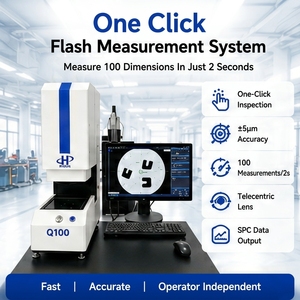
We deploy high-precision one-click optical measuring systems across the assembly floor, verifying pantoscopic tilt, bridge width, hinge deflection, and screw torque tolerances down to micrometer increments across all production runs.
In addition to bespoke OEM/ODM manufacturing, our portfolio integration includes distributed global benchmarks like Danish 3D-printed Monoqool and Parisian ba&sh Eyewear, providing boutique optical practices with true brand differentiation.
By eliminating multiple tiers of trading middlemen, our China-based high-throughput production lines grant global optical distributors, e-commerce brands, and optometry clinics factory-direct pricing with rapid iteration cycles.
Unlike conventional trading brokers, our manufacturing supply chain implements medical-grade optometric testing protocols adhering to ISO 12870:2016, ANSI Z80.3, and CE Directive 2017/745 for all wholesale eyewear exports.
| Component / Material | Material Specification | Testing Protocol | Compliance Standard |
|---|---|---|---|
| Cellulose Acetate Frames | High-density bio-based cotton linter polymer | 500-hour sweat/sebum immersion; dimensional stability at 60°C | ISO 12870, REACH Regulation (EC) No 1907/2006 |
| TR90 Memory Polymer | Swiss Grilamid TR90 homopolyamide | 20,000-cycle bridge flex test; extreme impact deflection (-30°C) | FDA 21 CFR 801.410 (Drop Ball), EN ISO 12312-1 |
| Stainless Steel & Monel Metal | Medical Grade 316L / Nickel-Free electroplating | 72-hour salt spray corrosion test; nickel release audit (<0.5 ug/cm²/week) | EN 16128:2015, Prop 65 Compliance |
| Lenses & Smart Modules | Nylon / CR-39 / Integrated Bluetooth Audio | UV400 spectrometer cutoff; RF shielding; IPX4 water resistance | ANSI Z80.3-2018, FCC Part 15, CE RED 2014/53/EU |
Market insights for procurement officers, enterprise optometry groups, and fashion eyewear buyers navigating supply chain realignment, circular sustainability, and technological integration.
Global optical retail consumers increasingly demand circularity. Modern wholesale purchasing requires shifting from fossil-derived plastics to bio-acetate formulated with plant-based plasticizers (wood pulp, cotton lint) and recyclable eco-TR90 polymers. Sourcing managers must demand verified cradle-to-gate carbon auditing and REACH certifications from their Asian manufacturing partners.
Following pioneer models like Monoqool, additive 3D-printing in polyamide (PA12) is fundamentally changing inventory turnover. Rather than committing capital to 5,000-unit injection molds per SKU, buyers are utilizing rapid-batch on-demand 3D production for custom boutique lines, drastically cutting waste, tooling lead times, and retail deadstock risk.
Eyewear is transitioning from passive visual correction into an active digital interface. Sourcing strategies are actively incorporating lightweight smart glasses featuring open-ear directional acoustic speakers, electrochromic light-adaptive lenses, and dual micro-MEMS noise-cancelling microphones without compromising anatomical weight balance on the nasal bridge.
How state-of-the-art Chinese manufacturing clusters are evolving beyond low-cost fabrication into global design engineering and computer-vision validated production hubs.
Manual acetate polishing is increasingly reinforced by multi-axis CNC micro-milling machinery. This allows for complex sculptural bevels, ultra-precise barrel hinge slotting, and razor-sharp tolerances across geometric silhouettes, maintaining continuous aesthetic repeatability from initial prototype to 100,000-unit mass runs.
Manual quality sorting has transitioned to automated telecentric machine vision systems, such as the HSD-Q100 platform. These instruments capture instant multi-point dimensional verifications in milliseconds—measuring rim thickness, pupillary alignment symmetry, and lens groove depths with zero human margin of error.
Modern global brands are abandoning single-fit frame molds. Engineering facilities now utilize 3D cranial database scans to manufacture interchangeable universal nose bridge pads, tailored pantoscopic angles, and curved temple designs that accommodate diverse global ethnic bone structures seamlessly.
Comprehensive answers addressing MOQs, international compliance, optical lab glazing, and private label customization for experienced global importers.
Standard custom private-label acetate frames typically require an MOQ of 300 to 500 pieces per model (divided into 2-3 colorways) to cover custom sheet rolling and tooling setups. For ready-to-ship catalog models (such as our TR90 and PC reading lines), MOQs start as low as 12 to 50 units for trial inventory runs.
Yes. All exported optical frames and sunglass lines undergo full testing for CE marking under EU MDR 2017/745, FDA Device Registration (21 CFR 801.410 drop-ball impact test), ANSI Z80.3, and ISO 12870 nickel release guidelines. Verified compliance audit certificates are provided with every shipping bill of lading.
Our frames are engineered strictly for professional dispensing. Rim grooves feature standard 'V' bevel profiles calibrated at precise 110-120 degree angles. Acetate temples incorporate cold-bend wire cores, and TR90 frames feature stable base curves, ensuring effortless cold/warm lens glazing without frame distortion or pop-outs.
Our QC protocol executes four mandatory audit gates: (1) Raw material chemical and stability testing, (2) In-line 10-point HSD-Q100 optical flash dimension verification, (3) 20,000-cycle spring-hinge fatigue endurance testing, and (4) Final AQL 1.0/2.5 aesthetic surface audits checking for micro-scratches, burrs, and electroplating uniformity.
Backed by 145+ years of design heritage, our creative team assists retail partners in developing complete private label ecosystems—including custom temple laser engravings, branded core wire imprints, eco-leather hard cases, microfiber cloths, and point-of-sale display trays tailored to upscale optical boutiques.
Initial 3D CAD modeling and rapid functional 3D resin prototypes take 7-10 business days. Upon physical sample approval, bulk production lead times average 35 to 45 days for inject TR90/metal frames, and 55 to 65 days for hand-polished cellulose acetate collections, supported by expedited air or sea freight logistics.
Whether you require a curated independent frame collection for your boutique practice, volume factory production for national optical chains, or specialized OEM smart eyewear development, our engineering team is ready to scale your vision.