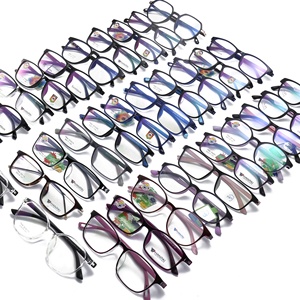

Precision Industrial Engineering, Advanced Polymer Chemistry, and Heritage Optical Craftsmanship for Independent Eyecare Brands and High-Volume Retailers Worldwide.
Engineered for high-dispensing throughput, structural memory retention, and exceptional aesthetic longevity across modern prescription labs.
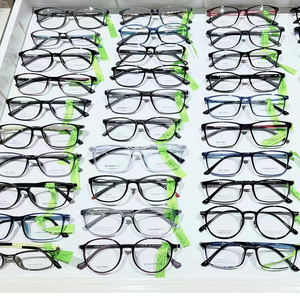
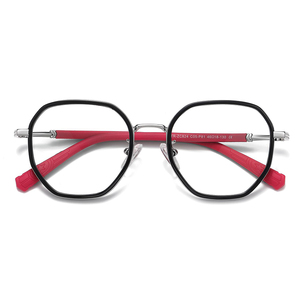
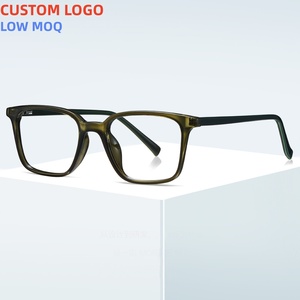
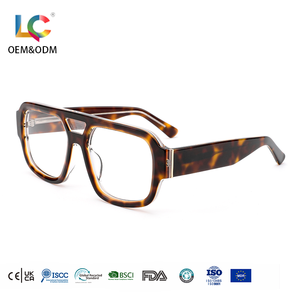
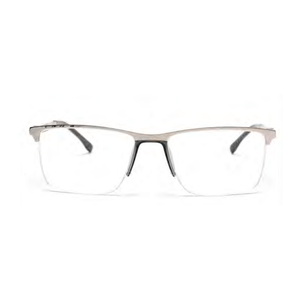
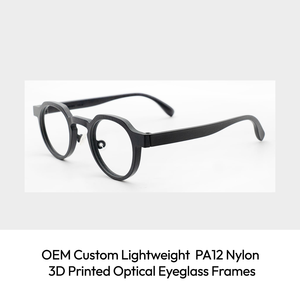
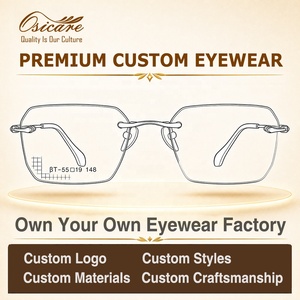
Rooted in optical heritage established in 1879, our industrial capacity bridges five generations of precision lens-fitting expertise with high-tolerance computer-numerical manufacturing.
Founded on proprietary optical know-how surviving across 145 continuous years. We engineer frame face-form angles, vertex distances, and pantoscopic tilts directly suited for modern complex progressive prescriptions.
From micro-milled Japanese titanium and Italian Mazzucchelli bio-acetate skiving to selective laser sintered (SLS) PA12 polyamide powder, our multi-material lines execute designs without industrial bottlenecks.
Equipped with specialized 3-barrel, 5-barrel, and screwless friction-lock hinges engineered to resist beyond 25,000 cycles of opening and closing without pitch degradation, looseness, or torque failure.
Trusted globally to produce high-prestige private labels alongside our design-house labels (Erkers1879, NW77th, The Neighbors, Tocco, Monoqool). We understand retail margins and independent optician dynamics.
A rigorous metallurgical and polymer comparison helping optical supply chain managers, brand directors, and sourcing managers specify optimum bill-of-materials (BOM) configurations.
| Substrate Material | Specific Density (g/cm³) | Tensile Modulus (MPa) | Hypoallergenic Certification | Core Optical Merchandising Fit |
|---|---|---|---|---|
| Japanese Beta-Titanium (β-Ti) | 4.43 - 4.51 | 105,000 - 110,000 | 100% Medical Grade ISO 10993 | Ultra-minimalist, flexible rimless, and executive luxury wire collections. |
| Bio-Cellulose Acetate | 1.27 - 1.32 | 2,100 - 2,800 | Phthalate-Free / Skin-Friendly | Chunky statement profiles, bespoke tortoiseshell laminations, high-end retail. |
| Polyamide 12 (3D SLS Nylon) | 0.95 - 1.01 | 1,500 - 1,750 | Biocompatible Clean Surface | Parametric bespoke fits, structural internal channels, modern avant-garde. |
| Swiss Grilamid TR90 | 1.00 - 1.05 | 1,200 - 1,600 | FDA & CE Approved | Pediatric, active-sports frames, ultra-light everyday high-turnover lines. |
| Cupro-Nickel Monel Alloy | 8.80 - 8.90 | 130,000 - 160,000 | Multi-Layer Barrier Coated | Rigid classic browlines, vintage double bridges, structural temple cores. |
How progressive brand buyers and optical enterprise groups must pivot their supply ecosystems to maintain gross margins amid evolving regulatory, consumer, and technological environments.
Traditional brass casting and mold-opening cycles require 120-day horizons and substantial minimum commitments. Additive Selective Laser Sintering (SLS) using Polyamide 12 allows private label distributors to execute short-run test styles (sub-100 units), iterate shapes rapidly, and eliminate inventory deadstock risk.
Environmental legislation across the European Union and North America is accelerating the phase-out of traditional diethyl phthalate (DEP) plasticizers. Modern procurement mandates cotton-seed and wood-pulp bio-acetates with bio-based carbon content exceeding 68%, matching traditional machining hardness.
The convergence of prescription eyewear with open-ear directional audio, blue-light digital filtering, and micro-sensing hardware demands complex interior temple cavities. We provide dual-shot injection molding that houses sub-miniature PCBs without swelling external temple thicknesses beyond 3.8mm.
A look at the functional engineering elements defining the upcoming collection releases in contemporary optical showrooms.
Mechanical failures trace overwhelmingly to loosened hinge screws. Contemporary high-end lines utilize inter-locking micro-folded titanium leaves or cylindrical tension dowels that maintain uniform, smooth hinge torque throughout the lifetime of the frame.
As strong refractive errors require thicker lens profiles, our CNC milling centers execute asymmetrical V-bevels recessed deep within acetate rim chassis. This camouflages prescription edge thickness while providing high lens retention security.
Eliminating slippage across diverse nasal topologies, our OEM frame programs feature integrated multi-axis titanium pad arms, swappable silicone pad geometries, and specialized wide splay-angle bridge saddles for uniform weight dispersion.
Clear, direct answers regarding production limits, tooling costs, international compliance standards, and custom private-label workflows.
Whether you require precision contract manufacturing for an established retail eyewear network or bespoke prototyping for an independent designer label, our engineering team is at your disposal.