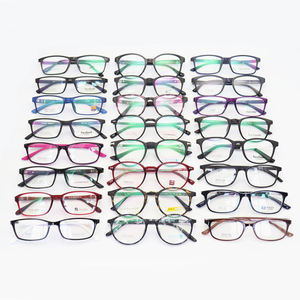

Explore engineered architectures balancing structural integrity, artisanal finishes, and modern ergonomics. Produced under stringent ISO 12870 standard tolerances.
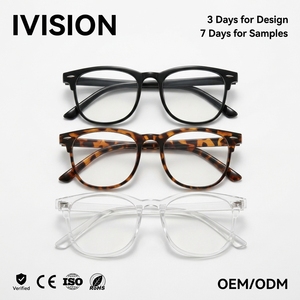
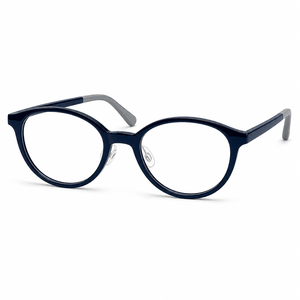
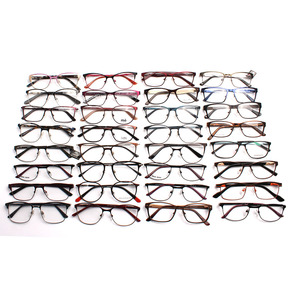
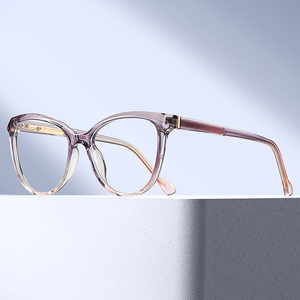
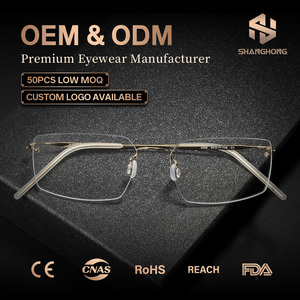
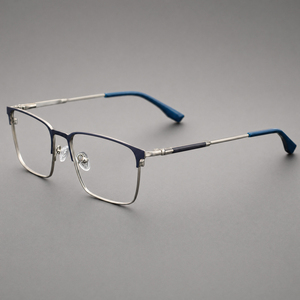
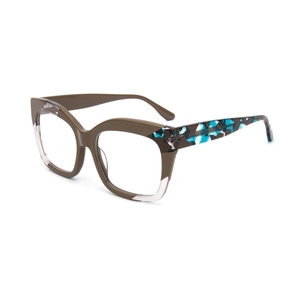
Geometric optical frames—spanning precise octagons, architectural crowns, asymmetric polygons, and sharp pantos—represent a decisive shift in global retail eyecare. Moving past standard ovular forms, contemporary patients demand facial-defining geometries that serve as wearable design statements. However, for optical buyers and OEM brands, manufacturing geometric profiles presents profound structural challenges compared to organic curved frames.
At our manufacturing house, geometric frame architecture requires stringent physical balance. When an optical frame incorporates defined vertices, localized internal stresses concentrate around structural corners during mechanical rolling, milling, and progressive cold-forming. Without meticulous stress-relief protocols, geometric eyewires risk warping under the thermal load of optometric lens edging and glazing. Our OEM solutions eliminate these mechanical points of failure through stress-annealed cellulose acetate and multi-axis CNC micro-milled alloy rims.
Procurement directors and eyewear brand buyers must forecast shifts in technical demand. Driven by independent optical boutique growth and the decentralization of retail frame boards, the geometric category demonstrates strong commercial momentum. Buyers must optimize inventories across three dominant manufacturing vectors:
Global demand is accelerating toward polygonal profiles engineered with 0.8mm Japanese Beta-Titanium wire. Minimalist octagons provide industrial tensile resilience with sub-10-gram frame weights for executive wearers.
Modern consumers seek dimensional beveling. Multi-axis CNC skiving along geometric brow lines creates distinctive refracted light reflections across high-density Mazzucchelli cellulose acetate blocks.
In line with sustainable Scandinavian engineering, selective laser sintering (SLS) allows pure geometric forms without tooling constraints. Integrated screwless hinges minimize mechanical maintenance issues in long-term wear.
Selecting the optimal material infrastructure dictates hinge integrity, finish durability, and patient satisfaction at the dispensing counter:
| Substrate Platform | Tensile Yield (MPa) | Corrosion Resistance | Target Lens Range | Recommended Geometric Silhouettes |
|---|---|---|---|---|
| Beta-Titanium Alloy | 880 - 950 | Immune to Perspiration/Salts | -8.00D to +6.00D | Rimless Hexagons, Ultra-Fine Octagonal Wire |
| High-Density Acetate (HD) | 85 - 110 | High (Hypoallergenic) | -12.00D to +8.00D | Thick Beveled Cuboids, Sharp-Edge Cat-Eyes |
| Memory Polymer (TR90) | 65 - 80 | Exceptional Chemical Shield | -4.00D to +3.50D | Flexible Youth Polygons, Sport-Optical Hybrids |
| Monel / Stainless 304L | 520 - 680 | IP真空离子电镀 Protection | -6.00D to +4.00D | Classic Panto-Crowns, Dual-Wire Geometric Bridges |
Partnering with an OEM/ODM vendor requires more than assembly lines; it requires deep domain knowledge of human facial anatomy, dispensary workflows, and lasting retail product differentiation. Headquartered at 2815 Olive Street in St. Louis, Missouri, our foundation traces directly back to 1879. Guided today by Jack Erker III and Tony Erker, we combine 145 years of optical craftsmanship with advanced turnkey factory capabilities.
Unlike standard mass-producers, our heritage spans proprietary collection engineering—including our historical hallmark Erkers1879, contemporary architectural lines like NW77th, approachable everyday collections like The Neighbors, and comfort-focused silhouettes like Tocco Eyewear. Furthermore, our technical supply network distributes boundary-pushing lines such as Denmark’s 3D-printed Monoqool and Parisian fashion house ba&sh Eyewear. When we manufacture custom geometric eyewear lines for your private label, every bezel curve, hinge clearance, and temple core wire reflects over a century of professional optical refinement.
Key technical and logistical answers for optical retail chains, private label brands, and practice buyers.
Our standard OEM baseline begins at 300 units per model for custom-tooled metal or acetate geometries, split across 3 bespoke colorways (100 units/color). For stock catalog geometric styles customized with private-label laser etching and packaging, MOQs start from 50 units.
Acute-angled geometric frames require precise V-groove depth and uniform rim tension. We utilize dynamic 5-axis computer-controlled milling to maintain an accurate 115-degree eyewire groove. This prevents optical lens displacement across fluctuating regional climates.
Yes. We engineer customized bridge geometries, including standard European keyhole designs, high-projection titanium pads, and integrated ergonomic silicone configurations tailored for low-bridge Asian fit (AF) demographics.
Every shipment is backed by comprehensive CE self-declaration files, ISO 12870 mechanical fatigue certifications, drop-ball impact compliance (FDA 21 CFR 801.410), nickel-release safety reports (EN 16128), and REACH chemical compliance certificates.
We deliver complete, ready-to-dispense programs, including FSC-certified rigid boxes, collapsible magnetic vegan-leather cases, microfiber cloths, and branded temple printing to create a consistent unboxing experience.
Upon CAD approval, we produce functional SLA 3D physical mockups within 72 hours for ergonomic confirmation. Handcrafted master prototypes manufactured in your target acetate or metal alloys are delivered within 21 business days.
Request our comprehensive wholesale catalog, request pre-production prototype samples, or discuss private label production timelines directly with our engineering division.
Get Catalog