Global B2B Contract Optical Engineering • Est. 1879

Custom OEM Polarized Sunglasses Wholesale Manufacturers & Manufacturer

Five Generations of Optical Heritage Merged with State-of-the-Art Polarized Lens Filtration, Precision CNC Acetate Machining, and High-Throughput Private Label Supply Chains.

Precision Eyewear Catalog

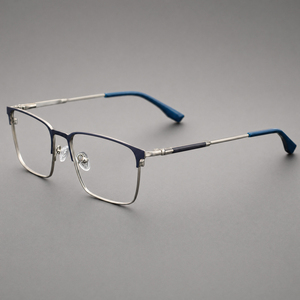
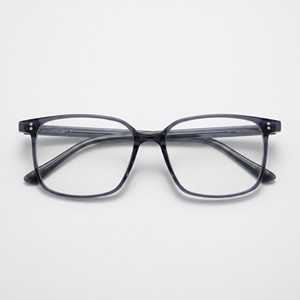
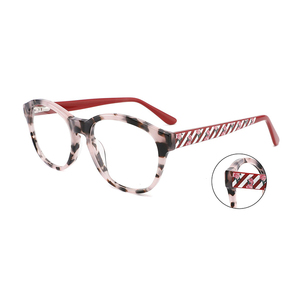
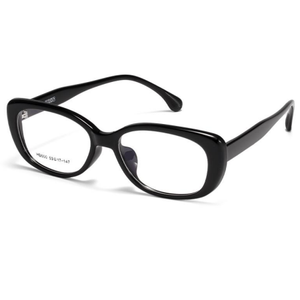
High-Performance Optical Frames & Polarized Sunglasses Selection

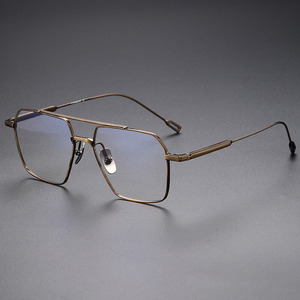
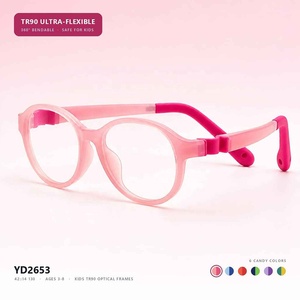
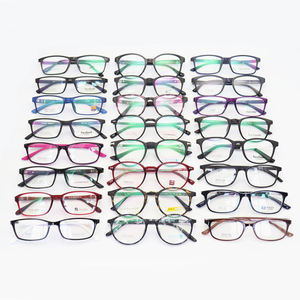
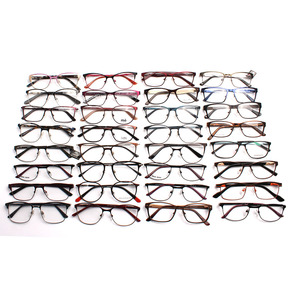
Explore our premium wholesale frame silhouettes engineered for immediate OEM adaptation, polarized RX prescription glazing, and custom private label manufacturing.
Five Generations of Optical Excellence

Why Global Independent Brands Trust Studio Optyx for OEM Eyewear

Combining the heritage of St. Louis optical precision dating back to 1879 with contemporary turnkey manufacturing facilities.

145+
Years of Craftsmanship
Family-owned optical lineage passed down across five continuous generations since 1879.
6
Global Designer Brands
In-house powerhouse collections including Erkers1879, NW77th, Tocco, and European distributions.
1,000s
Active Retail Partners
Independent opticians, ophthalmic clinics, and boutique sunglass brands served worldwide.
99.8%
Batch Optical Fidelity
Rigorous multi-stage collimation, spectrophotometry, and stress-polarization inspections.
Institutional Reliability

End-to-End OEM/ODM Optical Mastery Led by Jack Erker III and Tony Erker

Unlike commodity trading companies, Studio Optyx operates from deep ophthalmic roots. Our proprietary design and manufacturing protocols originate from five generations of dispensary knowledge and contract engineering. When private label eyewear brands, fashion houses, and retail optometry groups commission our custom OEM polarized sunglasses, they leverage an unbroken chain of optical integrity. Every sunglass geometry is calculated to prevent optical birefringence, chromatic aberrations, and field distortion, guaranteeing superior visual acuity across all ambient glare conditions.

Send an Inquiry
Technical Whitepaper

The Engineering Mechanics of Custom Polarized Eyewear Manufacturing

An authoritative breakdown of polarizing efficiency, PVA wafer encapsulation, substrate physics, and base-curve optics for wholesale buyers.

The Physics of Polarized Glare Elimination: Brewster's Angle & PVA Alignment

Unpolarized natural sunlight propagates as electromagnetic waves oscillating randomly in all perpendicular planes. However, upon impinging on horizontal reflective surfaces—such as asphalt, bodies of water, snow packs, and automotive windscreens—the reflected light becomes predominantly polarized parallel to the surface plane (governed by Brewster's Law: θB = arctan(n2/n1)). This horizontal reflectance generates high-intensity blinding glare that degrades contrast sensitivity and visual comfort. Studio Optyx OEM polarized sunglass lenses incorporate a precision-stretched, iodine-doped Polyvinyl Alcohol (PVA) film positioned precisely perpendicular to the horizontal glare axis. Our high-efficiency polarized filters achieve up to 99.9% polarizing efficiency with luminous transmittance tailored across Category 2 (18–43% VLT) and Category 3 (8–18% VLT), strictly adhering to ISO 12312-1 and ANSI Z80.3 standards.

Multi-Layer Triacetate Cellulose (TAC)

Our 7-layer and 9-layer TAC polarized lenses represent the benchmark for lightweight lifestyle and fashion eyewear. Designed for distortion-free performance without chromatic splitting.

  • Outer double-layer scratch-resistant hard-coat (HC)
  • Polyvinyl Alcohol (PVA) core polarizing membrane
  • Double-sided UV400 absorption blocking 100% UVA/UVB
  • Exceptional dimensional stability for rimless & full-rim frames

Cast Polyamide (Nylon) & CR-39 Optics

For luxury and performance optical brands requiring ultra-low Abbe value dispersion, our cast nylon polarized lenses deliver supreme clarity with negligible internal stress.

  • High Abbe Value (52–58) eliminating rainbow edge dispersion
  • Zero-stress injection eliminating internal birefringence rings
  • Exceptional chemical resistance against sunscreen & acetone
  • High flexibility suited for grooved rimless drill mounts

Polycarbonate Ballistic Decentered Lenses

Tailored for tactical sports, marine, and active sunglasses, these lenses undergo precision optical decentration to eliminate prism displacement in high base curves.

  • Exceeds ANSI Z87.1 high-velocity drop-ball impact parameters
  • Fused wafer injection preventing delamination under thermal shock
  • Base 6 and Base 8 geometric ray-tracing compensation
  • Hydrophobic, oleophobic, and rear-surface AR vacuum coating
Substrate Material Refractive Index Abbe Clarity Value Polarizing Efficiency Impact Resistance Recommended OEM Application
Premium 9-Layer TAC 1.49 – 1.50 56 – 58 > 99.2% Moderate (Everyday Wear) Boutique & Fashion Lifestyle
Cast Polyamide (Nylon) 1.52 – 1.54 50 – 54 > 99.8% High (Flexibility Certified) Luxury Designer & Rimless Eyewear
Optical Polycarbonate 1.59 30 – 32 > 99.5% Extreme (Ballistic Rated) Performance Sport, Fishing & Tactical
High-Index 1.60 / 1.67 MR-8 1.60 – 1.67 32 – 41 > 99.0% High Tensile Strength Prescription Polarized Sunglass Programs
Ultra-Thin Crown Glass 1.52 58 – 60 > 99.9% Tempered Chemical Dip Heritage Collector & Marine Polarized
Strategic Market Intelligence

Future Procurement & Technological Trends in Polarized Sunglasses

Key technological shifts shaping the next 5 to 10 years of private label polarized eyewear supply chains.

1. Sustainable Bio-Based Acetates & Circular Polymers

Global procurement regulations such as the EU Corporate Sustainability Due Diligence Directive are accelerating the demand for eco-certified eyewear materials. In response, Studio Optyx provides bio-cellulose acetates plasticized with vegetable-derived triacetin instead of phthalates, yielding over 68% bio-based carbon content. Combined with recycled marine polymer nylon frames, OEM buyers can satisfy stringent ESG mandates without sacrificing thermal moldability, hinge screw retention, or tensile strength.

2. Dynamic Photochromic-Polarized Fusion Wafers

The convergence of variable light transmission with polarized filtration is the single fastest-growing segment in high-end eyewear. Next-generation OEM lenses utilize matrix-embedded spiropyran photochromic molecules fused with iodine PVA polarizers. Under indirect ambient light, lenses maintain a luminous transmittance of 65% (ideal for cloud cover and driving), darkening dynamically to 12% under intense solar UV while preserving 98%+ polarizing glare attenuation.

3. Additive Manufacturing & Selective Laser Sintering (SLS)

As pioneered in our distributed Scandinavian Monoqool collection, 3D printing in Polyamide 12 (PA12) is fundamentally disrupting inventory forecasting. OEM clients can produce ultra-complex, lightweight lattice temples and screwless hinge architectures without expensive steel tooling molds. This drastically compresses prototype iteration cycles from 60 days down to 72 hours, enabling hyper-targeted capsule drops and on-demand replenishment with zero MOQ waste.

4. Vacuum PVD Thin-Film Coating & Spectral Tuning

Advanced OEM eyewear now demands custom spectral filtering tailored to specific sporting and environmental conditions. Utilizing physical vapor deposition (PVD) magnetron sputtering, we deposit multi-layer dielectric optical coatings, including rear-surface anti-reflective (AR) stacks to eliminate back-glare bounce into the eye, and front-surface hydrophobic/oleophobic fluoropolymer layers that repel saltwater, sweat, and fingerprints with contact angles surpassing 115 degrees.

5. Digital Trunk Shows & Omnichannel Vendor Integrations

Wholesale distribution is evolving beyond static catalogs. Independent opticians and multi-door boutique retailers increasingly require turnkey digital enablement. Studio Optyx facilitates interactive vendor trunk shows, virtual try-on (VTO) 3D asset provisioning, and pre-assorted frame displays that empower retail staff to showcase personalized polarized options, accelerating sell-through velocity and reducing retailer return rates.

Procurement Playbook

Frequently Asked Questions on Custom OEM Polarized Sunglass Sourcing

In-depth operational, technical, and regulatory clarity for optical buyers, product directors, and sourcing managers.

What is the standard Minimum Order Quantity (MOQ) for custom OEM polarized sunglasses? +
Our flexible OEM/ODM framework accommodates both established global labels and emerging independent boutique designers. For custom injection TR90 or metal frames utilizing existing open tooling, our baseline MOQ begins at 300 to 500 units per model, distributed across 2 to 3 colorways (typically 100–150 units per SKU). For bespoke custom CNC handmade acetate designs requiring exclusive color lamination or custom hardware milling, the standard production threshold is 300 pieces per style. Additive 3D-printed (SLS) titanium or polyamide collections feature ultra-low minimums starting at just 50 units per design.
How do you guarantee polarized axis alignment and prevent lens delamination? +
Polarization efficiency is entirely contingent upon absolute axial precision. In compliance with international standards (ISO 12312-1 Clause 5.3.5.2 and ANSI Z80.3), the polarizing filter axis must not deviate by more than ±3° from the horizontal meridian. Studio Optyx implements automated robotic laser-guided alignment edging that locks the lens blanks into the frame eye-wire with an alignment tolerance under ±1.5°. To permanently eradicate delamination, our lenses undergo autoclave high-temperature bonding and vacuum lamination cycles, followed by rigorous 72-hour boiling water, high-salinity immersion, and thermal cycling shock tests (-20°C to +80°C).
What optical and safety certifications do your OEM sunglasses fulfill? +
Every production batch manufactured by Studio Optyx is engineered to surpass worldwide regulatory directives. This includes United States FDA 21 CFR 801.410 drop-ball impact compliance, ANSI Z80.3:2018 optical requirements, European CE / UKCA under Regulation (EU) 2016/425, ISO 12312-1:2022, and Australian AS/NZS 1067.1:2016 standards. We provide complete third-party laboratory documentation (such as Intertek, SGS, or Colts Laboratories reports) including spectrophotometric spectral curves, transmittance classification, UV400 blocking certification, nickel release rates for metal frames (EN 16128), and REACH compliance for all frame resins.
What are typical lead times from CAD prototyping to mass container delivery? +
Our end-to-end OEM project lifecycle operates along structured timelines: (1) Design & Engineering: 2D aesthetic renders and 3D CAD mechanical drawings are completed within 7 to 10 business days. (2) Prototyping: Functional CNC acetate or 3D-printed pre-production fit models are delivered within 14 to 21 days for physical tactile review. (3) Tooling & Mold Fabrication: Custom injection steel molds require 30 to 40 days. (4) Mass Production: Standard manufacturing runs for handmade acetate, precision metals, and injection frames average 60 to 75 calendar days, including barrel tumbling, hand-polishing, multi-stage electroplating, ultrasonic cleaning, and 100% optical quality inspection. Expedited batch runs are available upon request.
Can we customize branding, temple hardware, hinge assemblies, and packaging? +
Yes, full personalization is our core operational focus. We offer laser-etched lens corner watermarks, pad-printed or foil hot-stamped temple logos, custom wire-core engravings inside transparent acetate, cast metal end-piece plaques, and German OBE or Comotec five-barrel and seven-barrel hinge integrations. Furthermore, we design and produce cohesive retail packaging ecosystems—including debossed genuine leather cases, recycled PET micro-fiber cleaning cloths, branded outer presentation boxes, and polarized verification tester cards featuring your private label branding.
How do you handle polarized lenses in wrapped sport sunglasses (Base 8)? +
High base-curve frames (Base 6 to Base 8) present inherent optical distortion risks, particularly unwanted prismatic power and astigmatic aberration when light enters off-axis. Studio Optyx utilizes computationally decentered lens blanks for all wrap-around sport frames. By shifting the optical center away from the geometric center of the lens along a precision Cartesian coordinate curve, our lenses re-align incoming rays directly with the human pupillary axis. This eliminates peripheral distortion, eye fatigue, and headaches, delivering true-to-life depth perception for extreme marine, cycling, and driving applications.
Accelerate Your Sunglass Collection

Partner with a Proven Optical Eyewear Design & Manufacturing House

Whether you require full-scale contract OEM manufacturing, specialized polarized RX programs, or boutique trunk-show collections, our St. Louis engineering and global production teams are ready to realize your vision.
Send an Inquiry