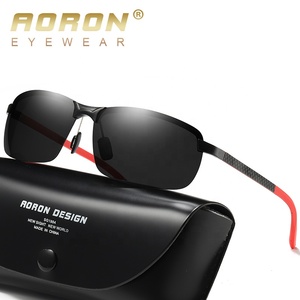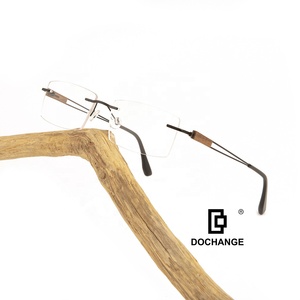
Explore our specialized range of lightweight continuous-weave and forged composite eyewear. Every frame incorporates micro-tolerance hinge architectures, medical-grade skin contact ergonomics, and effortless cold-glaze lens accommodation.
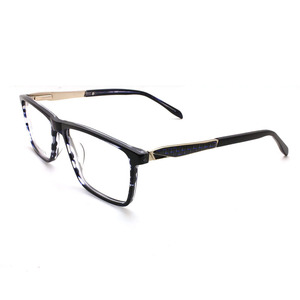
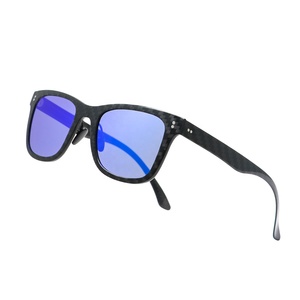
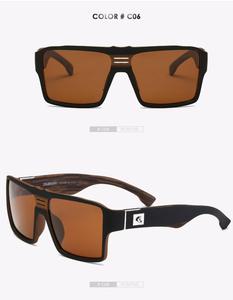
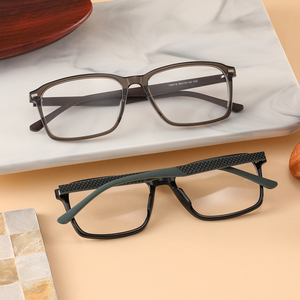
Studio Optyx traces its foundational lineage to 1879 in St. Louis, Missouri. Over 145 years and five generations of optical stewardship, our manufacturing framework has transitioned from master bench-dressing of traditional horn and wire to operating as an advanced OEM/ODM exporter of high-modulus carbon fiber spectacles.
Combining time-tested human ergonomics with aerospace-grade autoclave thermo-compression, our production lines manufacture eyewear that achieves unprecedented structural stability, tensile resilience, and all-day wearer comfort. We provide independent optical chains, medical optometry clinics, and luxury private labels with a transparent, direct-from-source engineering partner.

A technical evaluation for procurement directors, product development heads, and optical brand owners assessing material performance metrics, tensile limits, and manufacturing yields.
| Substrate Category | Tensile Strength (MPa) | Density (g/cm³) | Flexural Fatigue Limit | Cold-Glazing Adaptability | Hypoallergenic Rating |
|---|---|---|---|---|---|
| Prepreg 3K Carbon Fiber (Ours) | 1850 – 2100 | 1.52 – 1.60 | 10,000,000 Cycles (No set) | Excellent (Grooved Bevel <0.03mm) | 100% Medical Bio-Inert |
| Forged Carbon Strand Matrix (Ours) | 1400 – 1650 | 1.48 – 1.55 | Isotropic High Impact Load | High (5-Axis Multi-Directional) | 100% Medical Bio-Inert |
| Japanese Beta-Titanium (Grade 5) | 890 – 1100 | 4.43 | Moderate (Prone to work-hardening) | High (Rim-lock wire screw required) | Hypoallergenic |
| Mazzucchelli Cellulose Acetate | 85 – 115 | 1.28 – 1.32 | Low (Plastic deformation over time) | Excellent (Hot air blower 60°C) | Good (Plasticizer leaching risk) |
| Injection Molded TR-90 / Grilamid | 65 – 80 | 1.14 | Moderate (Prone to UV embrittlement) | Snap-fit Only (Thermal degradation) | Standard Polymer Inert |
We eliminate supply chain opacity by consolidating tooling fabrication, raw prepreg layup, vacuum autoclave consolidation, and final optical surface finishing within audited manufacturing centers.
Our custom CNC stations run ultra-fine diamond tooling at 48,000 RPM, cutting continuous 3K weave and forged composite blanks with tolerances down to ±0.02mm, preventing fiber fraying and resin chipping along delicate optical eyewires.
Unlike cheap wet compression molds, our factory utilizes sealed autoclave chambers under 6.5 bar pressure and strict thermal curves, ensuring 100% void-free composite compaction that prevents frame warpage under prescription lens loads.
We lead the industry in multi-material bonding patents, successfully uniting carbon fiber cores with organic Mazzucchelli bio-acetate frontals, certified wood veneers, and screwless beta-titanium spring barrel hinges.
Serving world-renowned luxury design houses since 1879, we uphold strict non-disclosure regimes. Custom 3D CAD blueprints, exclusive mold geometries, and proprietary carbon weave textures remain confidential assets under rigorous legal guarantees.
Every exported batch ships with comprehensive quality assurance documentation: CE compliance, UKCA conformity, FDA medical device registration, ISO 12870 ophthalmic frame standards, and REACH chemical safety certification.
From pad-printed inner temple identification codes and fiber-laser engraving on titanium core plates to custom recycled packaging, luxury microfiber cloths, and branded cases, we handle end-to-end retail packaging.
Gain competitive information advantages through our operational analysis of emerging procurement vectors, consumer demands, and high-margin product shifts in the carbon fiber eyewear domain.
While traditional 2x2 twill carbon weaves remain staples in masculine performance lines, luxury eyewear consumers increasingly seek chopped-strand "forged carbon." By infusing fragmented carbon flakes under intense localized thermal pressure, each frame displays a marbled chromatic depth similar to Damascus steel or petrified wood, giving consumers high perceived exclusivity.
Strict European Union Green Claims directives are accelerating corporate demand for sustainable composite solutions. Forward-thinking procurement strategies now target Recycled Aerospace Prepreg Scrap (rCF) combined with bio-epoxy systems derived from vegetable oil matrices, reducing total product carbon footprints by up to 48% while maintaining unyielding tensile yield strengths.
The rapid convergence of smart audio eyewear and lightweight prescription specs demands frames with internal hollow conduits. Carbon fiber offers the exact torsional rigidity required to protect micro-speaker drivers, multi-axis MEMS microphones, and ultra-thin lithium-ion batteries inside ultra-slim 3.8mm temple profiles without cracking during everyday flexure.
Large-scale inventory liabilities are driving optical importers toward agility. Modern OEM manufacturing leverages modular carbon sheet cutting and rapid master tooling setups. This shifts traditional high-risk 3,000-unit opening orders down to tiered pilot batches of 300 to 500 units per colorway, empowering brands to validate new retail assortments without prolonged lead-time exposure.
Direct answers addressing tooling investments, glazing guidelines, structural durability, and shipping logistics.
The difference lies in structural integrity, weight distribution, and tactile quality. "Carbon-look" frames are typical nylon (TR-90) or polycarbonate plastics coated with water-transfer printed films that peel, yellow, and scratch easily under continuous UV and sweat exposure.
Genuine carbon fiber frames crafted by our factory use genuine continuous carbon fibers (such as Toray T700) vacuum-cured in an autoclave under high heat and pressure. The resulting structural composite has 10 times the tensile strength of standard plastic at a fraction of the weight, features thermal stability that never bends out of alignment in summer heat, and presents authentic structural fiber depth across all exposed cross-sections.
Yes. A historical complaint from opticians was that pure carbon fiber does not exhibit the thermal plasticity of acetate frames and cannot be expanded on standard optical frame heaters. We solve this through two specialized engineering methods:
1. Micro-Groove Bevel Calibration: Our CNC eyewires are cut with an exact 115° optical bevel angle, allowing prescription lab edging machines to cold-glaze high-index (1.60, 1.67, 1.74) single vision and progressive lenses directly into the rim without frame pre-heating.
2. Hybrid Rim Systems: For high-cylinder or extreme prescription requirements, we engineer hybrid fronts that pair a structural carbon core with a malleable bio-acetate inner lens track or beta-titanium wire lock, ensuring opticians adjust and mount lenses with standard lab protocols.
For custom ODM private label configurations from our existing precision tooling libraries, our baseline MOQ begins at 300 pieces per model (split across 2 to 3 color finishes or carbon weave patterns).
For fully custom, ground-up OEM projects requiring proprietary CAD blueprints and bespoke steel tooling, our standard operational pipeline includes:
• 3D CAD & Photorealistic Render Validation: 5 to 7 business days.
• Physical Handcrafted CNC Prototype: 10 to 14 business days.
• Precision Tooling & Mold Finalization: 25 to 30 days.
• Full Production Run & Optical Drop-Ball Testing: 45 to 60 days following sample sign-off.
Pure carbon fiber has exceptionally high flexural memory; it springs back to its original molded curve and resists permanent manual bending. To provide optometrists and opticians with clinical fitting flexibility, our designs integrate flexible internal wire cores within the terminal 45mm to 65mm of the temple tips.
This allows the dispensing professional to comfortably adjust pantoscopic tilt, temple wrap, and mastoid bend over an ordinary heated bead pan without destabilizing the structural carbon fiber temple beam.
We supply a wide range of surface treatments formulated to withstand sweat, sebum, cosmetics, and harsh maritime salt spray:
• Satin Natural Matte: Ultra-smooth micro-blasted finish that highlights the tactical, technical character of genuine 3K carbon fiber.
• High-Gloss Optical Clear-Coat: Triple-dipped, UV-cured polyurethane finish that amplifies depth and light reflection within forged or twill patterns.
• Translucent Tint Injections: Colorized automotive-grade resins (Deep Azure, British Racing Green, Crimson Red, Smoked Gunmetal) that preserve genuine fiber weave visibility while matching brand color schemes.
• Soft-Touch Tactile Coating: Hypoallergenic exterior elastomeric finish for athletic and active eyewear collections.
Absolutely. Elemental carbon fibers and our fully cured bisphenol-free epoxy systems are chemically inert and inherently non-reactive with human perspiration. Furthermore, all metal components used in our bridge bridges, nose pads, and hinges are manufactured from 100% bio-compatible Japanese Titanium or 316L medical stainless steel, complying with EU Nickel Directive EN 1811 and REACH Annex XVII regulations.
Connect with our technical design team in St. Louis and our composite production engineers. Review over 200+ active carbon fiber molds, order pre-production material swatches, or initiate custom CAD prototyping today.
Get Catalog