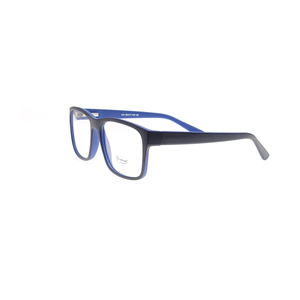
Engineered for high-volume optical boutiques and optical distributors. Fully customizable via turnkey OEM/ODM pathways.
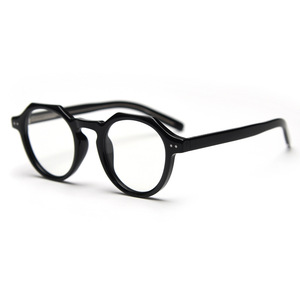
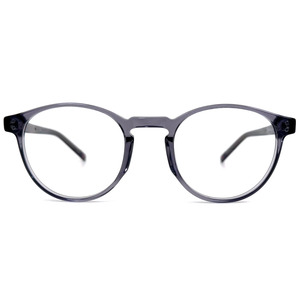
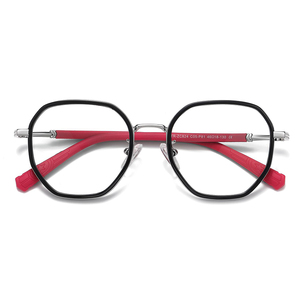

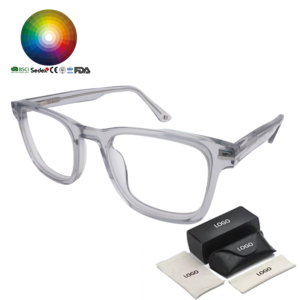

A comprehensive B2B engineering guide to balancing pantoscopic tilt, temple tension, lens decentration, and high-index weight distribution.
Oversized frames experience disproportionate mechanical torque along the endpiece and nose bridge. When prescribing lenses above -3.00D or +2.50D, standard acetate flex leads to unwanted focal aberration. Our vetted manufacturing tier utilizes co-molded wire cores with dual-axis pin lock hinges, preserving a calibrated 8° to 10° pantoscopic tilt under heavy optical loads.
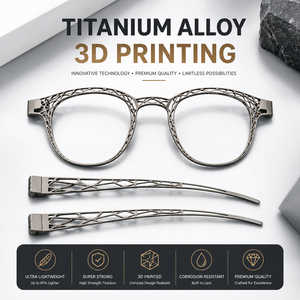
High-volume oversized silhouettes frequently suffer from bridge slippage due to dead weight. By migrating front-chassis production to Selective Laser Sintering (SLS) using Polyamide-11/12 combined with Beta-Titanium wire temples, total frame chassis weight drops below 9.2 grams. Screwless interlocking barrel systems eliminate friction backing and strip-outs during repeated ultrasonic cleaning cycles.
Expanding the Effective Diameter (ED) past 58mm induces severe optical decentration for narrow pupil distances (PD ≤ 62mm). Elite suppliers execute customized groove-depth profiling and bevel angle compensation (typically 110° to 125° v-bevel), mitigating edge thickness blowout on high-index 1.67 and 1.74 progressive lenses while preserving uniform temporal retention.
Procurement teams for leading optical chains are fundamentally overhauling their supply chain specifications. By 2026, European and North American regulations demand verifiable traceability on polymer inputs. The shift toward ISCC-certified circular cellulose acetate (formulated with bio-based plasticizers replacing traditional phthalates) is no longer a luxury marketing story, but an import compliance requirement.
Simultaneously, oversized geometries provide the exact interior temple cavity volume (minimum 3.2mm channel depth) needed to integrate micro-directional bone conduction audio transducers, dual MEMS microphones, and capacitive touch sensors without swelling profile dimensions. Modern OEM suppliers are developing hybrid composite structures combining CNC-milled 8mm Italian acetate fronts with cold-forged aircraft titanium cores to accommodate optoelectronic modules seamlessly.
Get Catalog
How technical buyers distinguish contract assemblers from genuine optical manufacturing pioneers.
Tier-1 factories run a minimum 72-hour tumbling regime across four distinct grades of birchwood and beechwood chips immersed in organic pumice pastes. This guarantees a mirror-finish luster on oversized temples and eliminates microscopic burrs that cause dermal irritation behind the mastoid bone.
Cutting thick 6.0mm-10.0mm acetate blanks into oversized contours introduces immense latent internal stress. Certified facilities implement a 48-hour climate-controlled annealing bake cycle at 65°C to stabilize polymer chains, avoiding post-distribution warping and lens popping under ambient seasonal changes.
Prior to factory-gate sign-off, oversized prototypes must undergo 20,000 continuous hinge cycles, sweat-immersion salinity tests (ISO 12870 standard compliance), and 5.0kg drop-ball impact verification on eyewires to safeguard high-prescription lens integrity during accidental falls.

With five generations of optical heritage spanning 145 years, our operational philosophy is rooted in the fine balance between anatomical comfort and enduring physical mechanics. Unlike modern dropship aggregators, our St. Louis, Missouri lineage establishes direct engineering governance over every phase: mold design, cold rolling, vacuum electroplating, laser etching, and hand bench assembly.
We serve thousands of optical boutiques and ophthalmic distribution networks globally. By housing in-house proprietary design lines alongside elite contract manufacturing services, we guarantee that wholesale partners bypass middleman markups while retaining full ownership of bespoke CAD specifications, private label molds, and custom hardware dies.
Direct technical answers addressing Minimum Order Quantities (MOQ), material certifications, and dispensing safety.
Download our technical catalog detailing technical CAD drawings, temple gauge specifications, acetate shade swatches, and tiered B2B wholesale pricing.
Get Catalog