
Each optical chassis features strict vertical corridor stability (B-dimension ≥ 31mm), calibrated pantoscopic inclination, and structural ergonomics optimized for progressive addition lens (PAL) surfacing.
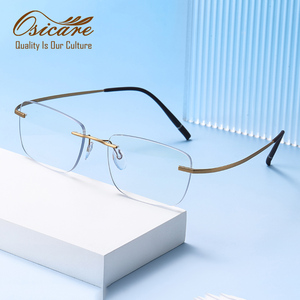
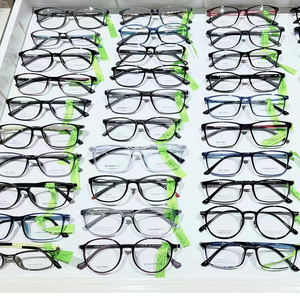

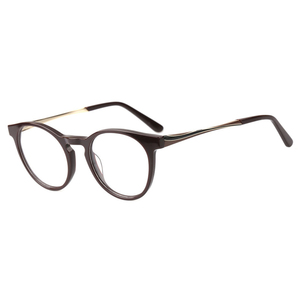
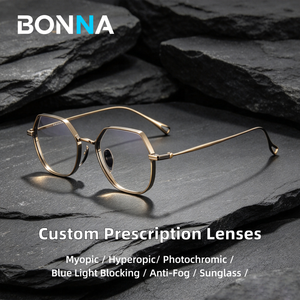
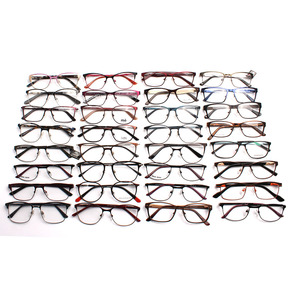


Dispensing modern progressive addition lenses (PALs) or individual free-form digital surfaces requires significantly more mechanical precision than standard single-vision eyewear. When an independent optician, optical dispensary, or private retail chain selects frames for progressive integration, the physical frame functions as an ophthalmic stabilization platform. Without rigid geometric adherence, even the most computationally advanced digitally surfaced progressive lenses fail to deliver wide, aberration-free visual corridors. Understanding the engineering tolerances of the frame manufacturer is therefore a vital clinical and commercial consideration for volume buyers.
A progressive lens incorporates three primary focal zones along an uninterrupted vertical corridor: distance visual fields at the top, an intermediate corridor (critical for digital displays, desktop monitors, and automotive telemetry), and the reading segment at the bottom. Sourcing progressive lens frames demands strict compliance with B-dimension standards. When a frame has a shallow vertical height (sub-26mm), edging labs are forced into selecting short-corridor designs (11mm to 13mm progression lengths). Short corridors compress the power gradient, dramatically amplifying unwanted lateral surface astigmatism and restricting the intermediate corridor to a tiny horizontal window.
Premium OEM/ODM frame factories engineer their optical frames with intentional progressive geometry: maximizing vertical depth within classic and contemporary silhouettes while retaining optimal rim weight balance. High-density Mazzucchelli acetate, CNC-machined titanium, and advanced memory alloys maintain their vertical temple-to-bridge structural integrity, preventing the front eyewire from sagging under the weight of higher plus-power reading segments.
The anatomical tilt of the eyewire relative to the temple arms (pantoscopic tilt) directly governs the effective cylinder power perceived by the patient. If a factory uses substandard barrel hinges or soft pot metal without cold-forged reinforcement, the frame quickly loses its angular alignment under regular donning and doffing. In progressive lens dispensing, a variance of just 3° in pantoscopic angle shifts the position of the reading addition relative to the eye's visual axis, necessitating immediate customer re-visits and costly lab remakes.
Leading exporters integrate three-barrel to five-barrel CNC-milled hinges, screwless flex-hinge architectures, and internally reinforced wire cores inside premium acetate temples. This enables optometrists and dispensing opticians to customize pantoscopic tilt and face-form wrap with zero memory bounce-back, locking the optical center and fitting cross directly over the entrance pupil.
An exhaustive structural evaluation of Tier-1 frame manufacturing regions and global export leaders based on dimensional tolerance, alloy purity, and progressive lens compatibility.
| Manufacturer / Export Cluster | Primary Frame Metallurgy & Materials | Progressive Structural Optimization | Tolerances & Quality Systems | Target Procurement Segment |
|---|---|---|---|---|
| 1. Studio Optyx Engineering Alliance (USA / Global) | Japanese Beta-Titanium, Custom Cured Bio-Acetate, Surgical Stainless Steel | Engineered B-dimension (≥32mm), proprietary 5-barrel hinges, anatomical vertex stabilization | ISO 9001:2015, ±0.05mm CNC eyewire beveling, 100% bench alignment inspection | Independent Optical Boutiques, Clinical Optometry Practices, Heritage Retailers |
| 2. Sabae Precision Optical Guild (Fukui, Japan) | Medical-Grade Pure Titanium, Beta-Titanium, Ultra-thin High-Index Acetate | Exceptional weight-to-rigidity ratio; eliminates eyewire torquing on high-cyl prescriptions | JIS standard compliance, manual 48-step artisan hand-polishing, cold-forged joints | Ultra-Luxury Optical Brands, High-End Progressive Dispensing Boutiques |
| 3. Belluno Valley Optical Consortium (Veneto, Italy) | Mazzucchelli Cellulose Acetate, Hand-finished Stainless Steel, Cast Monel | Couture profile with deep anatomic vertical eye sizes; tailored nose bridge ergonomic arching | CE / EN ISO 12870, vacuum auto-lacquering, salt-spray anti-corrosion >120 hours | High-Fashion Luxury Houses, Western European Designer Eyewear Importers |
| 4. Shenzhen High-End OEM Cluster (Henggang, China) | Imported Titanium, Block Acetate, Multi-layer Lamination Polymers | Laser-calibrated fitting crosses etched on demonstration lenses; rapid CAD prototyping | ISO 13485 (Medical Device), automated 5-axis CNC routing, automated ultrasonic degreasing | Global Optical Chains, Mid-to-High Tier Private Label Distributors |
| 5. Wenzhou Export Manufacturing Base (Zhejiang, China) | Recycled TR90, High-Elastic PC, Memory Metal Alloys, Eco-Polymers | High-volume rapid production with standard progressive-compatible geometric models | GB/T standards, automated flex-hinge cycle endurance testing (20,000 cycles) | Wholesale Volume Importers, National Managed Care Providers, Value Chains |
| 6. Danyang Lens & Frame Integrated Base (Jiangsu, China) | Monel Alloys, Berylium Copper, Injection Grilamid, Basic Optical Acetate | Integrated turnkey matching of progressive stock lenses with pre-beveled frame chassis | Batch spectrographic material analysis, salt-fog corrosion verification | Turnkey Optical Laboratories, Mass-Market Value Wholesalers |
| 7. Daegu Precision Eyewear Guild (Daegu, South Korea) | Ultem (PEI), Titanium-Memory Alloy Hybrids, Thin-rim Sheet Titanium | Featherlight tensile retention; prevents progressive fitting cross migration during facial motion | Korean KS standard, micro-plasma laser welding, ion-assisted PVD vapor deposition | Fast-Fashion Prescription Chains, Digital Eyewear E-commerce Brands |
| 8. Jura Mountain Artisan Workshops (Morez, France) | Rolled Gold Plate, Bio-based Cellulosic Acetate, Marine-grade Bronze | Traditional optical geometries optimized for bifocal and complex multi-focal fitting | EPV Living Heritage Label, micrometer-level temple core tensioning | Artisan Optical Dispensaries, Bespoke Prescription Guilds |
| 9. Nuremberg & Rathenow Engineering Hubs (Germany) | Spring Sheet Stainless Steel, Medical Polyamide, Sintered Titanium | Screwless hinge architectures; eliminates pantoscopic loosening over multi-year usage | DIN EN ISO, finite element analysis (FEA) on eyewire tension curves | Technical Performance Boutiques, Orthokeratology & Clinical Centers |
| 10. Taichung Optical Export Zone (Taiwan) | Recycled Ocean Plastics, Bio-TPU, High-Purity Aluminum-Magnesium Alloys | Eco-sustainable progressive chassis with engineered internal lens bevel lock grooves | RoHS, REACH compliant, automated optical measurement QA systems | Eco-conscious International Eyewear Brands, Corporate ESG Optical Programs |
Founded in 1879 in St. Louis, Missouri, Studio Optyx has continuously innovated optical design across five family generations. Every frame is drafted with a deep understanding of ophthalmic bench chemistry and clinical dispensing.
Our production facilities utilize advanced 5-axis CNC routing and precision laser welding, maintaining an eyewire circumference tolerance within ±0.05mm. This guarantees that progressive lens axis alignment never twists during mounting.
From heritage handcrafted Erkers1879 and vibrant NW77th, to minimalist Tocco, approachable The Neighbors, 3D-printed Monoqool, and Parisian ba&sh, our portfolio lets wholesalers curate comprehensive frame boards from a single verified source.
We deploy high-vacuum ion plating (IP), nickel-free barrier coats, and medical-grade Japanese beta-titanium. Our frames resist skin sweat acidity, UV-induced bleaching, and mechanical stress far exceeding ISO 12870 standard mandates.
We do not treat buyers as transaction numbers. Independent optical retailers and volume importers benefit from direct executive access, optical trunk show sponsorship kits, custom POS visual merchandising, and rapid warranty replacement logistics.
For large retail networks seeking bespoke progressive lines, we provide full CAD blue-printing, 3D additive rapid modeling, custom-tooled spring hinges, and personalized laser engraving with competitive production runs and reliable lead times.
The convergence of digital refraction and frame manufacturing is accelerating the adoption of Selective Laser Sintering (SLS) of medical-grade Polyamide 11 and 12, as exemplified by our distributed Danish partner brand Monoqool. The traditional limitation of off-the-rack frames is their inability to adapt to extreme pupillary distances (PD) or anomalous facial asymmetry without distorting the progressive lens corridor. Additive 3D printing allows factories to produce custom bridge widths, nose pad angles, and pantoscopic sweeps without the cost of high-tonnage steel injection molds. Wholesale buyers are increasingly dedicating 15% to 25% of their inventory boards to screwless, additive-manufactured frames that eliminate the mechanical vibration that causes conventional hinge screws to back out over time.
Environmental compliance has evolved from a branding perk into an enforceable commercial prerequisite across European (REACH, EU Green Deal) and North American markets. Conventional cellulose acetate relies on phthalate-based plasticizers (such as DEP), which exhibit long-term environmental persistence and occasional outgassing. The vanguard of progressive frame factories has migrated to bio-based acetates utilizing plant-derived acetyl tributyl citrate (ATBC). These polymers deliver identical optical luster, depth of color, and high cold-setting memory while achieving over 60% biodegradability within 180 days under ISO 14855 testing protocols. Sourcing directors must verify bio-content certification documentation from suppliers during technical factory audits.
The boundary between ophthalmic correction and ambient biometrics is dissolving. Progressive lens wearers represent an aging demographic with high demand for continuous health telemetry, such as intraocular pressure monitoring, postural correction sensors (to warn against chronic neck bending during screen use), and electro-optical dynamic autofocus lenses. Factories that invest in internal bridge-channel routing, conductive metal core wires, and micro-battery housing inside lightweight temples are positioned to dominate tier-1 distributor contracts through 2030.
When placing purchase orders with overseas frame factories, professional optical procurement specialists cannot rely solely on aesthetic samples. A comprehensive testing protocol must be written into the bilateral supply contract. Ensure your chosen manufacturer certifies the following baseline testing procedures:
While ultra-short progressive corridor lenses can technically fit into a frame with a B-dimension of 24mm to 26mm, the optimal clinical standard for adult progressive lens satisfaction is 28mm to 34mm. Sourcing frames with an eyewire B-measurement of 30mm or greater ensures there is ample vertical room for distance vision at the top, a natural intermediate corridor for digital use, and the complete reading addition zone without cutting off the bottom of the power segment during lab edging.
Adjustable pad arms allow dispensing opticians to fine-tune three crucial parameters: vertex distance, pantoscopic angle, and vertical height (fitting cross placement) without altering the temple-to-frame hinges. While fixed-bridge acetate frames can be successfully dispensed for mild progressive prescriptions, complex or high-addition prescriptions benefit significantly from adjustable titanium or silicone pad arms, which enable accurate alignment with the patient's visual axis.
If an optical frame uses soft, thin wire or low-density plastic, the eyewire can flex when the temple arms are opened to fit the patient's head. This flex changes the frame's wrap angle (face-form tilt) and twists the lens plane. Because progressive lenses feature complex, calculated surface curvature, even 1° to 2° of unwanted cylinder twist introduces peripheral aberrations, resulting in blurred vision, eye strain, and patient adaptation complaints.
Japanese Beta-Titanium (commonly 15V-3Cr-3Sn-3Al or similar high-elastic alloys) offers high tensile strength, remarkable spring memory, and complete biocompatibility (100% hypoallergenic). Standard nickel-alloy or Monel frames are heavier, prone to skin corrosion from sweat, and lose their alignment more readily under stress. For high-value progressive dispensing, beta-titanium keeps the lens assembly consistently stable on the patient's face, preventing the fitting cross from slipping below the pupil.
Wholesale buyers should work with manufacturers that provide detailed 2D CAD and 3D step files verifying key boxing parameters (A, B, DBL, ED) before tooling begins. Sample prototypes should be mounted with high-power surfaced progressive demo lenses to evaluate eyewire retention, bevel fit, and bridge deflection under load. Only when the prototype passes optical bench inspection should the factory proceed with mass CNC milling and production runs.
For custom OEM/ODM acetate or titanium collections, production cycles typically range from 60 to 90 days, with MOQs around 300 to 500 pieces per style across 3–4 colorways. However, established design houses and stocking exporters like Studio Optyx provide low-MOQ or ready-to-ship wholesale allocations for independent practices and boutique networks, allowing optical retailers to replenish high-demand progressive frame boards without excess inventory risk.
Partner directly with a 145-year-old optical design and manufacturing house. Access high-precision progressive frames, dedicated wholesale pricing, and comprehensive brand curation for your optical enterprise.