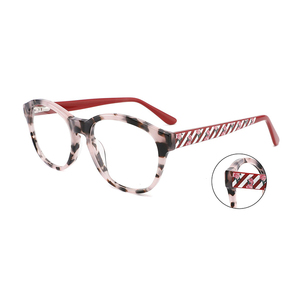
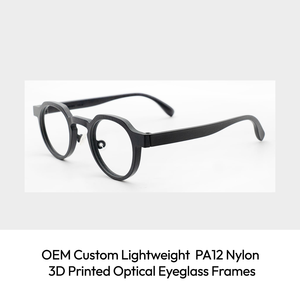
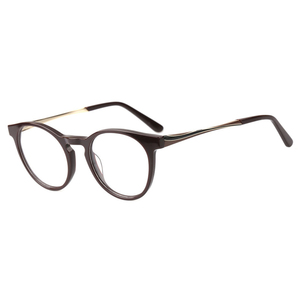
Explore our specialized production lines spanning high-performance SLS nylon, selective laser melted titanium, and precision acetate hybrid assemblies.
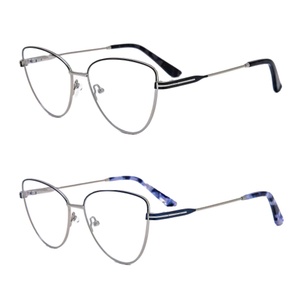
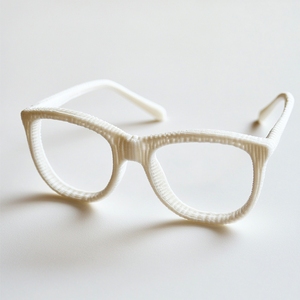
Merging centuries-old anatomical fitting ergonomics with advanced German laser-sintering systems to deliver unparalleled structural integrity.
Rooted in five generations of eyewear engineering, our design house applies deep cephalometric datasets to ensure every parametric 3D print conforms naturally to diverse facial pantoscopic angles and bridge topographies.
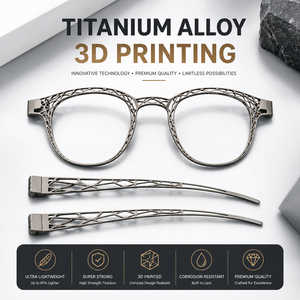
Equipped with state-of-the-art CO2 lasers for Polyamide 12 (PA12) and Direct Metal Laser Sintering (DMLS) for ultra-lightweight aerospace Titanium, achieving density over 99.8% with zero internal structural voids.
Pioneering modern functional eyewear through monolithic additive hinges. We eliminate traditional tiny screws, locknuts, and micro-welds, creating unbreakable interlocking pivot channels that require zero routine maintenance.
Every batch undergoes automated 3D optical scanning, bridge flex fatigue testing (20,000 continuous cycles), sweat acidity immersion tests, and biocompatibility assays compliant with EU CE and US FDA medical-grade standards.
Unfinished additive parts exhibit porous tactile coarseness. Our proprietary automated smoothing and physicochemical vapor smoothing seal micro-porosities, delivering skin-safe, velvet-matte, and high-gloss finishes.
Serving independent optometrists, luxury fashion houses, and retail chains with low-MOQ rapid iteration, custom localized color dyeing recipes, and personalized laser-engraved bridge serializations.
For more than a century, optical frame manufacturing relied strictly on subtractive processing: routing profiles from cured cellulose acetate sheets or casting and stamping nickel-copper alloys. While subtractive techniques formed the foundation of classic eyewear, they enforce harsh commercial constraints: up to 75% material waste during milling, astronomical tooling expenditures for steel molds ($3,000–$8,000 per SKU), and prototyping cycles spanning four to eight months. As global optical buyers shift toward agile inventories and custom facial geometries, China's advanced 3D printing eyewear infrastructure has fundamentally unlocked on-demand serial production.
Selecting the optimal additive process directly dictates structural compliance, yield rates, and final patient comfort. In our production facilities, additive workflows are segmented into three specialized categories:
| Technology | Core Materials | Mechanical Tensile | Surface Finish | Primary Optical Use Case |
|---|---|---|---|---|
| Selective Laser Sintering (SLS) | PA12 Nylon, PA11 Bio-Polyamide | 48–54 MPa | Velvet Matte / Vapor Polished | Full-rim daily optical wear, screwless hinges, sports frames |
| Direct Metal Laser Sintering (DMLS) | Ti-6Al-4V Grade 5 Titanium | 900–1050 MPa | Bead Blasted / Micro-Polished | Ultra-luxury rimless bridges, minimalist temples, surgical-grade eyewear |
| Stereolithography (SLA) | Rigid Photopolymers, Tough Resin | 35–45 MPa | Ultra-Smooth / Transparent | Design master models, aesthetic try-on verification, fashion display |
| Fused Deposition Modeling (FDM) | PLA, ABS, PETG | 25–35 MPa | Visible Layer Ridges | Internal packaging jigs, rapid assembly fixtures (non-dispensary) |
SLS Polyamide 12 (PA12): The Gold Standard in Modern Optical Retailing. PA12 is uniquely suited for ophthalmic prescriptions. With a specific gravity of approximately 1.01 g/cm³, frames manufactured via PA12 are nearly 30% lighter than standard cellulose acetate (1.28–1.32 g/cm³) and significantly more flexible than traditional TR90 injection molded plastics. In cold climates, injection-molded frames can become brittle; conversely, laser-sintered PA12 maintains molecular elasticity and impact resistance across temperature extremes ranging from -20°C to 80°C. This allows opticians to snap high-index corrective lenses into bevel grooves using standard bench warmers without risking frame snapping.
Global optical retail is facing structural margin compression caused by inflated deadstock. Traditional brand distribution channels force independent practices to commit to minimum runs of 300 to 500 units per colorway. If a specific bridge width or oversized eye size underperforms, the retailer absorbs heavy inventory write-downs. Additive manufacturing redefines wholesale supply economics through three transformative procurement models:
1. Parametric Mass Customization: Rather than forcing patients into rigid standard sizes (e.g., 50-18-140), optical practices can capture digital facial scans (pupillary distance, naso-frontal angle, temple ear height) and transmit calibrated STL or STEP files directly to our China production facility. Custom frames are built within 72 hours, perfectly fitted to atypical craniofacial morphologies without retooling penalties.
2. Micro-Batch Restocking (MTO - Made To Order): Additive manufacturing decouples production economics from batch size. A print chamber accommodates nesting configurations of 40 completely unique frame geometries within the same 12-hour sintering build. Wholesale procurement teams can replenish inventory on a rolling 14-day schedule, dropping capital lock-up by over 60%.
3. Circular Sustainability & ESG Compliance: Sustainability is no longer an optional marketing bullet. Subtractive milling generates thousands of tons of non-recyclable acetate slurry annually. SLS additive manufacturing uses pure powder; unmelted nylon cake is recovered, blended with virgin material at tightly calibrated 70/30 ratios, and reused in subsequent builds, reducing total polymer scrap to under 5%.
Raw 3D printed components straight from the de-powdering chamber are unsuitable for immediate retail presentation. Raw PA12 exhibits high microscopic porosity, making it susceptible to skin oils, cosmetics, perspiration, and ultraviolet degradation. As an experienced China manufacturing partner, our industrial finishing infrastructure includes essential multi-stage post-processing:
First, parts undergo high-pressure centrifugal rotary tumbling with ceramic and organic walnut shell granules to smooth raw layer stepping. Second, automated chemical vapor smoothing (using eco-sealed closed-loop solvents) melts the surface boundary layer at a sub-micron depth, permanently sealing porosity and increasing elongation-at-break performance. Finally, deep-penetration molecular dye infusion is executed under high pressure and temperature, ensuring colors penetrate 0.2mm to 0.4mm deep into the polymer lattice so frames do not flake, fade, or expose white cores when adjusted by an optician's heat blower.
Key technical, financial, and logistical insights for professional optical buyers, brand directors, and clinic owners.
Partner directly with China's premier 3D printed optical production facility. Send us your CAD models or design concepts for an immediate manufacturing feasibility evaluation and rapid quotation.
Get a Quote