B2B Manufacturing Intelligence & OEM/ODM Whitepaper

Top China Fashion Optical Frames Factory & Exporters

Empowering Global Optical Retailers, Independent Brands, and Eyecare Professionals with ISO9001-Certified Precision Engineering, Multi-Material Innovation, and Five Generations of Frame-Crafting Heritage.

Export Benchmark Catalog

Engineered Optical Frames & Precision Rx Lenses

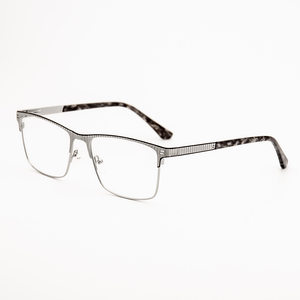
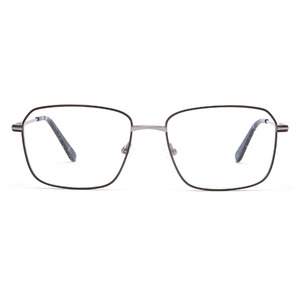
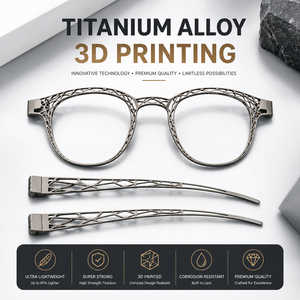
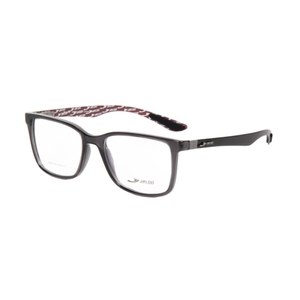
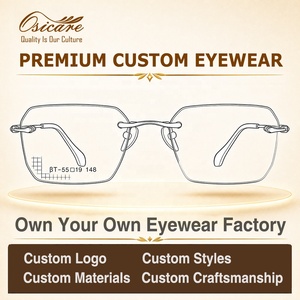
Explore our turnkey OEM/ODM export collection spanning aerospace-grade titanium, CNC bio-acetate, lightweight carbon composite, and next-generation additive manufacturing.

Get Catalog
145+
Years Craft Heritage Lineage
2,400K
Annual Frame Export Capacity
99.6%
First-Pass Glazing Accuracy
80+
Global Destination Markets

Five Generations of Optical Pedigree Meets Scalable Chinese Precision Manufacturing

In the hyper-competitive eyewear industry, independent optical practices, luxury retail chains, and international design brands face a delicate balancing act: maintaining bespoke artisanal aesthetics while satisfying stringent global regulatory tolerances, tight seasonal lead times, and unit margin targets. Tracing our optical design lineage back to 1879 through heritage collaborations with institutions like Studio Optyx—curators behind legendary houses such as Erkers1879, NW77th, Tocco, and The Neighbors—our Chinese manufacturing and export facilities represent a premier convergence of historical American/European frame proportions and cutting-edge Asian manufacturing infrastructure.

Unlike standard high-volume assembly lines that churn out generic injection plastic spectacles, our facility operates on an integrated OEM/ODM matrix. We house specialized cleanrooms for ophthalmic lens casting, multiaxis CNC milling for aged cotton-cellulose acetate, wire-EDM titanium micro-machining, and closed-loop water treatment tumbler facilities. Every batch undergoes rigorous quality assurance benchmarks aligned directly with ISO 12870:2016 (Ophthalmic Optics – Spectacle Frames) and ANSI Z80.5, safeguarding pantoscopic tilt, bridge bridge-spread flexibility, and long-term temple tension against fatigue.

Ultra-Low Tolerance CNC Tooling

We utilize 5-axis German and Japanese CNC machine cutters capable of producing bevel groove profiles within ±0.03mm. This guarantees flawless ophthalmic lens glazing in high-volume optical retail labs without cracking, edge chipping, or frame deformation under high base curves.

Biocompatible Materials & Plating

All raw materials conform strictly to EU REACH Annex XVII (Nickel Release Test under EN 1811) and California Proposition 65. Our proprietary PVD (Physical Vapor Deposition) ion-plating creates a 0.35μm diamond-like carbon or 24K gold coating resistant to 72-hour artificial sweat immersion.

Rapid Prototyping & Trunk Show Support

Supporting modern agile retail strategies, our industrial design team turns 2D sketches into 3D CAD renders and functional SLS laser-sintered prototypes within 7 working days. We empower independent practices to run curated private-label trunk shows with minimal initial financial exposure.

Material Engineering Comparison for Commercial Frame Procurement

Selecting the optimal frame substrate determines not only the showroom aesthetics of an optical collection, but also its downstream dispensary adjustability, weight-distribution index, and warranty return rate. Below is an engineering overview of our core export frame substrates:

Material Classification Specific Gravity (g/cm³) Tensile Strength (MPa) Dispensary Adjustability Optimal Consumer Demographics
Cured Cotton Acetate 1.28 – 1.32 55 – 75 Excellent (Heat-pliable @ 55–65°C) Fashion boutiques, statement silhouettes, premium retail
Japanese Pure Titanium (Grade 2) 4.51 345 – 480 Moderate (Cold-bend pliers) Executive minimalist, hypoallergenic, ultra-light daily wear
Beta-Titanium Alloy (Ti-15V-3Cr-3Sn-3Al) 4.75 850 – 1100 High Elasticity (Shape-memory) Active lifestyle, rimless compression mounts, tension temples
Aero-Grade 3K Carbon Fiber 1.55 – 1.60 1200 – 1600 Limited (Requires adjustable temple tips) High-tech urban commuter, ultra-resilient sports opticals
Additive Polyamide (PA12 3D Print) 1.01 – 1.05 48 – 52 Moderate (Selective localized heat) Avant-garde design houses, bespoke custom sizing, zero-waste lines
Strategic Forecasting

Key Sourcing & Procurement Trends Shaping Global Eyewear

Navigate shifting consumer expectations, strict ESG mandates, and advanced manufacturing technologies with our forward-looking industrial roadmap.

Trend 01 • Sustainability

Circular Bio-Acetate & Zero-Microplastic Rims

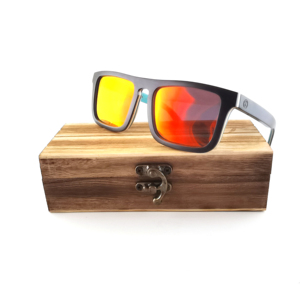
Global buyers are transitioning from petroleum-based diethyl phthalate plasticizers to bio-based triethyl citrate binders. Certified biodegradable wood fibers and closed-loop cellulose formulations are shifting from niche sustainability options to essential baseline requirements for European and North American retail distribution.

Trend 02 • Smart Integration

Acoustic & Sensor Chassis Cavity Engineering

The boundary between traditional ophthalmic spectacle frames and wearable smart electronics is blurring. Factories with specialized CNC hollow-temple routing and precision injection channels are capturing market share by supplying smart audio-ready eyewear frames that retain standard optical bench glazeability.

Trend 03 • Modular Supply Chain

Low-MOQ On-Demand Additive Manufacturing

To combat holding inventory risks and deadstock markdowns, multi-location retailers are turning to 3D SLS titanium and nylon print production. This enables micro-batch localized production, seasonal colorway refreshes with zero expensive steel-mold tooling charges, and rapid on-demand restocks.

Trend 04 • Ergonomics

Universal Morphological Nose-Bridge Geometries

Modern B2B optical buyers demand inclusive anatomical sizing. Modern frame export lines now feature modular stepped nose pads, adjustable beta-titanium pad arms, and modified splay angles engineered to accommodate both European high-bridge profiles and East Asian shallow-bridge facial anatomies effortlessly.

Next-Generation Engineering Trends in Frame Mechanical Design

The contemporary eyewear consumer treats spectacle frames not merely as medical visual prosthetics, but as centerpiece fashion expressions that demand zero weight compromise. In our technical cleanrooms and CAD laboratories, three primary structural revolutions are redefining daily frame performance:

1. Friction-Based Screwless Hinge Systems: Traditional 3-barrel and 5-barrel hinges held together by micro-screws account for over 68% of post-sale customer returns due to screw backout, thread stripping, and loosening. Drawing inspiration from modern Scandinavian minimalism (such as Denmark's Monoqool), our engineering team manufactures patent-pending interlocking cylindrical spring-loops and wire-tension hinges. These components eliminate screws completely, requiring zero servicing over hundreds of thousands of flex cycles.

2. Hybrid Structural Co-Molding: Monolithic materials often present trade-offs—acetate offers deep color saturation but carries excess weight; titanium provides featherweight strength but limits color pattern diversity. Our advanced production combines high-modulus carbon fiber core laminates encased in Japanese raw acetate rings, stabilized with beta-titanium wire temples. This gives optical retailers frames that weigh under 12 grams while displaying rich, layered tortoiseshell patterns.

3. Aspherical Curvature Synchronization with Rx Lens Laboratories: A common failure in cheap wholesale frames is the distortion of high-cylinder or steep-minus prescription lenses when mounted into overly bowed frame fronts. Our industrial tooling optimizes the front bevel curve to a calibrated 4.0-to-4.5 base curve, ensuring that free-form progressive lenses and high-index aspherical elements (such as MR-8 resin) seat with uniform peripheral stress distribution, eliminating lens popping and peripheral astigmatic aberration.

Professional Due Diligence

Frequently Asked Questions for Optical Frame Importers

Critical technical, regulatory, and supply chain questions addressed directly by our Senior Optical Engineering and Global Logistics Team.

What minimum order quantities (MOQs) apply to custom OEM versus in-stock wholesale orders?
For in-stock catalog models across acetate, metal, and titanium collections, our MOQ starts at a low barrier of 50 to 100 pieces per model, allowing mixed colorways to assist independent boutiques with agile inventory planning. For full custom OEM/ODM production involving custom acetate sheet curing, laser temple branding, and proprietary hinge casting, our baseline MOQ is typically 300 pieces per model (split across 2 to 3 color variants) to offset CNC tooling and steel template fabrication costs.
How does your factory ensure compliance with FDA, CE, and ISO international standards?
Every production run destined for export undergoes accredited third-party testing. We hold active FDA Device Establishment Registrations for the United States market and ensure full Declaration of Conformity under EU Medical Device Regulation (MDR 2017/745) Class I medical devices. Our testing laboratory performs mechanical bridge deformation testing, 24-hour endurance flex tests (ISO 12870 clause 4.8), thermal stability tests up to 60°C, and perspiration exposure assays (ISO 12870 clause 4.9).
Can your production handle custom branded packaging, hard cases, and point-of-sale merchandise?
Yes. A successful eyewear brand launch requires an integrated presentation. We offer comprehensive private-label packaging suites including vegan leather hard cases, collapsible magnetic boxes, ultra-fine high-density microfiber cleaning cloths with embossed or heat-transfer logos, serialized warranty authenticity cards, and pre-printed barcode SKU tags ready for instant retail POS intake.
What is the standard lead time from initial 2D/3D design prototyping to final seaport dispatch?
The rapid prototyping phase takes 7 to 10 business days for functional 3D models and CNC acrylic prototypes. Once physical samples are confirmed and raw materials (such as custom aged acetate blocks) are prepared, standard mass production takes 45 to 60 days. For urgent replenishment of catalog styles with established tooling, turnarounds can be expedited to 25 to 30 days, shipped via air courier (DHL/FedEx/UPS) or sea freight (FOB Shanghai/Shenzhen/Ningbo).
How does the factory manage quality control (QC) and handle defective components?
We maintain an internal defect rate under 0.4% through a strict 4-stage inspection protocol: Incoming Material Inspection (IQC), In-Process Milling & Soldering Checks (IPQC), 100% Manual Hand-Polishing Inspection, and Final Optical Alignment & Packaging Quality Control (OQC). If any piece exhibits structural defects or plating failure within 12 months under standard dispensary conditions, we provide an immediate 1-to-1 credit replacement on subsequent purchase orders.
Do you supply ophthalmic demo lenses with anti-reflective or blue-light blocking properties?
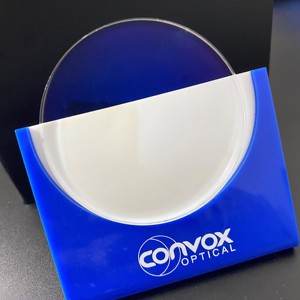
Yes. While economy factories install brittle 0.8mm clear plastic demo plates that distort frame eyewires, we fit our frames with optical-grade 1.2mm to 1.4mm CR-39 or acrylic demo lenses. These feature clean pad-printed branding, laser-etched alignment markings, and optional anti-scratch blue-light filtering coats, ensuring high presentation value for showroom display and immediate over-the-counter wearing.

Elevate Your Optical Frame Portfolio for the Upcoming Season

Whether you are expanding an established boutique retail presence, building a private-label independent eyewear collection, or seeking high-precision contract manufacturing with five generations of optical heritage, our engineering team is ready to assist. Review our complete export specification catalog, technical tear-sheets, and sample schedules today.

Get Catalog