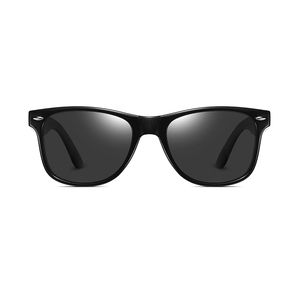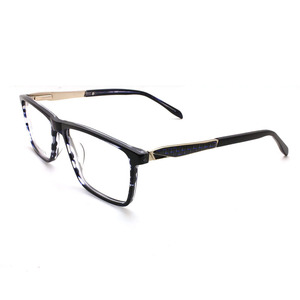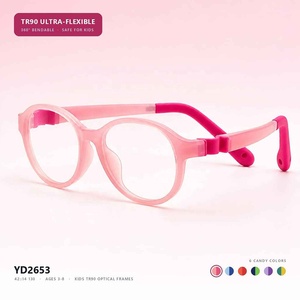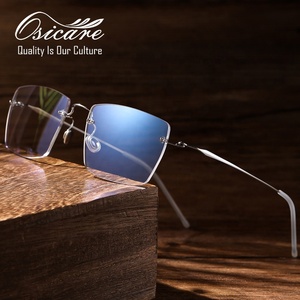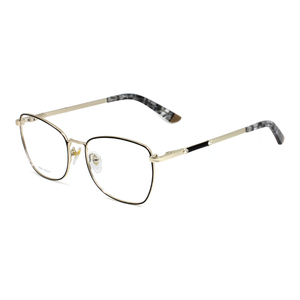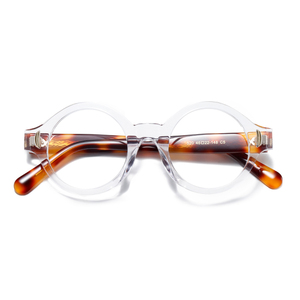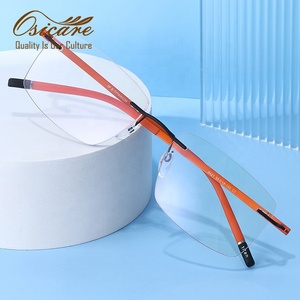
Explore eight core reference models representing current industrial standards across extruded Mazzucchelli-grade acetate, Grade-5 pure titanium, and medical-grade TR-90 thermoplastics.

Combining the heritage of century-old optical traditions with cutting-edge production hubs across Shenzhen, Wenzhou, and Danyang. We operate under stringent quality protocols that bridge Western independent dispensing realities with high-throughput manufacturing.
The global eyewear sector is undergoing an unprecedented structural transition. For decades, international sourcing directors, private label eyewear brand founders, and independent eyecare professionals (ECPs) navigated global procurement through conventional trade shows and geographically isolated intermediaries. Today, modern semantic search algorithms and data-driven supply networks demand total operational transparency, rapid product iteration, and rigorous industrial quality assurance.
Sourcing optical frames from China is no longer merely a cost-reduction exercise; it has become an exercise in engineering leverage and material innovation. China represents over 70% of worldwide spectacle frame manufacturing volume, anchored by three major geographical clusters: Shenzhen (high-end bespoke acetate and titanium precision machining), Wenzhou (high-throughput fashion acetate and injection TR-90), and Danyang (raw optical blanks, lenses, and structural metal components). Sourcing directors must understand how to navigate these technical nodes to maximize margin without sacrificing optical precision at the dispensing desk.
Navigating the Chinese optical landscape requires an understanding of industrial geography. Misallocating an order to an incompatible manufacturing cluster directly impacts yield rates, lead times, and post-sale optical performance:
Shenzhen (Henggang District): Renowned for high-precision CNC acetate fabrication and medical-grade Grade-1 through Grade-5 titanium machining. If your brand board demands intricate three-dimensional acetate sculpting, aged raw Italian/Japanese materials (such as Mazzucchelli 1849 or Daicel), multi-axis hinge pin inserts, and PVD titanium vapor deposition, Shenzhen is the undisputed manufacturing benchmark. The tolerance thresholds here mirror luxury Swiss horology standards.
Wenzhou (Ouhai District): The world capital of middle-to-high volume injection-molded TR-90, high-elasticity stainless steel, and commercial acetate collections. Wenzhou excels in automated manufacturing lines, high-speed automated polishing, and standardized assembly lines, offering the best cost-to-quality ratio for fast-moving retail assortments.
Danyang: While widely regarded as the lens center of the world, Danyang also dominates base-metal processing, spring-hinge hardware casting, and low-cost ready-to-ship reading glasses. Sourcing directors frequently bundle frame assemblies with pre-edged non-prescription blue-light blocking lenses or stock demonstration blanks out of this logistics node.
From an optometrist's perspective, a frame is not merely a fashion accessory; it is an ophthalmic medical device engineered to hold prescription lenses in precise pantoscopic tilt and vertex distance alignment over a prolonged wear cycle. Sourcing failures usually surface at the optical bench, where poorly constructed frames crack under standard lens bevel insertion or deform under moderate hot-air frame warmers.
To eliminate these catastrophic field failures, leading manufacturers deploy high-grade materials with documented thermo-elastic stability:
Cellulose Acetate vs. Recycled PC: High-grade acetate derived from cotton seed fibers and wood pulp undergoes natural curing for a minimum of 60 to 90 days. This degassing phase ensures that internal stresses are dissipated, preventing warping after the optician cuts progressive lenses into the eyewire. In contrast, for sustainable eco-lines, virgin PC is replaced with molecularly certified circular polymers that achieve UV400 clarity while meeting environmental compliance mandates.
Titanium Grade Differentiation: A major trap in budget optical frame sourcing is ambiguous "titanium" labeling. Pure titanium (Grade 1 and 2) offers complete biocompatibility and corrosion immunity, ideal for rim wire and endpieces. Meanwhile, Beta-Titanium (alloyed with vanadium and aluminum) delivers modulus-of-elasticity memory, making it the premier choice for temples and screwless bridge architecture that flexes without structural fatigue.
The optical export sector is pivoting rapidly toward technologically advanced, socially accountable production ecosystems. Procurement directors must align their purchasing with three dominant macro trends:
Trend A: Selective Laser Sintering (SLS) and Additive Tooling: As exemplified by pioneering Nordic lines such as Monoqool, on-demand 3D-printed polyamide frames are redefining inventory dynamics. Additive manufacturing completely bypasses the traditional 4-month injection-mold tooling timeline, allowing independent optical buyers to commission custom geometry runs in batches as small as 50 units without tooling amortizations.
Trend B: Decarbonization and Circular Material Passports: European Union sustainability mandates (including the Corporate Sustainability Due Diligence Directive) require optical exporters to track the lifecycle footprint of frames. Forward-looking Chinese suppliers are implementing bio-based plasticizers (substituting phthalates) and verifiable ISCC-certified supply chains, giving private labels the documentation needed for ESG compliance.
Trend C: Precision Screwless Hinge Systems: Traditional barrel hinges held by micro-screws account for over 42% of optical return-to-vendor (RTV) claims caused by thread stripping and loosening. Next-generation optical engineering relies heavily on friction-locking hinges, elastic fold mechanisms, and laser-welded joint geometries that require zero screw maintenance over the product's lifespan.
A rigorous quality audit must encompass optical-specific stress benchmarks. B2B procurement contracts must explicitly define acceptance criteria across four non-negotiable stress simulations:
1. Acetate Delamination & Solvent Resistance: 48-hour continuous immersion in synthetic perspiration solutions followed by ultrasonic cleaning to verify the structural adhesion of multi-laminate layers.
2. Spring-Hinge Endurance Cycle: Automated pneumatic mechanical actuators cycling the temples open and closed 20,000 times under standard resistance, checking for friction decay or spring fracture.
3. Nickel-Release Testing: Complete compliance with EN 16128 standards, guaranteeing that metallic surfaces in continuous contact with human skin release less than 0.5 μg/cm²/week of free nickel ions, eliminating contact dermatitis risks.
4. Lens Groove Uniformity: Optical comparator verification of the eyewire V-bevel profile to guarantee consistent 110-degree bevel seating, preventing lens popping when high-minus high-index lenses are inserted.
Identify the technical capabilities distinguishing market leaders from low-tier assembly vendors in modern optical manufacturing.
Zero-tooling rapid deployment leveraging SLS nylon synthesis. Eliminates minimum order quantity barriers while delivering 30% lighter frame profiles with infinite color impregnation possibilities.
Formulations using non-petrochemical diethyl phthalate substitutes. Guaranteed biodegradability under ISO 14855 composting conditions without compromising high-gloss mechanical polish properties.
Next-generation springless, screwless interlocking junctions machined from surgical-grade titanium. Zero thread loosening, zero lubrication needs, and absolute structural reliability over years of use.
Combining Western optical heritage with high-precision Asian manufacturing infrastructure to eliminate supply chain vulnerability.
Five generations of optometry and optical retail insight guarantee every bridge, temple bend, and pantoscopic curve is built for human cranial anatomy and practical dispensing.
Full-time, in-house metallurgical engineers and optical dispensing technicians inspect every batch. Factory-floor audits match ISO 9001 and ISO 13485 medical device systems.
Direct communication with technical optical engineers—never outsourced sales desks. Rapid turnaround on 3D CAD modeling, rapid physical prototyping, and tooling evaluations.
Critical answers to direct technical inquiries regarding MOQ, regulatory compliance, material verification, and production schedules.
For custom CNC acetate, standard industrial production runs are 300 units per model, broken into 100 units per colorway. High-grade titanium frames typically mandate 300 units per mold due to EDM electrical discharge machining setups. However, our ready-to-ship catalog and select TR90 models can be secured at lower introductory volumes to support brand testing.
All exported eyewear conforms to ISO 12870:2016 ophthalmic optics standards. We maintain FDA Device Master Filings under 21 CFR 886.5844 (Spectacle Frame) and Class I Medical Device documentation for EU MDR (2017/745). Batch test reports covering biocompatibility, nickel leaching (EN 16128), and frame flammability are provided with each Bill of Lading.
Upon final approval of 2D/3D CAD technical drawings, rapid physical prototype samples require 14 to 21 working days. Full mass production lead times are 45 to 60 days for injection-molded TR-90 and surgical steel, and 75 to 90 days for complex, multi-laminate handmade acetate or custom PVD-coated pure titanium frames.
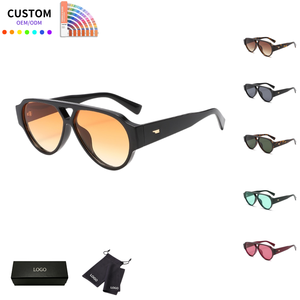
Yes. Custom branding capabilities encompass ultra-fine fiber laser engraving, high-resolution hot-foil stamping, inner-temple tampography (pad printing), metallic logo casting with enamel fills, and bespoke molded temple-tip endcaps. We also engineer custom FSC-certified cases, micro-fiber cloths, and retail packaging suites.
Every inbound raw material sheet undergoes spectral analysis and dimensional stabilization ovens. Acetate slabs are dried in humidity-regulated curing rooms to prevent post-milling warping. Titanium bars undergo ultrasonic non-destructive flaw detection to ensure no micro-voids exist within the hinge or bridge weld nodes.
We provide a comprehensive 12-month manufacturing warranty against structural failure, solder point breakage, or plating peeling under regular wear. Spare parts packages—including matching screws, silicone nose pads, and replacement temple assemblies—are systematically bundled (2%–3% over-pack ratio) with every commercial wholesale dispatch.
Initiate direct communications with our technical optical engineering desk. Receive instant material samples, full compliance whitepapers, and tailored volume pricing matrices.