




Future Procurement Trends in the Global Sustainable Eyewear Market (2025–2030)
Optical chain store directors, corporate brand licensors, and independent boutique networks are restructuring their procurement strategies to mitigate impending carbon border adjustments and meet consumer demand for ethical consumer goods. The following developments represent the non-negotiable vectors shaping wholesale sustainable optical imports over the next five years:
1. The Shift to Bio-Circular and Chemically Recycled Monomers
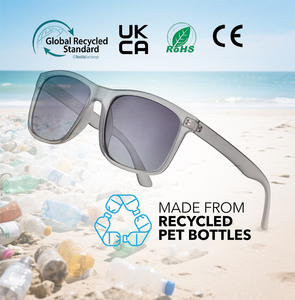
Mechanical recycling of PET water bottles into RPET frames has become commonplace, but progressive wholesale buyers are pivoting toward chemically recycled, depolymerized polyesters and certified mass-balance polyamides. Chemical recycling eliminates batch-to-batch color variance, yellowing, and brittleness—historical challenges associated with mechanical recycling—allowing designers to produce high-transparency crystal acetate frames with identical optical clarity to virgin fossil polymers.
2. Mono-Material Construction for Infinite Disassembly
End-of-life collection remains the greatest hurdle in optical sustainability. Conventional frames blend steel hinges, nickel wire cores, and organic lenses inside acetate or polycarbonate rims. Future-proof product portfolios, as developed in our Chinese engineering plants, embrace screwless snap-fit hinges and mono-material frame assemblies (such as 100% bio-based polyamide nylon rims, hinges, and temples). This allows frames to be shredded and re-extruded without manual multi-metal separation.
3. Agrarian Waste Composites and Rapid Regeneration Fibers
Wheat straw, coffee ground fibers, and rapidly renewable bamboo fibers reduce synthetic polymer weight by up to 40%. Sourced from agricultural byproduct collection hubs throughout rural China, these natural polymers are compounded with non-toxic binding agents to create distinct, organic matte textures that serve as strong visual indicators of sustainability on retail shelves.
4. Dematerialization via 3D SLS Additive Production
Subtractive milling of acetate sheets typically generates up to 70% virgin waste shavings. The future of low-carbon bulk eyewear lies in zero-waste additive manufacturing using bio-based PA11 and PA12 powders derived from castor beans. On-demand manufacturing eliminates excess inventory risk and allows independent optometrists to order bespoke frame fits with nearly zero raw material loss.