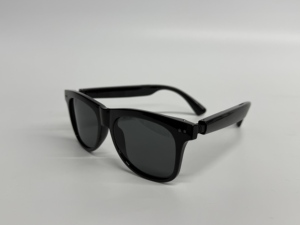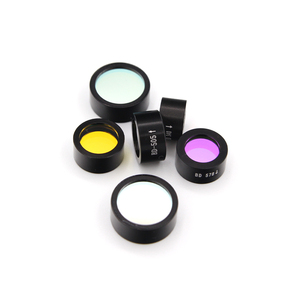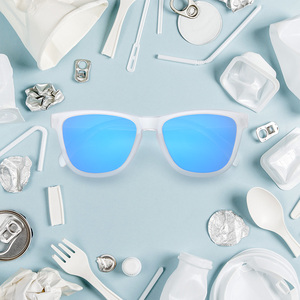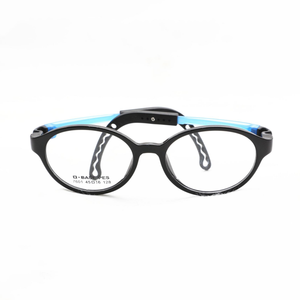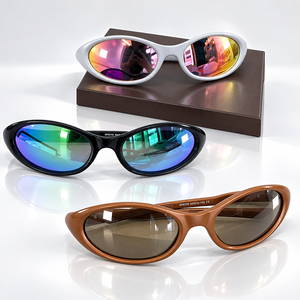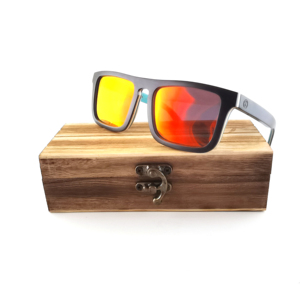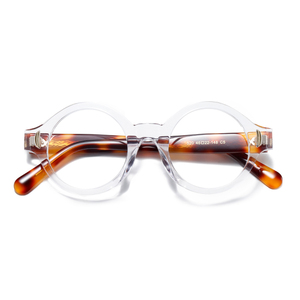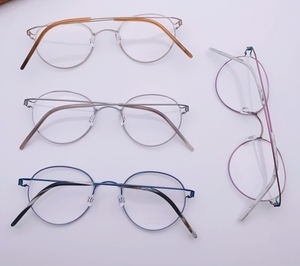
Direct OEM/ODM catalog spanning smart wearable integrations, clinical thin-film optics, hyper-flexible TR90 memory polymers, and artisan hand-polished luxury frames.
From custom gold-filled spectacles in 1879 St. Louis to high-throughput CAD/CAM micro-machining and additive manufacturing, Studio Optyx provides independent optical practices with uncompromised manufacturing integrity.
Guided today by Jack Erker III and Tony Erker, our legacy remains untangled from private equity conglomerates. Every design decision, hinge tension calibration, and material batch is directly accountable to independent optical retailers.
Our hybrid infrastructure merges handcrafted artisan hand-buffing (72-hour beechwood tumbler regimens for Erkers1879 and Tocco) with precision robotic CNC milling and Selective Laser Sintering (SLS) for screwless Monoqool frames.
We eliminate inventory deadweight through curated optical trunk show kits, real-time EDI order integration, and bespoke vendor terms tailored for high-dispensing optometry clinics across the Americas, Europe, and Asia-Pacific.
True ultra-light performance is not achieved simply by trimming acetate thickness; it requires an exact balance of Young's modulus, structural flexural fatigue, and pantoscopic tilt stability.
Utilizing vegetable-derived castor bean polymer powders, our Selective Laser Sintering chambers construct seamless, monolithic chassis structures weighing under 4.0 grams without metallic inserts or core wires. The resulting porosity is sealed via closed-loop hydrophobic dye infiltration, preventing sweat degradation and ensuring biocompatible ISO 10993 compliance.
Forged from Japanese Ti-15V-3Cr-3Sn-3Al alloys, our temple cores maintain a tensile yield strength above 980 MPa while offering unmatched flexural memory. Cold-worked wire drawing yields temples as thin as 0.75mm that deliver gentle, balanced temporal grip without creating pinch points around the mastoid process.
By eradicating micro-screws, our proprietary interlocking hinge joints eliminate the number one cause of clinic dispensing returns. Precision-stamped cantilever springs and CNC-milled spiral sockets absorb mechanical shock over 50,000+ open-close cycles without loosening, drift, or hinge galling.
| Material Classification | Specific Density (g/cm³) | Tensile Strength (MPa) | Hinge Failure Rate (50k Cycles) | Optician Glazing Complexity | Primary Commercial Application |
|---|---|---|---|---|---|
| Beta-Titanium (Ti-15-3-3-3) | 4.75 | > 980 | < 0.02% | Cold-Glaze / Step-Bevel | Minimalist Rimless & Hybrid Chassis |
| Swiss Grilamid TR90 | 1.02 | > 85 | < 0.08% | Cold-Snap Insertion | Flexible Children's & Sports Wrap Frames |
| SLS Polyamide (PA12) | 0.98 | > 65 | < 0.04% (Screwless) | Thermal Insert (60°C) | Independent Avant-Garde Designer Frames |
| Cellulose Bio-Acetate | 1.28 | > 55 | < 0.45% (Riveted 5-Barrel) | Standard Hot-Air Warmer | Artisan Heritage Prescription Frames |
| Carbon Fiber Pre-Preg | 1.45 | > 1200 | < 0.12% | CNC Automated Lens Profiling | Ultralight High-Torque Performance Rims |
Wholesale buyers, medical distributors, and independent practices must align their inventory roadmaps with the next wave of technological and regulatory transformations.
Traditional audio and AR glasses fail in retail due to heavy 45g+ nose bridge loads. Next-gen procurement demands lightweight TR90/titanium hybrid chassis that tuck micro-batteries and directional bone-conduction transducers into the temples while keeping front chassis weight below 12g.
With global sustainability mandates like EU CSRD and Extended Producer Responsibility (EPR), B2B buyers are shifting from petrochemical plasticizers to bio-based triethyl citrate binders. Expect frames that degrade cleanly in industrial composters within 180 days without sacrificing luster or hand-buffing clarity.
Optical stores are cutting inventory overhead by sourcing parametric 3D-printed chassis. Practitioners take a facial 3D scan at dispensing, and our export facilities produce bespoke temple lengths, bridge widths, and pantoscopic angles within a 10-day turnaround cycle.
Precision incidence coatings, such as ion-assisted deposition (IAD) 45-degree dichroic mirrors, are moving beyond analytical labs into everyday lifestyle eyewear. These deliver 98%+ transmission efficiency, zero chromatic aberration, and military-grade scratch thresholds.
Clear, technical answers to the most common questions raised by optical chain buyers, laboratory directors, and wholesale importers.
In high-end optical engineering, a prescription optical chassis (demo lenses excluded) must weigh less than 10.5 grams to qualify as ultra-light. Rimless beta-titanium and 3D-printed SLS frames often weigh between 3.8g and 7.5g, while full-rim high-density acetate or TR90 hybrid designs typically target 8.5g to 11.5g. Keeping the total front-weight under this threshold reduces nasal bridge pressure to less than 1.2 kPa, eliminating red indentation marks and bridge fatigue during all-day wear.
Screwless hinges engineered from cold-worked Japanese beta-titanium or spring-steel rely on uniform mechanical interlocking rather than the shearing force of a single micro-screw. In high-minus prescriptions (above -6.00D with lens edge thicknesses exceeding 5.5mm), standard screw barrels can loosen from uneven temporal torque. Screwless designs distribute temporal flexural stress across a continuous 180-degree cam arc, maintaining consistent closing tension (tested between 0.8N·m and 1.2N·m) through more than 50,000 cycles.
Swiss Grilamid TR90 is a semi-aromatic polyamide with an elastic memory threshold of 85 MPa. It should never be heated beyond 60°C in standard optical air warmers, as excessive heat can break down its molecular memory and loosen lens retention. Labs should edge lenses with a standard 110-degree V-bevel and size them to a precise 1:1 circumference match (tolerance within +0.1mm / -0.05mm). This allows safe cold-snap insertion without warping the eyewire or inducing base-curve flattening.
All frames produced and exported by our facilities undergo thorough batch-level verification according to ISO 12870:2018 (Ophthalmic Optics – Spectacle Frames). Our metallic and plating processes comply with EN 1811:2011+A1:2015, guaranteeing nickel release limits below 0.2 μg/cm²/week for prolonged skin contact. For the North American market, our products maintain valid FDA Class I Medical Device registration and comply with California Proposition 65 and ANSI Z80.3 impact standards.
For existing open-mold platforms (such as our high-flex kids' TR90 and outdoor active sunglasses), our standard production MOQ starts at 300 pieces per SKU across 3 curated colorways, with rapid private-label laser-engraving turnarounds within 15 to 21 business days. For fully custom ODM blueprints involving new CNC tooling, pantograph fixtures, and parametric CAD engineering, prototype sampling takes 25 days and bulk production requires 60 to 75 days, with a volume threshold of 600 to 1,200 pieces.
Additive Selective Laser Sintering (SLS) removes the design limitations of mold draft angles, allowing for intricate hollow bridges, organic internal ribbing, and variable rim thicknesses that drop weight to as low as 4 grams. Furthermore, SLS manufacturing produces zero tooling waste and operates without expensive metal injection molds, allowing brands to launch seasonal boutique collections with virtually zero tooling amortization costs.
Our custom 45-degree incidence angle dichroic mirrors rely on high-vacuum Ion-Assisted Deposition (IAD), applying dozens of alternating dielectric layers (such as TiO2 and SiO2) on BK7 optical glass. This delivers 98%+ reflectance at specified wavelengths while transmitting remaining spectra with under 0.5% scatter. These optical elements are critical for ophthalmic slit-lamps, fundus imaging systems, and surgical diagnostic loupes.
Every frame batch undergoes rigorous mechanical stress testing: (1) a 500-gram bridge flexure deflection test to verify elastic return; (2) a 50,000-cycle temple endurance test simulating 5 years of daily wear; (3) a 48-hour salt spray corrosion chamber (ISO 9227) testing for surface oxidation, and (4) a sweat immersion test at 55°C for 24 hours to confirm the coating and acetate finish will not discolor or peel.
Yes. Studio Optyx simplifies B2B frame buying. Accounts can consolidate heritage hand-crafted frames (Erkers1879), modern youth lifestyle styles (NW77th), accessible everyday frames (The Neighbors), architectural comfort lines (Tocco), advanced Danish 3D-printed styles (Monoqool), and Parisian ready-to-wear pieces (ba&sh) under a single consolidated purchase order with unified credit terms and customer support.
We provide full-service export documentation, including accurate HS Code classifications (9003.11 for plastic optical frames, 9003.19 for precious/non-precious metals, and 9004.10 for sunglasses), Certificates of Origin, drop-ball impact certificates for the FDA, and REACH declaration dossiers. Frames are packed in moisture-sealed static-free bubble sleeves inside drop-tested, reinforced corrugated export cartons to ensure safe delivery to distribution hubs worldwide.
Whether you need an OEM/ODM production run, a curated boutique trunk show kit, or customized material specifications for your private label, our 5th-generation optical team is ready to assist.