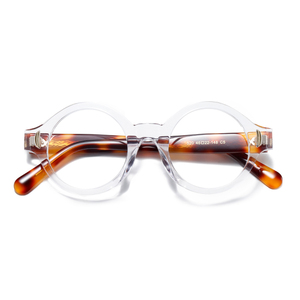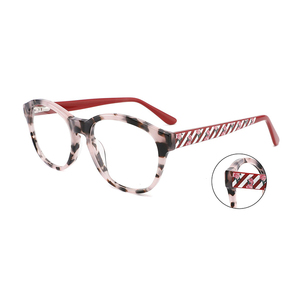
Engineered to satisfy JIS B 7285 visual standards, medical ergonomics, and boutique micro-brand specifications for discerning Tokyo, Osaka, and regional Japanese buyers.
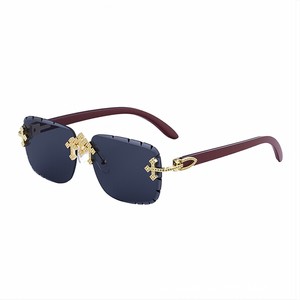
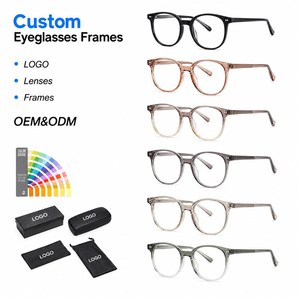
Years Heritage Craft
CNC Milling Precision
JIS Standards Compliance
Global Retail Partners
The Japanese eyewear landscape is internationally celebrated for legendary craftsmanship, originating from heritage hubs like Sabae (Fukui Prefecture). However, shifting economic paradigms, rapid changes in retail turnover, and the demand for fast micro-batch collections have led top-tier Japanese eyewear brands, independent megastores (such as JINS, Zoff, and Paris Miki), and avant-garde designer boutiques to source production from high-precision Chinese facilities.
As China's foremost premium designer eyewear OEM/ODM manufacturer, we bridge world-class multi-axis digital fabrication with time-tested bench artisanship. Integrating five generations of lineage with state-of-the-art Japanese CNC mills, automated German barrel-tumbling polishers, and proprietary hypoallergenic PVD (Physical Vapor Deposition) coating chambers, our facility delivers high-yield production runs calibrated explicitly for Asian biometric ergonomics and rigorous Japanese mechanical criteria.
How our precision designer frames and advanced optical components address distinct commercial, clinical, and lifestyle sectors throughout Japan.
Catering to niche, discerning fashion flagships that require low-volume, multi-color acetate and surgical-grade titanium frames. Incorporating custom 3D printed additive geometries, architectural beveled bridges, and ultra-deep acetate milling that rival European couture releases.
Optimized for urban commuters and extended screen exposure. Ultra-flexible TR-90 and beta-titanium hybrid assemblies featherweighting below 8.5 grams, designed with shallow vertex distances, elevated pantoscopic angles, and nose pad splay suited to flatter facial contours.
Engineering specialized progressive frames and ophthalmic components for private ophthalmology clinics and optometric centers across regional Japan. Seamlessly housing heavy-minus or multifocal high-index MR-8 resin lenses without rim distorting or temporal pinch pressure.
1. Biometric Asian-Fit Geometry: Standard Western frames frequently slip forward or rest excessively against the cheekbones of Japanese wearers due to a flatter nasal bridge and wider zygomatic bone architecture. Our dedicated engineering division designs bespoke "Asian-Fit" frames featuring heightened (14mm-16mm) bridge crests, engineered multi-step titanium pad arms with adjustable splay, and optimized face-form wraps below 5 degrees to eliminate spherical optical aberrations.
2. The Surge of Eco-Conscious Bio-Acetate and Recyclable Polymers: In alignment with Japan’s carbon-neutrality initiatives and the strict consumer demand for Sustainable Development Goals (SDGs), Japanese procurement managers actively seek frames manufactured from plant-derived cellulose acetate (Mazzucchelli-spec or eco-certified domestic pellets) devoid of phthalate plasticizers, alongside bamboo-composite hybrid temples.
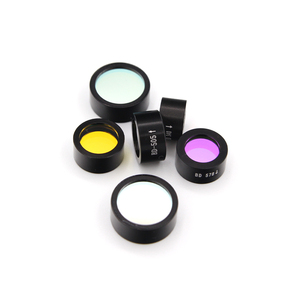
3. Smart Eyewear & Micro-Optics Integration: Japan’s tech-integrated lifestyle has accelerated the adoption of lightweight smart eyewear. From electro-acoustic polarized outdoor glasses to precision clinical equipment integrating 45-degree dichroic mirrors with 98% spectral reflectance, cross-disciplinary optoelectronic frames are pioneering high retail growth in Akihabara and central tech hubs.
4. Titanium Minimalism vs. Bold Heritage Revival: The domestic Japanese frame palette alternates between surgical, screwless beta-titanium structures (inspired by Nordic minimalism) and heavyweight 8mm-10mm vintage acetate silhouettes reminiscent of mid-20th-century artisan classics like our Erkers1879 archival designs.
Why Tier-1 Japanese optical brands and retail consortiums bypass intermediaries to partner directly with our specialized export manufacturing facility.
Rooted in five generations of design excellence since 1879. We combine century-old bench detailing with digital precision, honoring the highest echelon of craftsmanship demanded by Japanese master opticians.
Equipped with 5-axis computerized milling centers achieving tolerances within ±0.02mm. Perfect hinge pocket recesses, micro-groove bevels, and distortion-free bevel profiling guarantee seamless prescription lens mounting.
100% adherence to JIS B 7285 specifications. Every production lot undergoes 20,000-cycle bridge fatigue testing, 72-hour artificial perspiration immersion, and spectrophotometric UV400 transmittance validation.
Flexible MOQ structures tailored to boutique trunk shows, private optometric labels, and nationwide capsule releases, ensuring rapid tooling iterations and direct sample dispatch to Japan within 7 business days.
In our dust-free optical workshops, material integrity is prioritized above all else. For our metal and hybrid series, we utilize pure surgical titanium (Grade 2) and high-modulus beta-titanium alloys imported directly from certified metallurgical providers. Unlike standard nickel-alloy frames that corrode in humid summers, our vacuum ion-plating ensures non-allergenic surface contact, preventing galvanic corrosion and customer dermatitis.
For high-density acetate collections, our raw slabs undergo a proprietary 60-day oven-curing dehumidification process. This crucial stabilization prevents frame shrinkage, temple bowing, and lens pop-outs when subjected to fluctuating temperature differentials—a common logistical hazard when importing frames through Tokyo (NRT) or Osaka (KIX) ports into varying Japanese microclimates.
Clear, direct answers regarding customs protocols, JIS compliance, manufacturing tolerances, and account establishment.
Our entire manufacturing process strictly observes JIS B 7285:2008 (Ophthalmic optics - Spectacle frames - General requirements and test methods). Every export shipment to Japan is accompanied by batch testing certificates verifying dimension tolerances, hinge endurance (minimum 20,000 cycles under 1.5N tension), bridge deformation resistance, nickel-release limits under 0.5 μg/cm²/week, and mechanical strength under high-stress thermal variations.
Yes, absolutely. Over 60% of our production lines are explicitly calibrated for Asian cranial morphometry. We provide custom bridge crest heights (ranging from 14mm to 18mm), contoured pad-arm solder angles, 3D silicone saddle pads, and widened pantoscopic angles. Custom tooling for private labels can be executed to exact millimeter tolerances matching your brand's unique fitting specifications.
We understand that independent Japanese opticians and boutique chains prefer exclusive, limited-run capsule collections. For standard acetate and titanium lines, our starting MOQ is 300 pieces per model (divided into 3-4 custom colorways). For ultra-premium 3D-printed selective laser sintering (SLS) nylon or bespoke trunk-show collections, we offer flexible prototype batches starting as low as 100 units.
Our dedicated international trade team handles comprehensive DDP (Delivered Duty Paid) or FOB shipping directly to Tokyo, Yokohama, Nagoya, or Osaka. We supply full Japanese customs documentation including Certificates of Origin (under RCEP frameworks for preferential duty rates), Material Safety Data Sheets (MSDS), non-hazardous substance declarations, and bilingual Japanese/English commercial invoices.
Yes. We operate a rapid prototyping lab featuring precision SLA 3D printing and single-point diamond turning. Pre-production functional samples in genuine acetate or titanium can be fabricated and delivered to your office in Japan within 7 to 10 working days, allowing your optometry team to inspect tactile hand-feel, screw tension, and lens mounting accuracy before bulk commitment.
All frame eyewires are precision cut with standard 115-degree V-groove profiling designed to seamlessly fit 1.60, 1.67, and 1.74 ultra-high-index aspheric lenses, such as MR-8 and MR-174 monomers. The frame eye rim depth is engineered to conceal lateral lens edge thickness, preventing frame warping when edging severe myopia prescriptions common in the East Asian market.
Whether you require a distinctive private-label capsule, clinical optical components, or an authorized wholesale partnership across our heritage brands, our engineering team is ready to assist your procurement strategy.