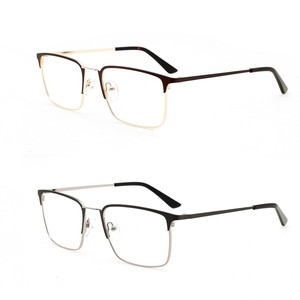

From ultra-lightweight titanium and SLS 3D-sintered architectures to hypoallergenic stainless steel and eco-conscious bio-acetate, our wholesale portfolio is precision-calibrated for European optometric standards.
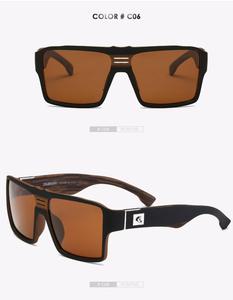
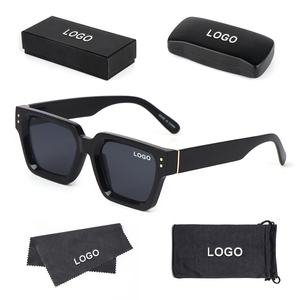
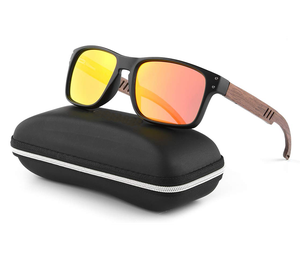
The ophthalmic optics sector in the Netherlands represents one of Europe's most mature, sophisticated, and discerning environments. Dominated by highly educated independent opticians (zelfstandige opticiens) and selective multi-store retail conglomerates (such as GrandVision, Specsavers, and Hans Anders), the Dutch consumer demands a convergence of ergonomic excellence, progressive lens compatibility, subtle minimalist aesthetics, and strict carbon-neutral stewardship. For Dutch eyewear buyers, importers, and brand houses sourcing from China, the historical paradigm of standard mass manufacturing is completely obsolete.
As a seasoned custom optical frame manufacturer, our manufacturing infrastructure bridges precision Chinese industrial execution with strict Dutch optometric expectations. Drawing upon five generations of historical design lineage and artisanal bench craft dating back to 1879 through our collaborative brand heritage, we execute custom OEM/ODM frame development with rigorous dimensional tolerance control (±0.15mm), medical-grade surface finishing, and full EU Medical Device Regulation (MDR 2017/745 Class I) technical documentation. Our specialized manufacturing export channel serving the Netherlands ensures frictionless port-of-entry velocity via the Port of Rotterdam and Amsterdam Schiphol Airport (AMS).
"Modern Dutch opticians are not merely buying a visual aid; they are curating a precision medical device that must endure maritime coastal humidity, withstand 120-kilometer daily cycling commutes, and offer effortless lens edging profiles for advanced freeform progressive lenses."
Whether your commercial operation focuses on bespoke private-label collections for boutique optometry practices along the PC Hooftstraat in Amsterdam, high-velocity titanium programs for regional retail groups across Noord-Brabant, or forward-looking additive 3D-sintered frames for design-conscious urban consumers, our enterprise capabilities guarantee comprehensive structural reliability, rapid turnarounds, and superior B2B wholesale unit economics.
Exporting optical frames to the Netherlands requires far more than aesthetic mimicry. Our R&D engineering department constructs customized specifications aligned with Dutch cranial morphology, daily microclimates, and dispensing workflows.
The Netherlands possesses the tallest average population globally, requiring distinct anthropometric parameters. Standard Asian or Mediterranean frame dimensions (135mm–140mm temple lengths; 50mm–52mm lens widths) lead to severe temple pinching, temporal pressure headaches, and forward slippage among Dutch consumers. We manufacture custom European fit tooling providing lengthened temples (145mm to 155mm), widened frontal apertures (54mm to 58mm eyesize), and expanded nose bridge geometry (17mm–20mm) calibrated specifically for Northern European cranial structures.
With cycling representing over 27% of all trips in the Netherlands, frames are subjected to persistent wind velocities, sudden North Sea downpours, high salinity coastal ambient air, and rapid thermal shifts. Our frames incorporate medical-grade Beta-Titanium and ion-plated multi-layer PVD vacuum coatings that exceed 120-hour salt spray corrosion testing (ISO 9227). Reinforced 5-barrel and 7-barrel OBD hinges with internal Nylok thread-locking screws prevent frame loosening caused by cobblestone bicycle vibrations across Amsterdam canal bridges.
The Dutch ophthalmic market features an extraordinarily high penetration of freeform progressive (multifocal) lenses driven by an aging demographic and intensive desk bound knowledge work. Our optical frame chassis are designed with an optimized pantoscopic angle (7° to 9°) and vertex distance clearance (12mm–14mm). Minimum B-measurement depths (≥34mm) are preserved across all styles, preventing optical distortion or peripheral corridor cutoff when Dutch lab technicians edge high-index progressive blanks.
Aligning your stock with current buying behaviors in Amsterdam, Rotterdam, and The Hague. We analyze the four primary market forces dictating consumer choice and retail margin expansion in 2025–2030.
Driven by strict Dutch government circularity targets (Nederland Circulair 2050), consumer demand has pivoted massively toward verified sustainable materials. We manufacture optical frames using ISCC-certified bio-based cellulose acetate (plasticizer derived from renewable organic sources rather than petroleum) with biodegradable ratings under ISO 14855, as well as 100% GRS-certified recycled ocean PC.
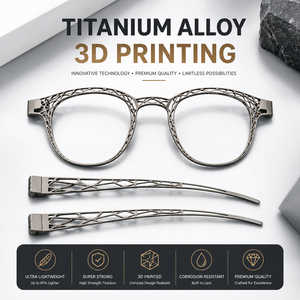
Influenced by Scandinavian and Danish architectural minimalism (widely revered by Dutch interior designers and architects), screwless eyewear systems have surged in boutique optometry clinics. Our advanced Selective Laser Sintering (SLS) additive manufacturing processes produce PA12 polyamide fronts weighing under 4.5 grams, seamlessly locked with titanium temples without prone-to-failure micro-screws.
With high computer literacy and remote work adoption throughout the Randstad metropolitan belt, high-grade anti-blue light clear plano lenses and dedicated computer workstation frames have moved from seasonal niche to year-round core inventory. Dutch buyers frequently request integrated blue-light blocking CR-39 and polycarbonate optical blanks pre-fitted into wholesale custom frames.
Under the EU Corporate Sustainability Due Diligence Directive (CSDDD) and Corporate Sustainability Reporting Directive (CSRD), Dutch optical chains must audit tier-1 and tier-2 Chinese suppliers. Our factory provides open-book environmental audits, BSCI social accountability certificates, conflict-free mineral declarations, and localized non-toxic plating documentation.
| Material Classification | Tensile Strength & Elasticity | Weight Profile | Corrosion & Hypoallergenic Rating | Ideal Dutch Retail Placement |
|---|---|---|---|---|
| Japanese Pure Titanium (Grade 2 & Beta-Ti) | Extreme flex recovery; tensile strength >850 MPa | Ultra-light (9.8g - 14.5g complete) | 100% Biocompatible; zero nickel release (EN 16128 compliant) | High-End Independent Opticians |
| Eco Bio-Based Cellulose Acetate (M49 Equivalent) | High structural memory; internal core-wire stabilization | Medium weight (22g - 29g complete) | Zero toxic plasticizers; non-reactive with skin sebum | Boutique Urban Design Studios |
| SLS 3D Printed Medical-Grade PA12 Polyamide | High impact absorption; shatterproof flexibility | Featherweight (4.2g - 8.0g front) | Inert polymer; immune to sweat, saltwater & rain degradation | Modern Tech-Driven Practices |
| Stainless Steel 304L / Monel Anti-Tarnish Matrix | High structural rigidity; clean solder-joint integrity | Balanced profile (16g - 21g complete) | Multi-layer PVD vacuum plating; sweat resistant | Volume Commercial Chains |
Inheriting more than a century of refined optical craftsmanship, our factory seamlessly integrates heritage benchwork with ultra-precision automated manufacturing.
Every pair of custom frames manufactured in our facility undergoes hand-buffing by seasoned master optical craftsmen. While high-precision CNC routers carve our raw Italian and domestic acetate blocks to sub-millimeter tolerances, true surface depth and tactile comfort require 72 hours of multi-stage tumbling in German beechwood chips followed by manual bench polishing with organic pumice paste.
We provide full-spectrum CAD/CAM mold engineering tailored to European optical specifications. Have a technical sketch or an archival shape you wish to modernize? Our design engineering department delivers 3D digital renderings within 48 hours and physical SLA/SLS prototype mockups within 5 business days, allowing Dutch brand directors to evaluate face-fit ergonomics prior to opening mass steel molds.
Operating under strict ISO 9001:2015 quality assurance protocols, every manufacturing lot undergoes 100% inline inspection. From spectrometer verification of raw titanium ingot chemistry to automated hinge flexure cycling (tested to exceed 25,000 continuous opening/closing actuations), our failure rate remains steadily below 0.18% across thousands of export shipments into European ports.
Direct, transparent answers addressing customs clearance at Rotterdam, EU MDR Class I declarations, nickel release testing, MOQ flexibility, and door-to-door delivery schedules.
Under EU MDR 2017/745, non-corrective optical frames fall under Class I Medical Devices. We provide full Technical Documentation (TD) files including the EU Declaration of Conformity (DoC), Basic UDI-DI allocation, clinical evaluation summaries, and verification of compliance with harmonized standard EN ISO 12870:2018. If your Dutch entity acts as the Legal Importer under Article 13 of the MDR, our regulatory division supplies all required technical dossiers to satisfy Dutch Healthcare and Youth Care Inspectorate (IGJ) scrutiny.
For large volume wholesale sea freight, containers depart Ningbo or Shenzhen ports directly to the Port of Rotterdam with a maritime transit time of 28 to 34 days. For urgent boutique stock, sample rounds, or mid-size replenishment orders, we utilize air cargo into Amsterdam Schiphol Airport (AMS) with 4-to-6 day door-to-door customs clearance. We support both FOB, CIF, and full DDP (Delivered Duty Paid) terms, wherein all Dutch VAT (BTW 21%) and import tariffs (typically 2.9% for HS Code 9003.11.00 and 9003.19.00) are fully pre-managed.
Nickel contact allergy is strictly monitored across Northern Europe. All metal components, including bridge solder joints, nose pad arms, and decorative temple wire cores, are manufactured strictly from nickel-free alloys or protected with advanced multi-layer PVD barriers. Every production batch is certified via accredited third-party laboratories (SGS, TÜV Rheinland, or Intertek) verifying nickel release rates below 0.5 μg/cm²/week in accordance with EN 16128:2015.
We provide tiered MOQ configurations tailored to independent Dutch opticians versus large retail groups: For custom acetate or metal styles requiring custom mold tooling and bespoke acetate sheeting, our standard MOQ is 300 pieces per model (divided across 3 to 4 colorways, e.g., 75-100 pieces per SKU). For stock-supported ready-to-ship models with private label laser engraving (temple printing and custom demo lenses), we accommodate boutique trial orders starting from 100 to 150 pieces total.
Absolutely. Before signing off on mass manufacturing, we routinely supply fully finished physical samples (complete with optical dummy lenses) to your optical edging workshop or lab partner. This allows your team to verify base curve consistency (typically 4.0 to 4.5 base for European prescription lenses), groove depth, eyewire screw thread retention, and ensure flawless compatibility with Briot, Nidek, or Essilor automatic lens edging machinery.
Yes. In alignment with Dutch waste prevention mandates and consumer preferences, we eliminate single-use PVC and non-degradable polybags upon request. We supply biodegradable cornstarch PLA protective sleeves, FSC-certified recycled rigid presentation boxes, micro-fiber cleaning cloths made from 100% recycled rPET bottles, and collapsible cork/recycled vegan leather cases designed for premium shelf appeal in Dutch boutique practices.
Elevate your optical frame board with precision-crafted eyewear engineered for European ergonomics and built to the highest medical-device specifications. Contact our international wholesale project team today to receive physical material swatches, OEM pricing catalogs, or discuss customized frame development.