
Production Portfolio
Engineered Optical Systems Ready for Thai Regional Distribution
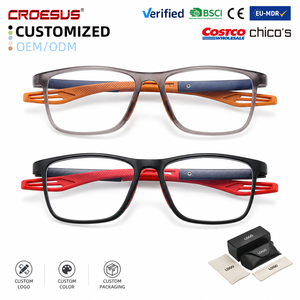
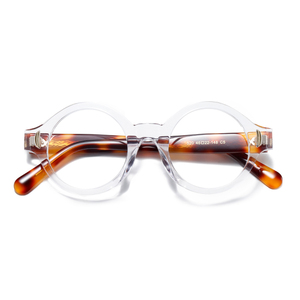
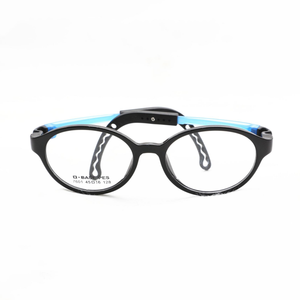
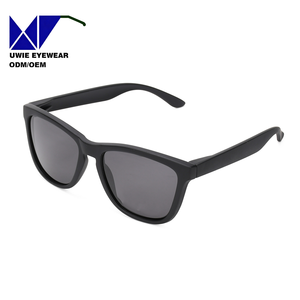
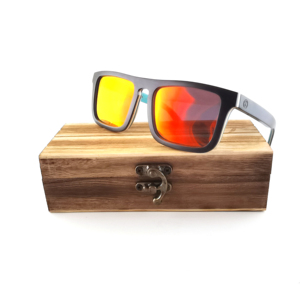
Curated frames featuring high-tensile spring hinges, neodymium magnetic locking clips, and ultra-durable substrates tested for extreme tropical heat and coastal humidity.
Market Intelligence Whitepaper
Macro Trends & Structural Demand for Clip-On Eyewear in Thailand
A comprehensive examination of consumer visual demands, atmospheric engineering challenges, and supply chain strategies shaping the Thai optical retail market from Bangkok to Phuket.
The eyewear landscape in Thailand is undergoing a fundamental structural transition. As Southeast Asia’s second-largest economy experiences rapid urbanization alongside rising digital screen engagement, visual health requirements are intersecting with lifestyle dynamics. Optical chains, independent optometry practices, and fashion retailers across Bangkok, Chiang Mai, and the Eastern Economic Corridor (EEC) face a discerning consumer base: one that demands effortless transition between indoor office work, high-glare tropical sunlight, and two-wheeled transit.
In this dynamic retail environment, Clip-On Eyewear systems have emerged as one of the fastest-growing categories in wholesale optics. Unlike Western markets where contact lenses or separate dedicated prescription sunglasses dominate, Thai consumers actively prefer multi-functional, single-frame solutions that combine medical visual correction with instantaneous sun protection. For B2B importers, buying groups, and brand owners, sourcing clip-on systems requires moving beyond generic commodity manufacturing toward advanced materials engineering capable of withstanding Thailand’s humid tropical climate.
Monsoon & Humidity Resilience
Thailand’s mean relative humidity frequently exceeds 80%. Standard steel clips suffer galvanic corrosion and hinge seizing. Our manufacturing lines implement ISO 9227 salt-spray resistant electroplating, vacuum ion deposition, and medical-grade silicone pads that resist hydrolytic degradation.
N52 Neodymium Magnetic Force
Motorbike and scooter transit accounts for over 70% of vehicle ownership in Thailand. Loose magnetic clips pose extreme road hazards. We incorporate hermetically sealed N52 rare-earth magnets inside the chassis lugs, delivering high-g shock retention even at speeds of 80 km/h without dislodging.
Triacetate TAC vs Polycarbonate
Every clip lens module manufactured for Thai distribution features multi-layered TAC (Triacetate Cellulose) polarized films or ballistic PC with scratch-resistant hard coats, delivering 100% UV400 filtering and mitigating intense equatorial solar reflectance from water, asphalt, and glass skyscrapers.
| Performance Parameter | Standard Commercial Grade | Our Thailand-Tropicalized B2B Standard | Clinical & Retail Benefit for Importers |
|---|---|---|---|
| Magnetic Coupling Mechanism | Exposed N35 Ferrite Magnets | Enclosed Marine-Grade N52 Neodymium Magnets | Prevents rust streaks under skin sweat; maintains zero-play retention during active vibration. |
| Frame Chassis Materials | Recycled ABS / Standard CP Plastic | Pure Beta-Titanium, EMS TR90, Mazzucchelli Acetate | Prevents frame deformation in high ambient heat (e.g., parked vehicles under direct 38°C sunlight). |
| Solar Lens Specifications | 0.74mm TAC Non-Uniform Filter | 1.0mm - 1.1mm Precision Polarized TAC / Polycarbonate | Eliminates optical distortion and prism deviation; adheres to ANSI Z80.3 and EN ISO 12312-1 standards. |
| Bridge Architecture | Rigid Monel Center Bar | Memory-Alloy Bridge or Sub-Rim Contour Clip | Allows effortless one-handed detachment by motor vehicle drivers and cyclists at traffic stops. |
According to field feedback collected across optical distribution networks in Pathumwan, Silom, and Chonburi, optical retailers report up to a 34% higher margin contribution on multi-piece magnetic optical sets compared to standard prescription frames. The value proposition to the end consumer is immediate: avoiding the steep financial burden of two separate sets of prescription lenses (one clear, one tinted) while maintaining an agile aesthetic suitable for modern life.
Localized Use-Cases
Engineering Solutions for Daily Thai Micro-Environments
How our frame and clip designs directly address urban, transportation, and industrial lifestyles across the Kingdom of Thailand.
Commuter Mobility & Motorbike Glare
Thailand’s road density requires continuous rapid adaptation. Commuters traveling along Sukhumvit or outer ring expressways encounter severe asphalt reflection and rapid transitions entering shaded underpasses or expressways. Our high-contrast amber and grey polarized clips attach in a fraction of a second without removing the optical frame from the face.
Office Aircon vs. Tropical Thermal Shock
The abrupt shift from 20°C air-conditioned offices or BTS Skytrain cars to 36°C humid outdoor air creates frame condensation and structural strain. By pairing hyper-stable EMS TR90 and Japanese Beta-Titanium skeletons with thermal-cured anti-fog backing, our frames preserve dimensional accuracy and prevent bridge slippage.
Coastal Marine, Golf & Leisure Optics
Thailand’s world-renowned coastal regions (Pattaya, Phuket, Koh Samui) and championship golf circuits demand extreme visual clarity. Our factory supplies precision hydrophobic, oleophobic, and anti-reflective coated clip-ons that repel sea spray, perspiration, and sunscreen residue with minimal maintenance.

Manufacturing Legacy Since 1879
Five Generations of Precision Optical Engineering Supporting Global Brands
Founded on a commitment to uncompromising optical craftsmanship that spans over 145 years, our family-owned design and manufacturing infrastructure combines heritage artisanal hand-finishing with advanced computer-controlled precision. While mass-market suppliers treat clip-on frames as stamped consumer gadgets, we engineer each chassis as a clinically certified Class I medical device.
Led by five generations of optical know-how, our facilities offer Thai wholesale distributors, private label fashion chains, and hospital optical networks complete turnkey OEM/ODM services: including custom pantoscopic angle adjustments for Asian facial ergonomics, customized base-curve matching to accommodate high minus prescriptions (-4.00D to -8.00D), and low-MOQ rapid sampling.
Procurement & Import Guidelines
Frequently Asked Questions by Thai Optical Importers
Essential guidance concerning Thai FDA compliance, import duties, customs tariffs under ACFTA, and material specifications.
What regulatory documentation is required to clear Clip-On Eyewear through Thai Customs and the Thai FDA? +
In Thailand, optical frames with non-corrective clip-ons are categorized under medical device regulations monitored by the Thai Food and Drug Administration (Thai FDA). Importers must hold an establishment license and submit Declaration of Conformity (DoC), ISO 13485 production certification, and CE marking records. Our factory provides complete technical dossiers, material biocompatibility test reports (ISO 10993), and UV400 spectral transmittance certificates to ensure frictionless clearance at Laem Chabang Port and Suvarnabhumi Customs.
How can Thai buyers utilize the ASEAN-China Free Trade Agreement (Form E) to minimize tariffs? +
Optical frames (HS Code 9003.11 / 9003.19) and sunglass components imported into Thailand typically incur an MFN customs duty rate between 5% and 10%, plus 7% VAT. Under the ACFTA framework, our qualified factory generates verified Certificate of Origin Form E documents, reducing standard customs import tariffs down to 0% preferential duty, substantially lowering your landed unit cost and expanding retail gross margins.
Do your clip-on systems accommodate high minus prescription lenses commonly required in the Thai population? +
Yes. A prevalent issue among generic clip-ons is that thick minus lenses (e.g., -5.00D or higher) extend beyond the front bezel, blocking the solar clip from securing flush against the magnetic anchors. Our specialized Asian-fit chassis incorporate an extended step-bevel rim groove and a 1.2mm front standoff clearance, allowing local opticians in Thailand to glaze high-index 1.60 and 1.67 lenses without interfering with magnetic contact points.
What are your minimum order quantities (MOQ) and lead times for OEM private label collections? +
For existing curated molds with custom logo laser engraving and branded packaging, our MOQ starts at 300 pieces per model (flexible across 2–3 colorways). For fully bespoke tooling and mold development (unique shapes, custom titanium rim profiles), MOQ is 1,200 pieces per chassis. Prototyping typically takes 15–20 days, while batch production runs are delivered within 45–60 days via direct sea or air freight to Bangkok.
How do your coatings prevent delamination and bubbles in Thailand's extreme heat? +
Automobile interiors parked in Bangkok can reach over 65°C. Lower-grade TAC lenses experience film separation (polarizing PVA film peeling from the outer cellulose sheets). We utilize autoclaved, thermally cross-linked polarizing multi-layer wafers bonded under cleanroom conditions, paired with multi-layer hydrophobic vacuum ion plating that resists both thermal warping and sweat acidity.
Partner with an Established Global Eyewear Design & Manufacturing House
Upgrade your optical retail chain, wholesale brand, or distribution network with laboratory-tested, climate-optimized clip-on frames engineered for maximum longevity and commercial margin.
Send an Inquiry