Handcrafted Acetate

Explore our export-ready optical inventory, combining ultra-durable cellulose acetate, bio-resins, memory titanium, and interchangeable magnetic clip systems designed for optical dispensary margins.
A comprehensive examination of mechanical retention, magnetic polarity alignment, prescription base-curve parity, and regulatory compliance under modern FDA/CPCSC directives.
In the United States, professional optical practices demand clip-on solutions that bridge visual aesthetics with uncompromising structural safety. Modern optical design distinguishes between two dominant clip methodologies: Sub-Surface Neodymium Magnetic Coupling (N52 Grade) and Micro-Engineered Bridge Claws.
Studio Optyx engineering teams optimize magnetic clip-on frames by recessing rare-earth NdFeB magnets into the temporal lugs of cellulose acetate or pure titanium chassis. By applying double-vacuum galvanic electroplating to the magnet housings, we eliminate oxidation caused by human sebum and ambient humidity—a frequent failure mode in lower-tier imports. For metal frames, such as our medical stainless steel and Monel collections, laser-welded mechanical clip-ons utilize tensioned 0.7mm high-tensile wire coated with surgical-grade silicone sleeves, protecting delicate anti-reflective (AR) lens coatings from peripheral scratching.
A common deficiency in commodity clip-on eyewear is the focal distortion introduced when plano polarized sun lenses make physical contact with high-minus or high-plus prescription lenses. Our industrial manufacturing protocol mandates strict Base Curve (BC) Parity matching. Optical base frames profiled at 4.00 to 4.50 diopter base curves are paired exclusively with matching 4.50 BC TAC (Tri-Acetate Cellulose) or injected polycarbonate lenses.
This uniform 1.8mm spatial gap preserves prescription vertex distances, preventing prism imbalances and optical distortion for high-cylinder corrections. For independent opticians and optical dispensaries across the US, this eliminates high lens-remake rates and maximizes patient comfort during outdoor transit.
How clip-on sunglasses drive retail dispensing, clinical conversions, and consumer utility across distinct American geographical and demographic segments.
Automotive commuters across the American Sunbelt face intense solar glare during morning and evening rush hours. Standard photochromic lenses often fail to darken inside automotive windshields because modern safety glass blocks the UV rays required for activation. Magnetic polarized clip-on eyewear delivers instantaneous category-3 light transmission attenuation, blocking horizontal glare from asphalt without requiring patients to purchase an entire secondary pair of progressive prescription sunglasses.
For outdoor recreation, fly fishing, and high-altitude driving in Colorado, Montana, and Michigan, glare attenuation is critical for visual acuity and eye health. Our TAC polarized clip-ons feature multi-layer internal anti-reflective backing to prevent back-glare bounce into the wearer’s cornea, providing 99.9% horizontal surface reflectance rejection across open water and snowpack terrain.
In tech-centric metropolitan areas like Seattle, New York, and Austin, remote and hybrid office workers demand rapid transition capability. Combining premium blue-light blocking reading glasses frames with a snap-on tinted polarized clip enables urban knowledge workers to transition seamlessly from multi-monitor indoor workstations directly to outdoor dining or urban commuting with zero mechanical effort.
Strategic purchasing managers are aligning their inventories with four major shifts impacting retail frame boards across independent OD practices and chain optical stores.
Dispensaries are pivoting away from bulky top-bridge clips. Current consumer preference centers on internal chamfer-embedded magnets concealed within temple end-pieces, preserving classical frame silhouettes when worn indoors.
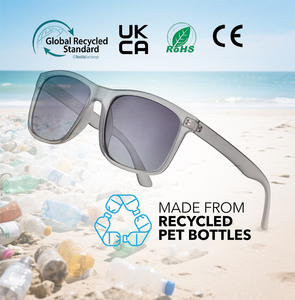
Eco-conscious American Gen-Z and Millennial demographics require sustainable optical materials. The integration of recycled ocean RPET and wheat-straw biocomposites into both chassis and clip rims provides independent dispensaries with compelling eco-narratives.
Pioneered by high-end European labels like Monoqool, polyamide-12 powder-bed fusion allows bespoke, ultra-light clip-on attachments with screwless hinges and zero metallurgical fatigue over extended usage cycles.
With US vision benefit plans (VSP, EyeMed) tightly controlling reimbursement allowances for complete prescription sun lenses, patient out-of-pocket costs remain high. Clip-on frames allow patients to use their single-vision or progressive frame allowance while acquiring sun protection as an affordable accessory.
Studio Optyx is not an anonymous trading broker. Founded in 1879, our family-owned design house has served optical retailers and independent doctors of optometry for 145 consecutive years. From our St. Louis headquarters at 2815 Olive Street, owners Jack Erker III and Tony Erker oversee rigorous quality-control protocols spanning our proprietary collections—including Erkers1879, NW77th, The Neighbors, and Tocco—as well as specialized distribution lines like Monoqool 3D and ba&sh.
When you procure clip-on frame assortments through our manufacturing channel, you gain access to factory-direct wholesale pricing, guaranteed dimensional consistency across reorders, low minimum order quantities (MOQs) for boutique retailers, and dedicated US account management.
Get a Quote
Essential answers covering regulatory testing, polarization efficiency, lens edging compatibility, and ordering minimums for North American sourcing professionals.
All optical frames and clip-on sun attachments imported into the US must comply with FDA 21 CFR 801.410 (Impact Resistance Drop Ball Testing), utilizing a 5/8-inch steel ball dropped from 50 inches. Additionally, sunglasses and clip-ons must satisfy ANSI Z80.3-2018 for transmittance, cosmetic defect thresholds, and UV radiation shielding (blocking 99% to 100% of UVA and UVB wavelengths up to 400nm). Frame hardware must also satisfy California Proposition 65 thresholds regarding lead, nickel release, and bisphenols.
Traditional cheap clip-ons rely on surface adhesives that deteriorate when exposed to sweat and skin oils. Studio Optyx utilizes a dual-retention system: Neodymium magnets are mechanically seated inside CNC-milled undercut cavities, anchored with an industrial cyanoacrylate-elastomer compound, and enclosed with a laser-welded flush cap. This ensures the magnets withstand exceeding 10,000 detachment cycles without lateral slippage or adhesive failure.
Yes. Our base optical frames are engineered with deep eyewire bevel grooves (depth 0.8mm, angle 115°) designed specifically for digital free-form progressive lenses, high-index (1.67 and 1.74) plastics, and polycarbonate surfacing. The magnetic clip attachments are balanced on a forward focal plane, providing 1.8mm clearance over front base curves up to +6.00D without physical scraping.
For ready-stock models within our wholesale catalog, minimum orders start as low as 50 to 100 units across mixed styles for independent practices. For fully customized private label collections (custom acetate colors, laser-engraved temple logos, custom packaging, and matching bespoke clips), standard production runs start at 300 units per style (100 units per colorway), with tooling and production timelines averaging 45 to 65 days from CAD prototype approval.
Yes. Our engineering facility supports reverse-engineering clip production. Optical chains can supply frame tracer files (OMA/VCA format) or physical demo samples. Our technical department renders 3D CAD files within 72 hours, producing physical 3D-printed or stamped metal prototypes with custom bridge hooks or hidden magnetic lugs engineered to your exact rim specifications.
Whether you require ready-to-ship stock, custom OEM clip engineering, or trunk show assortments for your multi-location practice, our St. Louis headquarters is ready to evaluate your specifications.
Get a Quote