
Specially calibrated for Korean facial anthropometrics—featuring low-bridge nose curves, adjusted pantoscopic tilt, and rim dimensions suited for high-index negative diopter lenses.
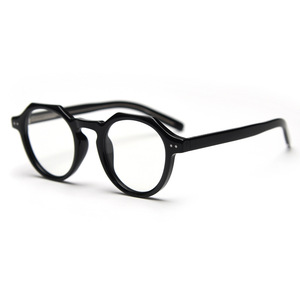
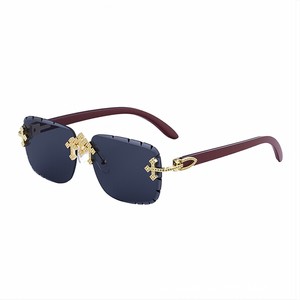
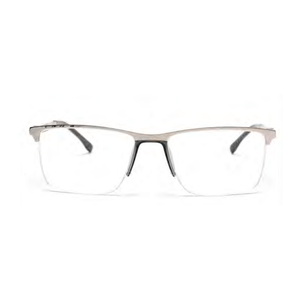
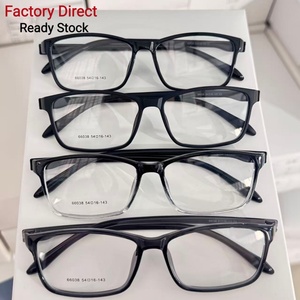

An empirical deep dive into craniofacial ergonomics, severe myopia prevalence, and the cultural ascension of minimalist "K-Eyewear" aesthetics.
In South Korea's optical industry, round and panto optical silhouettes have evolved far beyond passing fashion trends; they represent the structural foundation of both medical dispensing and retail volume. According to nationwide optometric clinical surveys, over 78% of young adults and teenagers across Seoul and Gyeonggi Province present with moderate to severe axial myopia, frequently requiring corrective prescriptions between -4.50D and -8.00D. In high-diopter lens surfacing, frame geometry exerts an immense impact on edge thickness, base curve distortion, and total optical dispersion. Round and soft-oval frames naturally minimize perimeter lens decentration, enabling Korean opticians to trim heavy, peripheral lens bulk and deliver aesthetically refined spectacles even with 1.67 and 1.74 ultra-high-index MR-7/MR-8 resin blanks.
Concurrently, South Korea's cultural embrace of delicate minimalism—anchored by historical references to mid-century scholar glasses and modernized through Korean entertainment styling—demands structural lightness. Korean consumers reject clunky, over-branded temples in favor of pure lines, subtle filigree engraving, and featherweight balance. For optical importers, wholesalers in Daegu (the historic heartland of Korea's frame manufacturing), and private-label distributors supplying retail franchises such as Davich, Look Optical, and Alo, sourcing dependable round frames with genuine Asian-fit nasal ergonomics is the single most vital factor in maintaining customer retention and minimizing in-store dispensing modifications.
Beta-titanium bridge & rim assemblies engineered to eliminate bridge slippage on low nasal profiles.
Automated groove dimensioning preventing high-index lens popping and acoustic stress creaking.
Five generations of proprietary tooling, engineering drawings, and global distribution logistics since 1879.
Compliant with South Korea’s Electrical Appliances and Consumer Products Safety Act and heavy-metal limits.
Different metropolitan sub-markets require distinct material balances, rim depths, and branding strategies. Here is how our wholesale catalog aligns with commercial buying channels.
High-net-worth patients undergoing refractive surgery (LASIK/LASEK/SMILE) requiring post-operative non-prescription UV400 and photochromic round frames. Medical clinics demand premium Grade 4 pure titanium and surgical nickel-free coatings to eliminate dermatological contact allergies and optimize post-surgical comfort.
Bespoke concept boutiques catering to Gen Z and millennial style pioneers who favor vintage "Grandpa Core," crown-panto acetate geometries, and translucent champagne or smoke-tea hues. Frames must feature 5-barrel hinges, custom wire cores, and organic hand-beveled edges suited for casual tinted lenses.
Over 100,000 software engineers and digital workers suffering from Computer Vision Syndrome (CVS). High demand for TR90 and flexible memory-metal round frames equipped with blue-light filtering lenses. These frames require low temporal clamping forces and soft silicone air-cushion nose pads that eliminate pressure marks during 10-hour screen sessions.
Traditional optical B2B trade complexes operating on tight margin replenishment. Wholesalers require high-throughput SKU consistency, stable factory direct pricing, pre-certified customs documentation, and standardized sizing (48-21-145 and 50-20-148) with interchangeable temple assemblies to service provincial retail networks.
Standardized national retail networks requiring tiered price-point architecture. Demands include private-label OEM laser-marking, customized Korean-language point-of-sale packaging, and stringent drop-ball impact resilience tests to guarantee zero consumer liability across hundreds of franchise doors.
Rapidly growing digital eyewear startups utilizing virtual 3D try-on applications. These businesses demand photometrically accurate 3D CAD (.STEP / .OBJ) wireframe models, ultra-repeatable dimensions (±0.1mm), and low-friction drop-shipping or consolidated air-freight directly into Incheon Free Economic Zone (IFEZ).
Strategic intelligence for frame buyers, procurement directors, and brand developers navigating changing consumer dynamics.
The Korean optical marketplace is undergoing a decisive shift from oversized, decorative silhouettes toward refined micro-architectural minimalism. Consumers are becoming hyper-educated regarding material compositions, actively checking whether temple wire is crafted from Japanese beta-titanium or standard stainless steel, and whether acetate is bio-based or petroleum-derived.
Additionally, the convergence of eyewear with tech wearables has heightened scrutiny over frame balance. Consumers demand frames that do not slide forward during humid summer months or irritate the mastoid process behind the ear during extended headphone wear.
| Design Element | Traditional Standard | 2025-2028 Korean Spec |
|---|---|---|
| Rim Silhouette | Generic 52mm Circular | 47-49mm Crown-Panto & Teardrop Round |
| Nose Bridge Drop | Western 18-20mm High Arc | Asian-Fit 21-22mm Lowered S-Curve |
| Pad Arm Material | Rigid Nickel Brass | Flexible Beta-Ti with Ceramic / Air-Silicone |
| Acetate Thickness | 6.0mm – 8.0mm Heavy Slab | 3.8mm – 4.5mm Micro-Milled High Density |
| Surface Plating | Standard Wet Galvanic | Ion PVD (Physical Vapor Deposition) |
1. The Crown-Panto Hybrid Ascendancy: While the pure spherical round frame maintains staple volume, Korean optical tastemakers are heavily adopting the "Crown-Panto"—a silhouette characterized by a rounded bottom rim paired with a flat, geometric upper browline. This design breaks up facial roundness and provides superior framing for the lower orbital ridge, making it universally flattering across East Asian facial structures.
2. Bio-Cellulose and Eco-Acetate Mandates: South Korea's Ministry of Environment and younger consumer cohorts are pressing optical brands for measurable sustainability. Our wholesale export pipeline for Korea incorporates renewable wood-pulp bio-acetates with phthalate-free plasticizers, ensuring biodegrability without sacrificing the tactile polish, rich luster, and dimensional stability demanded by optical artisans.
3. Advanced Colorways: Muted Earth and Translucent Ice: Black and tortoise frames no longer monopolize optical boards in Seoul. Purchasing data reveals a dramatic rise in clear champagne crystal, gradient olive, misty slate grey, and tea-tinted amber. These translucent hues soften facial contrast, harmonizing seamlessly with Korean skin tones and seasonal cosmetic trends.
Exporting to South Korea requires adherence to some of the world's strictest optical tolerances. Here is our end-to-end quality assurance matrix.
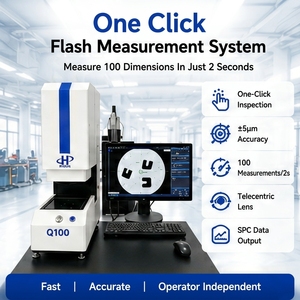
We deploy automated one-click flash measuring machines (such as our featured HSD-Q100 system) across our production cells. In under 2 seconds, our optical sensors measure 51 critical geometric points—including eyewire circumference, bridge distance, temple splay angle, and screw thread alignment—verifying tolerances within ±0.002mm before surface treatment.
Korean summers present high humidity combined with acidic perspiration. Our metal and titanium round frames undergo 72 continuous hours of atomized salt spray testing (5% NaCl solution at 35°C) without surface oxidation, flaking, or discoloration. Vacuum PVD titanium carbonitride coatings guarantee long-term skin contact resilience.
Every round frame hinge assembly—whether traditional German 5-barrel riveted joints or patented screwless spring systems—is tested to withstand 25,000 continuous opening and closing cycles under a standardized 1.5N load. Temples maintain smooth kinetic resistance without loose wobble or binding friction.
Founded in 1879, our manufacturing lineage spans 145 years of optical architecture, industrial design, and global wholesale partnerships. Rooted in traditional optical craftsmanship and elevated by modern robotics, we bridge historical hand-finishing with cleanroom automated repeatability.

Clear, definitive answers regarding Korean customs clearance, regulatory standards, minimum orders, and technical customization.
Whether you are a Daegu distributor sourcing high-precision titanium chassis, an Apgujeong optometry boutique launching a private-label round frame collection, or a commercial chain expanding high-index corrective inventory, our engineering team is ready to assist.