International Optical Trade Whitepaper

Top China Premium Designer Eyeglasses Manufacturers & Exporters in Indonesia

Precision Engineering, OEM/ODM Capabilities, and Tailored Supply-Chain Solutions for Indonesian Optical Boutiques, Chains, and Vision Care Providers.

Export-Ready Optical Portfolio

Precision Optical Frames & Lenses Tailored for Southeast Asia

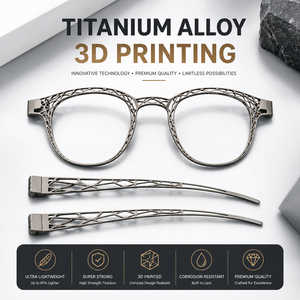
Engineered to comply with stringent ISO 12870 ocular standards, our export collections integrate hyper-resilient Japanese beta-titanium, authentic Italian Mazzucchelli acetate, 3D additive sintering, and advanced MR-8 resin technologies.

Industrial Heritage & Manufacturing Mastery

Five Generations of Optical Excellence Powering the Southeast Asian Market

Bridging 145 years of optical design pedigree with cutting-edge Chinese advanced manufacturing facilities, Studio Optyx provides Indonesian importers with unmatched precision, traceability, and retail profitability.

Founded on an enduring commitment to the eyewear craft dating back to 1879, our manufacturing lineage incorporates the deep technical heritage of multi-generational optical designers alongside the world's most advanced automated optical tooling facilities located in China's premier industrial hubs (Shenzhen, Danyang, and Wenzhou). In an increasingly competitive Indonesian retail landscape—dominated on one side by mass-market, commoditized imports and on the other by exorbitant European luxury monopolies—our specialized OEM/ODM export ecosystem delivers the ultimate Information Gain and competitive margin for optical distributors across Jakarta, Surabaya, Bandung, and Medan.

We believe optical frames are not merely fashion accessories; they are class-I medical devices and everyday ergonomic tools that must endure equatorial heat, maritime salinity, and prolonged digital wear. By applying rigorous European and North American quality assurance protocols to our Chinese supply chain, we offer direct access to factory-direct wholesale pricing, proprietary design IP, and comprehensive logistical compliance tailored specifically to Indonesian import protocols.

145+
Years Heritage

Family-guided optical craft and industrial frame engineering since 1879.

100%
Traceability

Mazzucchelli acetate, Japanese titanium, and Mitsui monomer certified origins.

500k+
Monthly Output

Scalable production capacity across ISO9001, CE, and FDA verified cleanrooms.

<0.12%
Defect Tolerance

Four-stage continuous optical QC exceeding ISO 12870 standards.

Localized Ergonomics & Climate Engineering

Engineering Frames for the Indonesian Environment & Demographics

Tropical humidity, equatorial ultraviolet radiation, daily two-wheeler commuting, and Southeast Asian craniofacial structures necessitate distinct manufacturing parameters.

Equatorial UV400 & High Heat Resistance

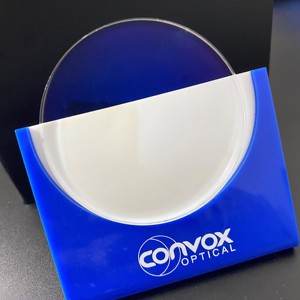
Indonesian average daily UV Index frequently spikes between 10 and 12+. Our CONVOX MR-8 optical lenses and sun lenses feature integral monomer UV blockers that absorb 100% of UVA/UVB rays up to 400nm without surface delamination, while our acetate undergoes 90-day curing to prevent heat warping.

Salt-Mist & Perspiration Anti-Corrosion

Relative humidity averaging 75%–90% across Java, Sumatra, and Bali induces rapid galvanic degradation in conventional metal alloys. We utilize multi-layer IP (Ion Plating) vacuum deposition and Grade-4 titanium cores, guaranteed against skin-acid pitting and tropical oxidization under ISO 12870 salt-spray benchmarks.

Tailored Asian Fit Craniofacial Design

Standard Western frame geometries frequently slip on flatter nasal bridges or press against prominent cheekbones. Our specialized Asian-Fit molds feature calibrated 14mm–16mm bridge widths, heightened molded acetate nose pads, extended micro-adjustable titanium pad arms, and modified pantoscopic tilt angles.

Modest Fashion & Commuter Helmet Comfort

With over 120 million registered motorcycles and a massive demand for modest Hijab-friendly fashion in Indonesia, our ultra-thin pure titanium sheets and flexible TR90 temples feature screwless, zero-snag hinge mechanics that slide effortlessly beneath headscarves and full-face helmets without temple pressure points.

Market Intelligence & Industry Economics

Strategic Macro Trends Driving the Indonesian Optical Market (2025–2030)

Analysis of shifting consumer behavior, public health insurance impacts, and the explosion of independent optical boutiques across Southeast Asia’s largest economy.

The BPJS Kesehatan Catalyst & Private Upselling

Indonesia's national health insurance scheme (BPJS Kesehatan) subsidizes basic optical care, vastly increasing public vision awareness. Forward-thinking optical retailers in Greater Jakarta (Jabodetabek) and secondary cities leverage this foot-traffic surge to upsell insured consumers to premium designer frames—such as ultra-lightweight titanium and handcrafted retro acetates—that deliver fashion appeal beyond baseline insurance allotments.

Proliferation of Independent Boutique Chains

While legacy retail chains (Optik Melawai, Optik Seis, Optik Tunggal) historically anchored tier-1 shopping malls, the market is experiencing rapid decentralized expansion of lifestyle-driven independent opticians. Gen Z and millennial Indonesian consumers prioritize niche designer storytelling, artisanal craftsmanship, and sustainable acetate over generic mass-market branding, unlocking explosive demand for agile OEM private labeling.

Digital Screen Proliferation & Youth Myopia

Indonesia ranks among the global leaders in average daily smartphone and digital screen exposure (exceeding 8.5 hours daily). With urban youth myopia prevalence rising rapidly in cities like Surabaya, Yogyakarta, and Medan, optical buyers are aggressively pivoting inventory toward high-index 1.61 MR-8 aspheric blue-light filtering lenses and resilient pediatric frames equipped with flexible Grilamid TR90 or silicone assemblies.

Material / Spec Composition & Metallurgy Climate Performance (IDN) Recommended Retail Positioning
Beta-Titanium Sheet Ti-15V-3Cr-3Sn-3Al High-Elasticity Alloy Zero-corrosion in salt spray; resilient to helmet deformation Executive, Minimalist Luxury, High-End Independent Optometry
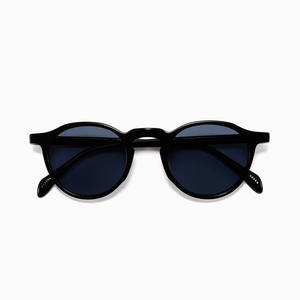
Mazzucchelli Acetate Organic Cellulose Acetate (Plasticizer < 22%) High thermal stability; deep depth of polish; zero bleaching Heritage Vintage, Designer Boutique Private Labels
CONVOX 1.61 MR-8 Polythiourethane Optical Monomer (Mitsui Korea) Hydrophobic/Oleophobic, extreme crack resistance for rimless mounts Daily Prescriptions, High-Index Aspheric Vision Corrections
Swiss Grilamid TR90 Transparent Polyamide Memory Co-Polymer Retains elastic memory in tropical ambient temperatures (35°C+) Active Sports, Driving, Pediatric, Value High-Turnover Series
Why Partner With Us

Enterprise Capabilities: Direct From Advanced Manufacturing Cleanrooms

From prototype CAD drafting to rapid container clearance at Tanjung Priok, our end-to-end B2B optical infrastructure empowers international optical brand owners.

End-to-End OEM/ODM & Bespoke Tooling

We operate in-house CNC mold-making, rapid stereolithography 3D prototyping, and customized laser-engraving facilities. Whether you need custom nose pad logos, specialized core wire patterns, or tailored Asian-fit bridge molds, our optical engineers convert your design concepts into sample approval in under 14 days.

Certified Export Compliance & Form E Support

We eliminate regulatory friction. All frames and lenses are manufactured under ISO 9001, ISO 13485 (Medical Devices), CE, and US FDA standards. For Indonesian clients, we provide full technical dossier files for Ministry of Health (Kemenkes) AKL registration and ASEAN-China Free Trade Agreement (Form E) documents for preferential tariff reduction.

Flexible MOQs & Ready-to-Ship Consignments

We bridge the divide between artisanal small-batch exclusivity and mass-industrial scaling. Our ready-to-ship collections support low minimum order quantities (from 50–100 pieces per SKU for private laser-branding), enabling independent optical store networks to trial trend-setting designs with minimal capital exposure.

Indonesian B2B Procurement FAQ

Navigating Optical Importation, Regulations, and Quality Control

Actionable answers to common questions raised by optical chain buyers, importers, and distributors across Java, Sumatra, Bali, and Sulawesi.

What are the Indonesian Ministry of Health (Kemenkes) AKL registration requirements for importing optical frames and prescription lenses? +

In Indonesia, ophthalmic prescription lenses and corrective spectacle frames are classified as Class A/B Medical Devices under the Ministry of Health (Kementerian Kesehatan RI - Kemenkes). To legally commercialize them, local importers must possess an IDAK (Izin Distribusi Alat Kesehatan) and obtain an AKL (Alat Kesehatan Luar) distribution license number.

As an experienced exporter, our manufacturing plants supply complete technical dossier documentation, including ISO 13485 certifications, Certificates of Free Sale (CFS) legalized by Indonesian diplomatic missions in China, Declaration of Conformity (DoC), full material safety data sheets (MSDS), and biocompatibility test reports (ISO 10993) to ensure seamless AKL registration approval through the Kemenkes online portal.

How do Form E and the ASEAN-China Free Trade Area (ACFTA) reduce import duties into Indonesian ports (Tanjung Priok, Tanjung Perak)? +

Under standard Most Favoured Nation (MFN) tariffs, importing finished optical frames (HS Code 9003.11 for plastics, 9003.19 for metals) and unmounted corrective lenses (HS Code 9001.50) into Indonesia can incur import customs duty rates ranging between 5% and 12.5%, alongside Value Added Tax (PPN 11%) and Income Tax (PPh 22 Article 2.5% to 7.5%).

By issuing a certified Certificate of Origin (COO) Form E issued under the ACFTA framework, import customs duty rates for qualifying optical products are frequently reduced to 0% at customs clearance checkpoints such as Tanjung Priok (Jakarta) and Tanjung Perak (Surabaya). Our specialized shipping department guarantees accurate HS classification and tariff documentation to maximize your duty-free savings.

What is the difference between standard CR-39 and your CONVOX Korean JV 1.61 MR-8 resin lenses in tropical retail environments? +

Conventional CR-39 (index 1.499) monomer has a low refractive index, brittle mechanical matrix, and prone to edge cracking when glazed into semi-rimless or rimless mounts common in Southeast Asian executive styling. Furthermore, standard lenses often use basic tint dip-dyes that degrade under intense equatorial sunlight.

Our CONVOX 1.61 MR-8 resin lenses utilize genuine Mitsui Chemicals polyurethane monomer technology. MR-8 provides: (1) An ultra-thin profile approximately 20% thinner than CR-39; (2) A superior Abbe value of 41, guaranteeing crisp optical acuity free of chromatic aberration; (3) Exceptional tensile and impact resistance exceeding FDA drop-ball standards; and (4) High thermal resistance up to 118°C, which prevents coating distortion during hot vehicle storage in Indonesian traffic conditions.

How does your factory prevent perspiration-induced verdigris (green tarnish) on metal frames sold in humid Southeast Asian regions? +

Verdigris develops when standard copper-nickel base alloys react with salt, lactic acid, and moisture excreted by the skin. To completely eliminate this problem for our Indonesian clients, we implement two distinct engineering solutions:

First, we champion our Pure Beta-Titanium and SLS 3D Titanium series, which are 100% copper-free and biologically inert. Second, for our metal alloy collections, we apply an intermediate barrier layer of palladium-nickel followed by vacuum Ion Plating (IP) and an ultra-dense electrophoretic polyurethane lacquer baked at 180°C. This hermetic barrier passes 96-hour synthetic perspiration and continuous salt-mist corrosion tests without oxidation, blistering, or skin discoloration.

What are the minimum order quantities (MOQ), production lead times, and private label customization options for Indonesian brands? +

We tailor our order structures to suit both growing boutique chains and large-scale optical wholesalers:

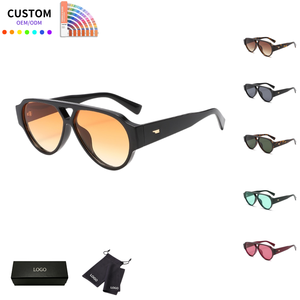
Ready-to-Ship Inventory: Available from 50 to 100 units per model with personalized laser engraving (temple typography, demo lens printing, custom branded leather cases, and microfibre lens cloths) within 10–14 business days.
Full Custom OEM/ODM Production: Dedicated new model production runs start at 300 pieces per acetate style (up to 3 color variations) or 500 pieces for bespoke titanium molds. Production cycle times typically range between 45 and 60 days following digital CAD and resin prototype sign-off.

Strategic Optical Sourcing Direct From The Source

Ready to Elevate Your Eyewear Margins in Indonesia?

Consult with our international optical trade directors today. Request sample kits, review physical acetate swatches, or initiate your custom OEM/ODM brand production with certified regulatory support.

Send an Inquiry